KEPCO freezes electricity rates for Q2 amid concerns over soaring global energy prices
- Input
- 2026-03-23 15:10:03
- Updated
- 2026-03-23 15:10:03
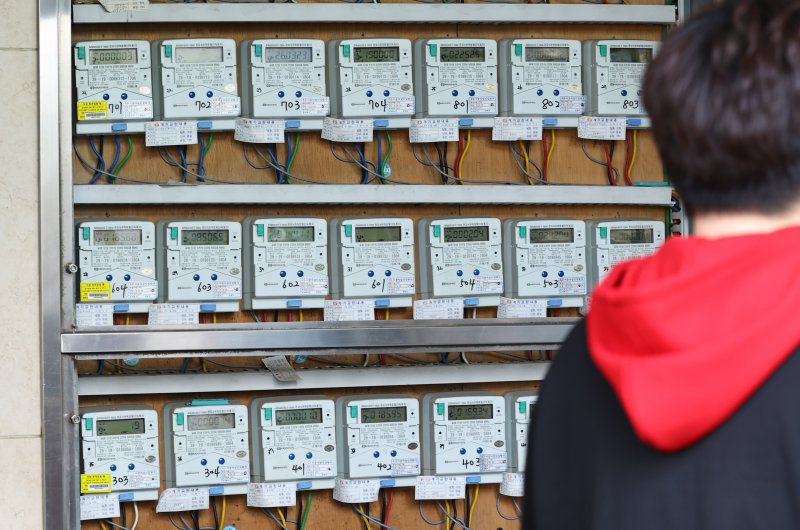
According to The Financial News, international oil prices have surged due to the war between the United States of America (USA) and the Islamic Republic of Iran, but electricity rates for the second quarter did not rise immediately. This is because Korea’s electricity pricing system does not reflect international fuel prices in real time, but instead applies the recent average fuel cost on a quarterly basis. However, experts warn that if the energy shock from the Middle East persists, the cost burden that was not reflected this time is likely to be passed on sequentially to electricity and gas bills in the second half of the year.
Korea Electric Power Corporation (KEPCO) stated on the 23rd that it will maintain the fuel cost adjustment rate for the second quarter at the current level of 5 won per kilowatt-hour (kWh).
Electricity bills consist of a basic charge, an energy usage charge, a climate and environment charge, and a fuel cost adjustment charge. Among these, the benchmark used to reflect short-term fluctuations in energy prices is the "fuel cost adjustment rate."
However, electricity rates in Korea do not change daily like gasoline prices at gas stations. The fuel cost adjustment rate, which is the key variable in electricity pricing, is calculated by averaging recent trends in coal, Liquefied Natural Gas (LNG), and oil prices over a certain period and then applying that figure on a quarterly basis. In other words, the impact of the war that escalated in late March is unlikely to be fully reflected immediately in rates for April to June, and will more likely show up in subsequent quarters with a time lag. Under this structure, the crucial factor is not a short-term spike, but how long high prices persist.
The problem is that the shock has not disappeared; it has merely been pushed back. If tensions in the Strait of Hormuz drag on and disruptions to crude oil and LNG supplies from the Middle East continue, KEPCO’s power generation fuel procurement costs will inevitably rise. International gas prices are reflected with a time lag of about two months, while oil prices feed through with a lag of about five months. Because Korea’s power market is more directly affected by LNG price increases than by oil, a prolonged conflict could lead to higher electricity and gas bills from the third quarter onward. In short, the reason second-quarter electricity rates are not rising now is not the absence of war-related shocks, but the fact that Korea’s electricity pricing system is built on a "time-lag structure" that reflects global energy prices with a delay.
An official in the power industry said, "In the past as well, there has always been a time lag of several months between international energy prices and domestic electricity rates," and added, "If energy costs remain elevated, it will be unavoidable to consider raising electricity rates in the second half of the year."
[email protected] Lee Yu-beom Reporter