"Why Must Women Be Objects on Display?" Retrospective of the Late Park Young-sook Breaks the Chains of Constraint
- Input
- 2026-03-23 14:33:01
- Updated
- 2026-03-23 14:33:01
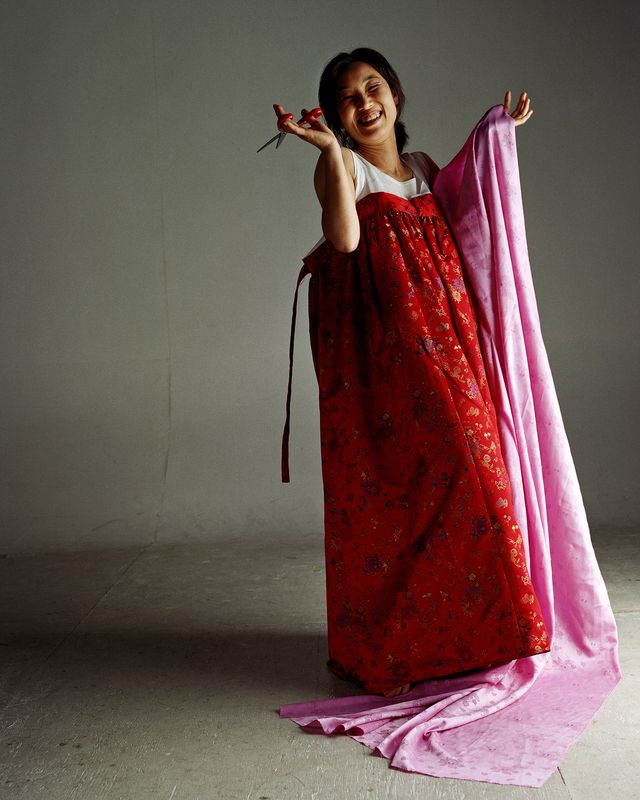
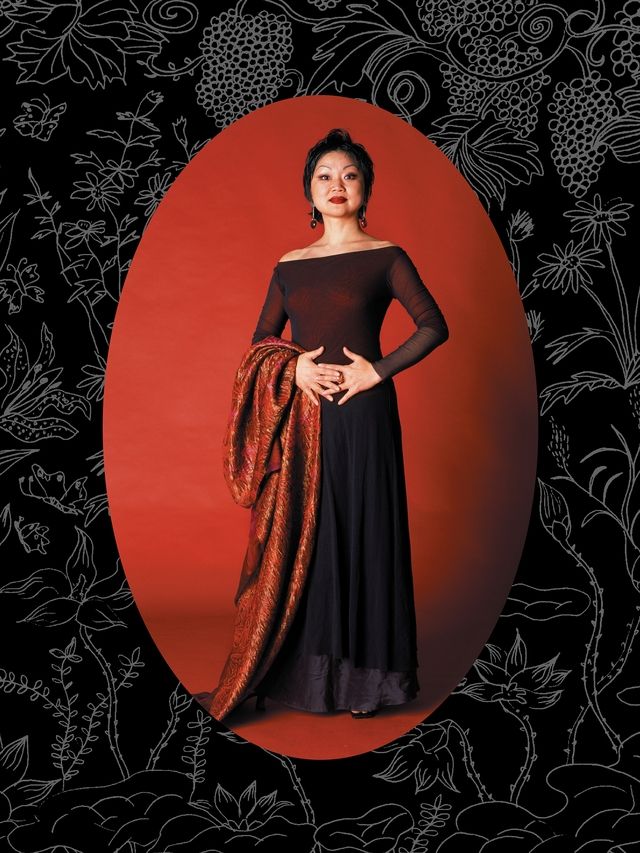
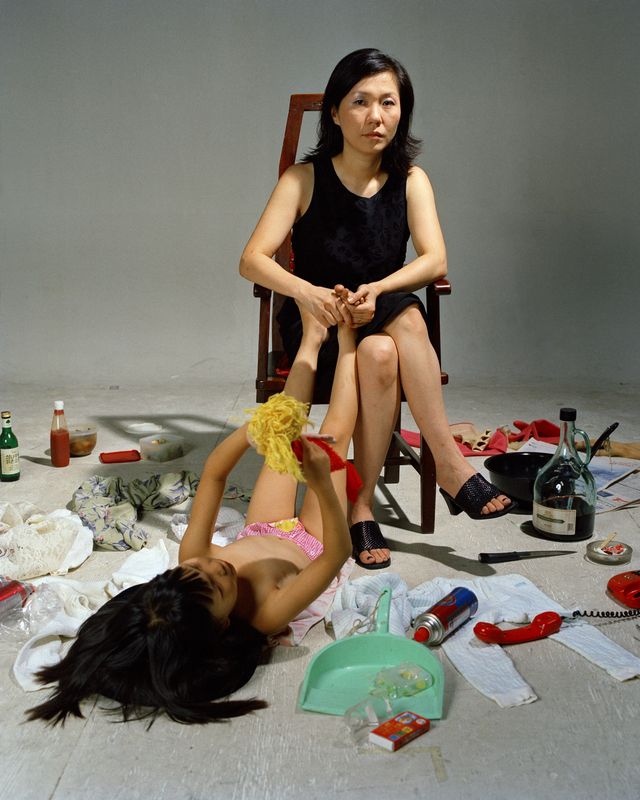
[Financial News]A so-called delinquent woman who has abandoned housework and childcare stares straight ahead as she paints her nails. Another woman, with nothing left to hold, clutches a factory-made pillow and gazes blankly into space. There is also a woman in a hanbok whose chest bursts open in laughter once she loosens the skirt ties that had bound her. The exhibition space is filled with images of women whom our society has long pointed at and condemned as "mad women."A comprehensive look at the work of Park Young-sook, a pioneer of feminist photography in Korea, has opened in the Jongno District, Seoul. Arario Gallery Seoul announced on the 23rd that it is presenting "Look, That Woman Sings and Dances," the first solo exhibition since Park’s passing last October, running through next month on the 18th.
Park was a first-generation artist who carved out the field of feminist photography in Korea. In her images, women who had long been objectified in photographs appear instead as subjects who speak and act for themselves. This exhibition brings together 41 photographs from her major series, including "Mad Women," "Body and Sexuality," and "The Witch Within Me," along with video works and archival materials.
On the first floor and basement level, the show focuses on key series produced between 1998 and 2005. "Body and Sexuality" (1998), "Mad Women" (1999), "The Lost Sex" (2001), "Imprisoned Body, Wandering Spirit" (2002), "The Witch Within Me" (2005), and "Flowers Shake Her" (2005) confront women’s bodies and desires, as well as oppression and madness, head-on. Park dismantles socially imposed images of "woman" and reimagines them as beings who sing and dance on their own terms, distilling this gaze across these works.
The third floor traces how the artist’s critical perspective took shape, through early works from the 1960s to the mid-1990s. Black-and-white series such as "Scene" (1963–67), "Witch" (1988), and "Rose" (1988) foreshadow the archetype of the "woman on the brink of madness" that appears later. The video work "Song of the Uterus: As the Great Mother Sleeps and Rises" (1994), originally produced using analog slide projection, has been digitally restored and is shown alongside them.
The centerpiece of this exhibition is the "Mad Women" series (1999–2019), which depicts women who step outside social norms: a woman staring into the void, a woman laughing with her hanbok skirt untied, and more. By using the deliberately provocative phrase "mad women" to frame women’s repressed realities, Park visualizes female subjectivity and anger.
The 1999 works in the "Mad Women" series, in particular, were created for all the women in history who were forced into patience and silence by male-centered social conventions. Over the following two decades, the "Mad Women" project evolved into various series. Park defined it as "gestures and records performed by today’s women on behalf of women of the past, who, without realizing that the pain driving them mad began in the unconscious, endured and endured again agonies so severe they could lose their minds—women who, for that very reason, could not help but become mad women and virgin ghosts."
The series "Imprisoned Body, Wandering Spirit" (2002) also weaves the experiences of women around the artist into its narrative. These images capture the moments when women performing repetitive domestic labor in their daily lives drift into thought, recalling the "space-time of mad women."
The photo collage "Witch" likewise calls up the history of women’s oppression. Drawing on the motif of witch burnings in the West, it seeks to summon and console the memories of women who were suppressed and sacrificed.
"Witch" was first shown together with another photo collage, "Rose" (1988), at the 1988 exhibition "Meeting of Women’s Liberation Poetry and Paintings: Let Our Spring Waters Flow" held at Grim Madang Min. These two works later became a meaningful turning point in Park’s feminist photography.
Meanwhile, alongside Park’s exhibition, Arario Gallery Seoul’s fourth floor is hosting "Life," a furniture exhibition by artist Lee Jung-bae, also running through next month on the 18th.
Under the concept of "furniture created by an artist," 17 pieces are on view that balance structure, proportion, and harmony, bringing together utility and beauty. Lee, who works with fragmented images of nature encountered in the city—such as a glimpse of mountains between dense office towers or a square of morning light entering through a window—has translated these motifs into furniture. Four two-dimensional works depicting natural scenery are also displayed within the furniture-defined spaces.
For Lee, the exhibition theme "Life" presents furniture not as merely functional objects but as a medium that reveals the structures of living. Ultimately, "Life" loosens the boundaries between art and design, between exhibition and everyday routine, and shows how life gradually takes shape through furniture. In his view, it is a form created by living itself and a "beauty of utility" completed through use.
Arario Gallery Seoul commented, "In this exhibition, Park Young-sook elevates women, long objectified in the history of photography, into authors of their own narratives and agents of speech, while Lee Jung-bae extends his sense of form into everyday life, presenting furniture as ‘forms in use’ and as sculptures experienced in daily living."
rsunjun@fnnews.com Yoo Sun-joon Reporter