Gulf Countries Shift Stance, Weigh Joining Counterstrikes After Iranian Attacks
- Input
- 2026-03-23 06:16:12
- Updated
- 2026-03-23 06:16:12
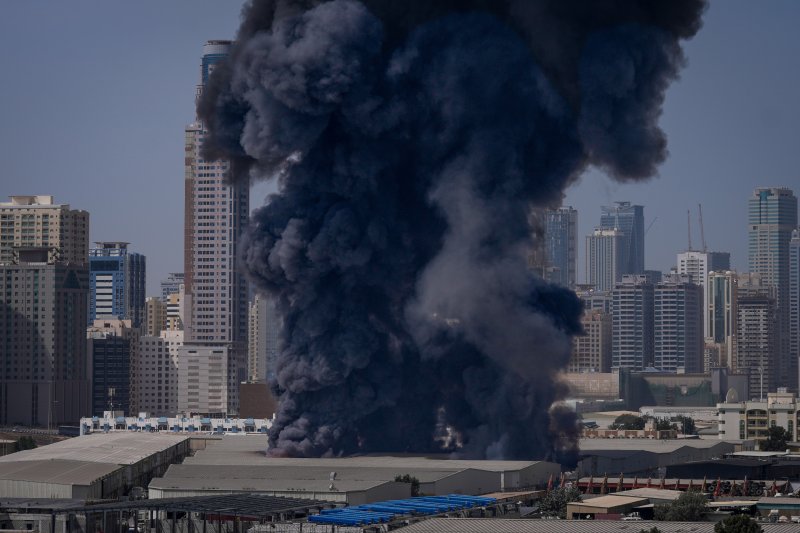
Before the war broke out, Gulf countries had warned United States of America (US) President Donald Trump against a confrontation with the Islamic Republic of Iran. Now, however, they are urging Washington to keep up the attacks until the Iranian regime’s military capabilities are decisively neutralized, Financial News reported.
On the 23rd (local time), The Times of Israel said it had interviewed senior officials from the Kingdom of Saudi Arabia (KSA), the United Arab Emirates (UAE), Kingdom of Bahrain and State of Qatar. According to the report, these key Gulf countries want the war to end only after the Islamic Republic of Iran’s military power has been so degraded that it no longer poses a serious threat.
In the early stages of the war, Gulf countries stressed a diplomatic solution and opposed preemptive strikes by the US and the State of Israel. Once the fighting began, however, the Islamic Republic of Iran launched missile and drone attacks not only on the US and the State of Israel, which had struck it, but also on KSA, UAE and the other members of the Gulf Cooperation Council (GCC).
Tehran had calculated that such retaliation would pressure the Gulf countries into demanding a cease-fire from Donald Trump. The outcome was the opposite. As civilian casualties mounted and vital sectors such as oil and gas production and tourism—lifelines of the regional economy—came under strain, Gulf countries began to conclude that "leaving Iran armed is the greater disaster," The Times of Israel reported.
One Gulf official said, "If this war ends with Iran still in possession of the weapons systems it is now using to attack the GCC, it would be a strategic catastrophe." The official added, "The offensive must continue until Iran’s missile and drone manufacturing facilities are completely destroyed."
As the mood shifts sharply, some states such as KSA and UAE are reportedly even considering directly joining strikes on the Islamic Republic of Iran alongside the US and the State of Israel. This is seen as a signal of their determination to inflict what they describe as "generational damage" so that Iran will not dare attack its neighbors again.
Not all Gulf countries share this view. The Sultanate of Oman maintains that "ending the war as quickly as possible is in everyone’s national interest" and continues to call for an early halt to the fighting.
While Gulf anger is directed first and foremost at the Islamic Republic of Iran, doubts are also growing about the reliability of the US security umbrella. One official argued that "US preparations for Iran’s retaliation were inadequate" and said, "From now on, we will diversify our security partners instead of relying excessively on the US alone."
Prospects for improving ties with the State of Israel have also dimmed. Ground operations and airstrikes the State of Israel is conducting in Lebanon under the banner of targeting Hezbollah, Iran’s proxy force, are fueling resentment in the Gulf countries.
A diplomat told The Times of Israel, "In a region that has not forgotten the tragedy of the Gaza Strip, the civilian casualties caused by Israel’s operations in Lebanon are eroding even the minimal goodwill created by efforts to weaken Iran’s capabilities."
[email protected] Yoon Jae-joon Reporter