Is 'ARMy-nomics' an Illusion or Reality? BTS Concert Brings Mixed Fortunes
- Input
- 2026-03-23 05:10:00
- Updated
- 2026-03-23 05:10:00
[Financial News] Ahead of BTS (Bangtan Boys)' comeback concert, many predicted massive economic ripple effects under the banner of "ARMy-nomics." ARMy-nomics is a portmanteau of BTS's fandom "ARMY" and "economics."
The market reaction, however, was uneven, and the results were mixed.
Restaurants and cafes around the Gwanghwamun area either shut their doors entirely or were flooded with customers, depending on their location. Convenience stores that had stocked up heavily in anticipation of huge crowds saw sharply different outcomes as well: some enjoyed higher sales, while others were left with piles of unsold inventory.
Sales Surge, but Inventory Piles Up
Convenience stores in the Gwanghwamun area prepared for large crowds by stocking up on gimbap, sandwiches, bottled water and other items. The results varied widely. Some stores reported higher sales, while others said sluggish demand left them with significant leftover stock. A few even launched "buy one, get one free" promotions to clear inventory.
CU Convenience Store (CU) reported that sales at its outlets near Gwanghwamun, within the concert’s impact zone, were 3.7 times higher than on the same day of the previous week. At three stores located closest to the main road by the venue, sales jumped by as much as 6.5 times.
BTS albums dominated the rankings, taking the top four spots in sales, and overall album revenue soared 214.3 times compared with the previous week. AAA batteries used in light sticks sold 51.7 times more than usual, making them the fifth-best-selling item. Ready-to-eat foods such as gimbap (14.8 times), sandwiches (12.5 times), and triangular gimbap (9.8 times), along with bottled water (9.3 times), also saw explosive growth.
At GS25, sales at five stores near Gwanghwamun were 3.3 times higher than a week earlier. In particular, sales of the "IGIN Highball," for which BTS member Jin is the model, surged 18.4 times.
Sales of hand warmers and portable batteries also jumped, by 58 times and 21 times respectively, while battery sales overall rose 36 times.
At 7-Eleven, sales at 40 stores in the Gwanghwamun and Myeong-dong commercial districts were 2.2 times higher than the previous month. At emart24, stores in the Gwanghwamun area saw sales rise 1.4 times from the previous week.
On paper, the sales increase was undeniable. The problem was that the number of customers did not match the volume of goods ordered. Stores had stocked up based on forecasts that 260,000 people would attend, but actual attendance was estimated at only 40,000 to 100,000, leaving a large amount of merchandise unsold.
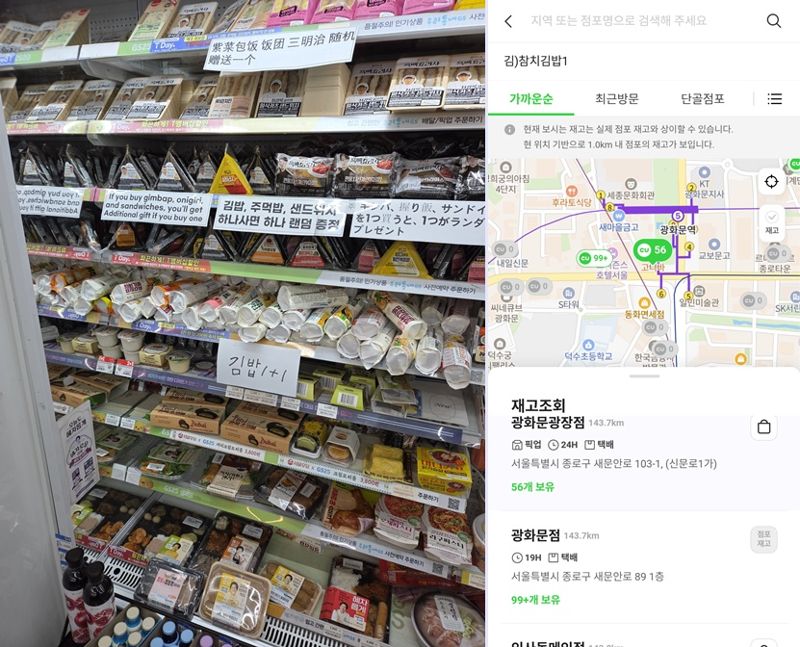
On the 22nd, online communities were filled with posts titled along the lines of "Gwanghwamun convenience store inventory status," accompanied by screenshots of maps showing remaining stock.
When users searched for remaining stock of "tuna gimbap," some stores still had more than 100 packs left. Items like gimbap and sandwiches must be discarded if they are not sold before their expiration date.
Some stores resorted to deep discounting to clear out their inventory.
In one photo posted online, a sign at a convenience store reads in English, Japanese and Chinese: "Buy one gimbap, rice ball or sandwich and get one random item free."
In response, some convenience store headquarters announced plans to help franchisees digest their excess inventory. An industry official explained, "Head office agreed in advance to provide support to prevent franchisees from bearing losses from discarded products."
Restaurants Also See Mixed Fortunes Depending on Location
Many restaurants and cafes located in buildings along Sejong-daero, which runs from Gwanghwamun Square to Seoul City Hall, chose to close for the day out of concern over potential crowds. KT Gwanghwamun Building West, which faces Gwanghwamun Square, was shut down, and all restaurants and cafes inside the building were closed as well.
At Gwanghwamun SFC Mall, the main entrance was blocked and only the rear entrance was open, limiting access and resulting in slower business than usual.
An employee at one restaurant inside SFC Mall lamented, "We prepared extra stock expecting a lot of customers, but the losses turned out to be significant."
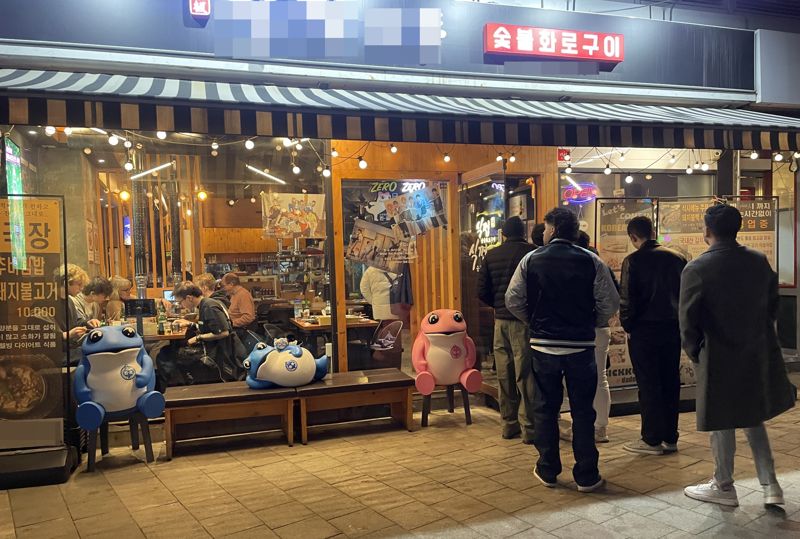
By contrast, restaurants located one block behind the concert venue were packed, with lines stretching out the door even at 10 p.m., when they would normally be closing on a weekend.
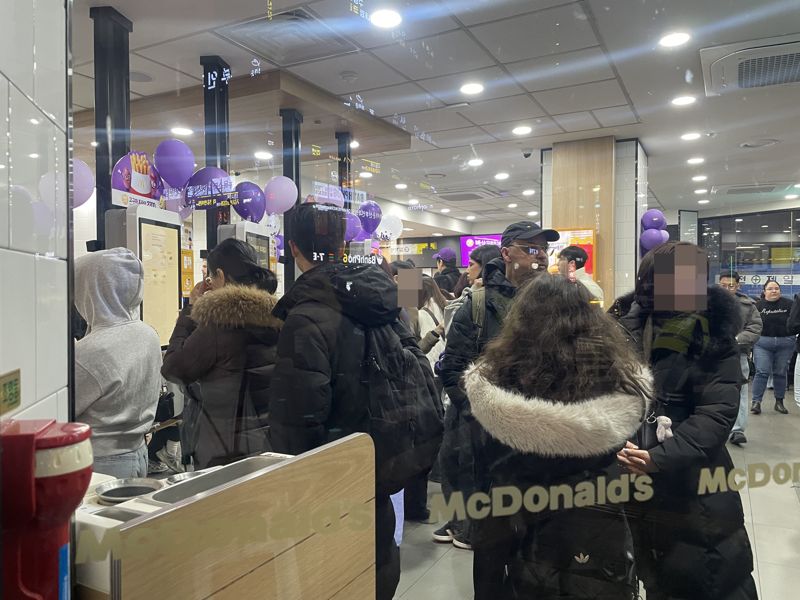
McDonald's Seoul City Hall, on Namdaemun-ro, Jung District, Seoul, decorated the store with purple balloons and other items to welcome BTS fans. After the concert ended, crowds poured in, filling even the second-floor tables late into the night, and customers lined up at the kiosks to place their orders.
Nearby barbecue restaurants saw a similar pattern. During the concert, only one table was occupied, but as soon as the show ended, a waiting line formed and the restaurant quickly filled every seat.
A large bar in Mugyo-dong, Jung-gu, Seoul, near Cheonggyecheon Stream, was also packed with ARMY from various countries who came for after-parties following the BTS concert.
Despite the mixed outcomes depending on circumstances, the economic impact is expected to continue for some time. Foreign media have projected that revenue from flights, accommodation, restaurants and merchandise could generate about 177 million dollars (around 266 billion won) in economic ripple effects in Seoul alone.
The Guardian, in an article on the economic impact of BTS's global tours, cited analysis by Northwestern University professor Tim Calkins. He predicted that host cities would benefit in terms of tourism, hotels and broader economic activity.
Lee Eun-hee, a professor of consumer studies at Inha University, also noted, "BTS concerts have drawn many tourists to Korea. Even after the shows, they are likely to visit popular areas such as Hongdae, Seongsu-dong and Namsan Mountain."
[email protected] Seo Yoon-kyung Reporter