Iran Fires IRBMs at U.S.-UK Base... 4,000 km Range Puts Europe Within Striking Distance [U.S.-Iran War]
- Input
- 2026-03-22 18:41:47
- Updated
- 2026-03-22 18:41:47
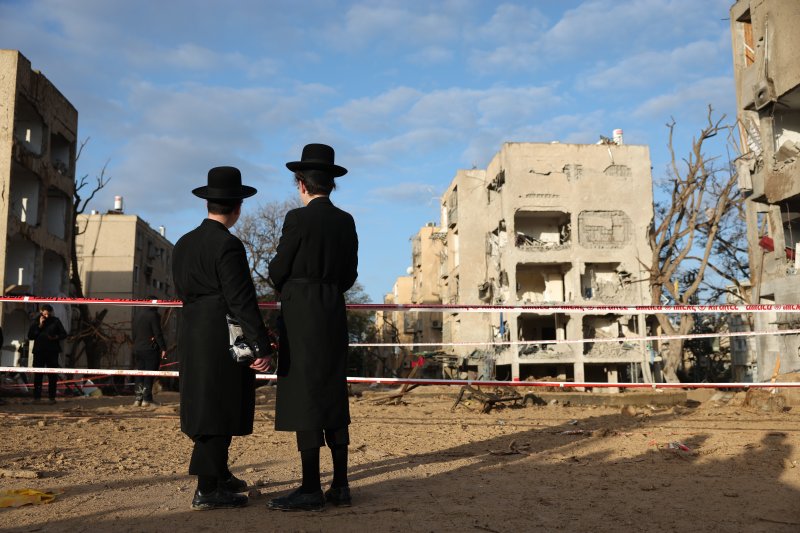
U.S. President Donald John Trump has said he is not considering deploying ground troops in this war. However, a large U.S. Marine Corps force is currently moving into the theater, prompting speculation that a ground campaign may be imminent. On top of this, the State of Israel and the Islamic Republic of Iran are carrying out attacks aimed at each other’s nuclear facilities, further fanning the flames of war.
■ U.S. Marines poised to arrive for possible amphibious operations
According to sources in the U.S. administration, the United States has dispatched three warships and about 2,500 U.S. Marines to the area around the Strait of Hormuz in the Middle East. The newly deployed force consists of three ships from the 11th Marine Expeditionary Unit, including the amphibious assault ship USS Boxer (LHD-4), which is based in San Diego. The Boxer is an amphibious assault ship capable of putting Marines ashore directly from the sea and serves as a "sea-based mobile platform" that carries troops, helicopters and equipment together.
A similar-sized expeditionary force, more than 2,200 Marines from the 31st Marine Expeditionary Unit (31st MEU) aboard the USS Tripoli, left Japan on the 11th. They are expected to arrive in the Strait of Hormuz sometime between the 23rd and 27th.
These forces are expected to be deployed first to secure control of the coastline. One scenario calls for placing a limited number of troops along Iran’s shoreline to remove threats to navigation in the Strait of Hormuz. The strait, through which more than 20% of the world’s crude oil shipments pass, is a key strategic chokepoint in this war.
In particular, small islands at the mouth of the strait, such as Abu Musa Island, Greater Tunb Island and Lesser Tunb Island, are being identified as primary objectives. The Islamic Republic of Iran has built military bases on these islands and thereby secured control over the strait. If U.S. forces seize this area, they could significantly reduce risks to maritime transport.
Another scenario focuses on securing energy infrastructure. U.S. government officials have mentioned a plan to deploy a limited number of ground troops to seize the oil facilities on Kharg Island, located in the middle of the Persian Gulf. Kharg Island is a critical hub through which about 90% of Iran’s oil exports pass and is often referred to as a "treasure island."
The United States has already conducted airstrikes in this area, and U.S. President Donald Trump has hinted at the possibility of additional strikes. Analysts say that if several hundred troops are deployed to secure the facilities, Washington could cut off a major source of revenue for the Iranian regime and use this as an "economic pressure card" to gain leverage in negotiations.
■ Strikes near Israeli nuclear facilities
On the same day, the Islamic Republic of Iran also launched missiles at Dimona and Arad, where Israeli nuclear facilities are located. Iranian state television declared, "We attacked cities that host Israeli nuclear facilities." The nuclear reactor is situated about 13 km southeast of the city of Dimona. Both areas are close to major military installations, including Nevatim Airbase. According to Agence France-Presse (AFP), more than 30 people were injured in Dimona, and at least 59 were wounded in Arad, which lies about 25 km to the northeast. Prime Minister of Israel Benjamin Netanyahu stated, "Tonight was an extremely difficult moment in our struggle for our future," adding, "We will continue to strike the enemy on all fronts."
Eliminating Iran’s nuclear facilities is a central element in discussions over deploying ground troops against the Islamic Republic of Iran. Current and former officials believe that a limited ground deployment may be necessary to physically secure Iran’s stockpile of highly enriched uranium. The idea is to bring the nuclear threat under direct physical control, as it is difficult to neutralize solely through airstrikes.
The exact locations of the uranium remain uncertain. According to the International Atomic Energy Agency (IAEA), roughly half of the approximately 440 kg of highly enriched uranium held by the Islamic Republic of Iran is believed to be in Isfahan. However, there are suggestions that the remainder is dispersed across the Fordow and Natanz facilities, and that some of it may have been moved.
[email protected] Reporter