"Will the U.S.-China summit be delayed again over the Iran conflict?" Speculation swirls over schedule talks
- Input
- 2026-03-22 09:45:08
- Updated
- 2026-03-22 09:45:08
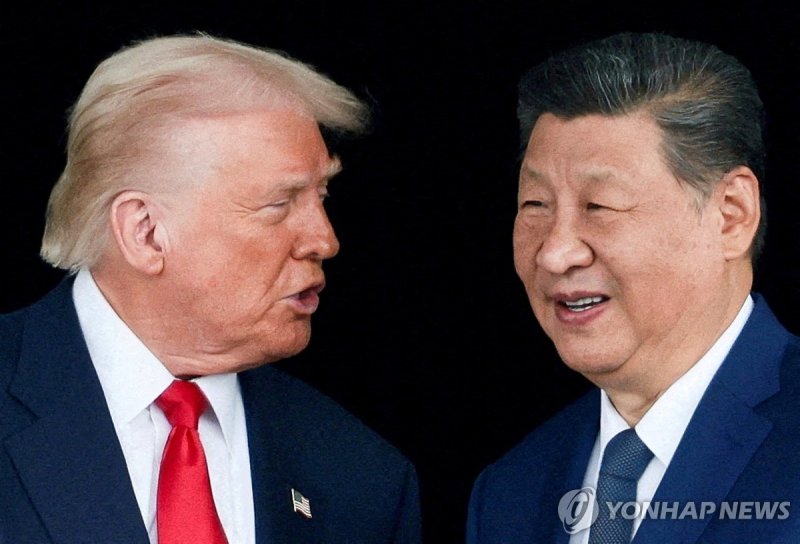
[Financial News] The U.S. government has reportedly put on hold efforts to coordinate the schedule for a U.S.-China summit until the current confrontation with Iran is resolved.
U.S. political outlet Politico reported on the 21st (local time) that the Donald Trump administration is understood to have decided to postpone discussions on scheduling a meeting between U.S. President Donald Trump and President of the People's Republic of China Xi Jinping until the Iran war is over.
A diplomat based in Washington, D.C., who is familiar with preparations for the summit, said, "The next date for the summit will only be put forward once the current tense phase of the Iran war is over." A source close to the Donald Trump administration also noted that a similar view is being shared within the administration.
Officially, however, the White House is distancing itself from such speculation. White House spokesperson Anna Kelly said, "The two countries are continuing productive discussions regarding Trump's visit to China, and there will be an announcement on this soon." The Embassy of the People's Republic of China in the United States of America has also not offered any specific comment on whether the schedule is being delayed.
Trump had originally planned to visit China from the 31st of this month to the 2nd of next month for a summit with Xi, but the schedule was pushed back as a result of the Iran war that began late last month. Trump recently remarked that his trip to China had been delayed by about a month and a half, prompting speculation that the summit date will be reset for around mid-May.
Previously, Trump and Xi held a summit in South Korea in late October last year. There, they agreed to temporarily suspend China's export controls on rare-earth elements (REE), resume purchases of U.S. soybeans, and reduce some U.S. tariffs on Chinese goods, putting a temporary lid on trade tensions.
Against this backdrop, experts are divided over the implications of the delay. Wendy Cutler, vice president of the Asia Society Policy Institute (ASPI), said, "Even if the summit does not take place, it does not necessarily mean that the stabilizing elements of the trade negotiations will be jeopardized," suggesting that bilateral consultations can continue even without a face-to-face meeting between the two leaders. By contrast, Rush Doshi, Director of the China Strategy Initiative at the Council on Foreign Relations (CFR), warned, "Without leader-to-leader communication, relations between the two countries could become far more unstable than many people expect," underscoring the need for a summit between the two leaders.
[email protected] Kim Ye-ji Reporter