Is the North Amending Its Constitution to Define Two 'Hostile States'? Supreme People's Assembly Convenes Today
- Input
- 2026-03-22 09:17:05
- Updated
- 2026-03-22 09:17:05
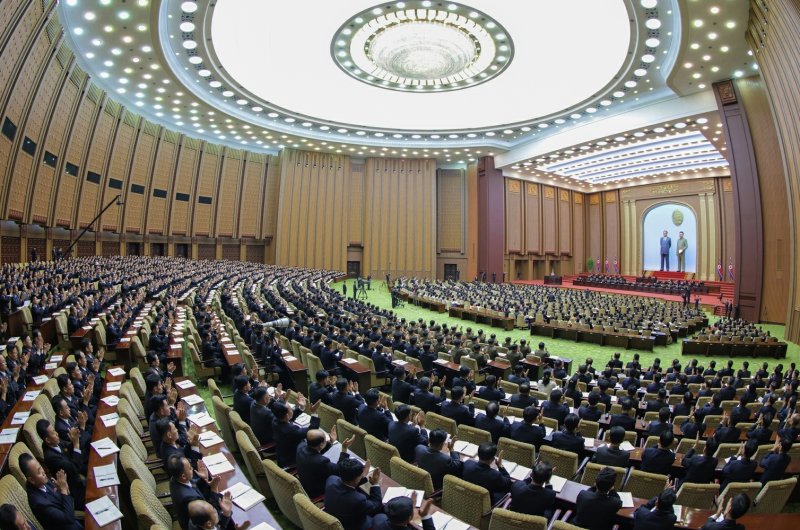
Kim Jong Un, President of the State Affairs Commission, declared in his closing address at the 9th Congress of the Workers' Party of Korea in February that he would "permanently exclude South Korea from the category of compatriots." However, because the Party Congress last month did not disclose whether the party rules related to inter-Korean relations were amended, it remains uncertain whether the constitution will be revised and whether any changes will be made public.
The agenda also includes the "election of the President of the State Affairs Commission" and "elections for state leadership bodies and committees of the Supreme People's Assembly." As a result, Kim Jong Un is expected to be reappointed as President of the State Affairs Commission. Appointments to key state posts, including the premier of the Cabinet and members of the State Affairs Commission, are also likely. The assembly is further expected to discuss implementation of the Five-Year Plan for National Economic Development presented at the Party Congress, the settlement of the 2025 state budget, and the 2026 state budget.
Attention is also focused on whether Kim Jong Un will use a policy speech during the Supreme People's Assembly session to send new messages toward the United States and South Korea. The Chairman of the Standing Committee of the Supreme People's Assembly, who serves as the head of the body, is also expected to be replaced. Choe Ryong Hae, the current Chairman of the Standing Committee of the Supreme People's Assembly, was dropped from the Central Committee of the Workers' Party of Korea at the 9th Party Congress and was also left off the list of deputies, suggesting he will step down. Jo Yong-won, formerly the party's organizational secretary, is being mentioned as his likely successor. Although Jo Yong-won holds the position of Member of the Presidium of the Politburo of the Workers' Party of Korea, he did not take on any additional senior posts such as party secretary or department director at the latest Party Congress, which increases the likelihood that he will become Chairman of the Standing Committee. Jo is known to have helped consolidate Kim Jong Un's grip on power by playing a key role in the purge of Jang Song Thaek, a powerful figure who had remained influential from the Kim Jong Il era.
[email protected] Kim Kyung-soo Reporter