From Appalachia to Mar-a-Lago — How the War with Iran Is Testing J. D. Vance
- Input
- 2026-03-22 06:04:20
- Updated
- 2026-03-22 06:04:20
#. February 14, 2025.
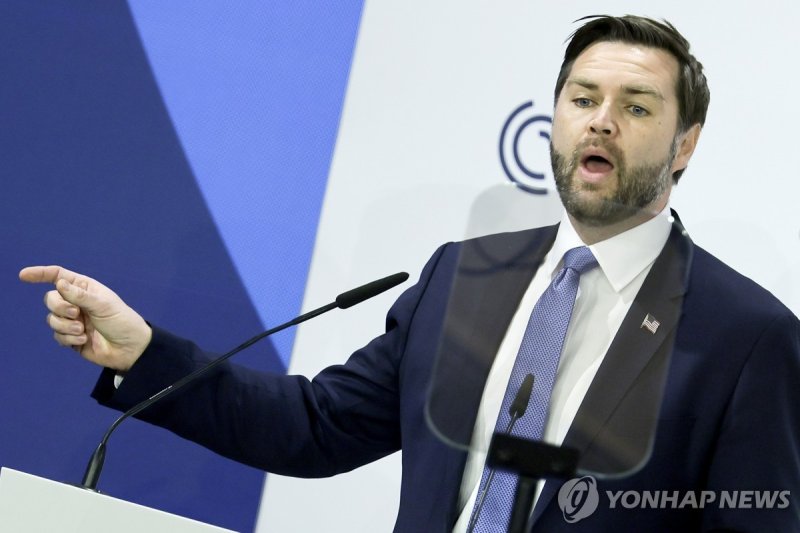
It was the morning after a 24-year-old Afghan asylum seeker had driven a car into a crowd in a Munich square, killing two people and injuring 37. The bloodstains had barely dried when Vice President J. D. Vance stepped up to the podium. It was his first visit to Europe since taking office, and all eyes were on him."The greatest threat to Europe is neither Russia nor China. It is the crisis from within.""The crisis Europe faces, the crisis we face together, is one of our own making.""If you are so afraid of your own voters that you run away from them, there is nothing the United States can do for you."Vance roared. His message was that Europe had brought this crisis upon itself and would have to solve it itself. The European leaders in the room were stunned into silence. Even after he finished, they did not applaud. Vance, however, did not waver.
Foreign media described the scene as having a "stunned" atmosphere and called his remarks a "blistering attack" on Europe’s leaders.
The speech went far beyond routine diplomatic language. It was a declaration that the United States would change how it viewed its allies, and a moment that previewed what role Vance intends to play in the power struggle of 2028. It was also the stage on which Vice President Vance openly affirmed the "neo-isolationism" that underpins his support for President Trump.#. February 28, 2026.
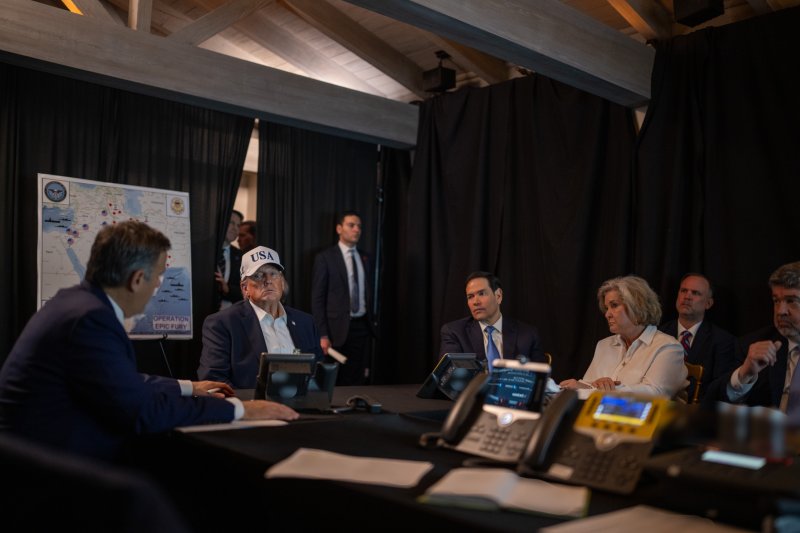
Near midnight, guests in tuxedos and evening gowns were raising glasses of champagne in the Mar-a-Lago ballroom. On the far side of that gilded hall, behind layers of black curtains, a very different scene was unfolding.
The director of the Central Intelligence Agency (CIA), the secretary of state, and the secretary of defense slipped in one by one, out of sight of the crowd. A map of the Middle East was set up on an easel. President Donald Trump appeared first in the ballroom, shouted, "I hope everyone is having a great time," danced briefly to "God Bless the USA," and then said he had to "go to work" as he left.
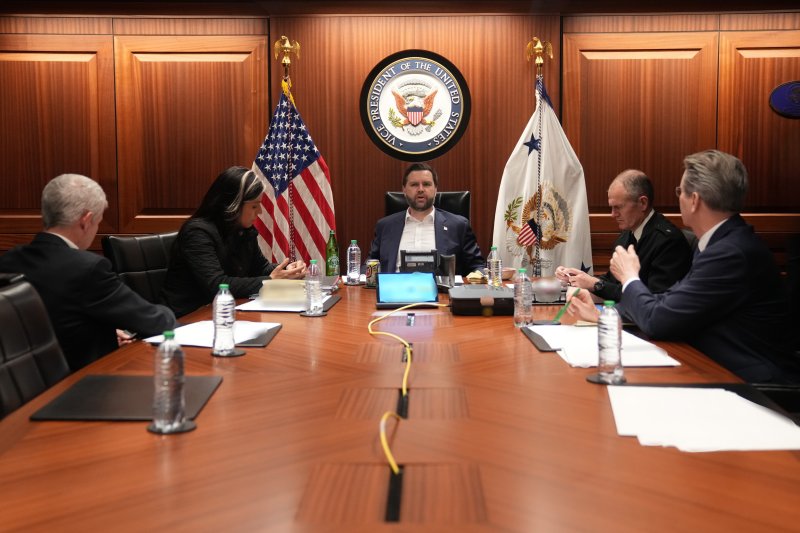
After that, Trump, Secretary of State Marco Rubio, and White House Chief of Staff Susie Wiles watched as U.S. forces struck the Islamic Republic of Iran, signaling the opening of a new Middle East war. Vice President Vance joined from the White House Situation Room via secure phone line, seated next to Director of National Intelligence (DNI) Tulsi Gabbard, one of the administration’s most outspoken skeptics of military action against Iran. National Broadcasting Company (NBC) commented that "the seating chart said it all."
Rubio at his side, Vance on his own
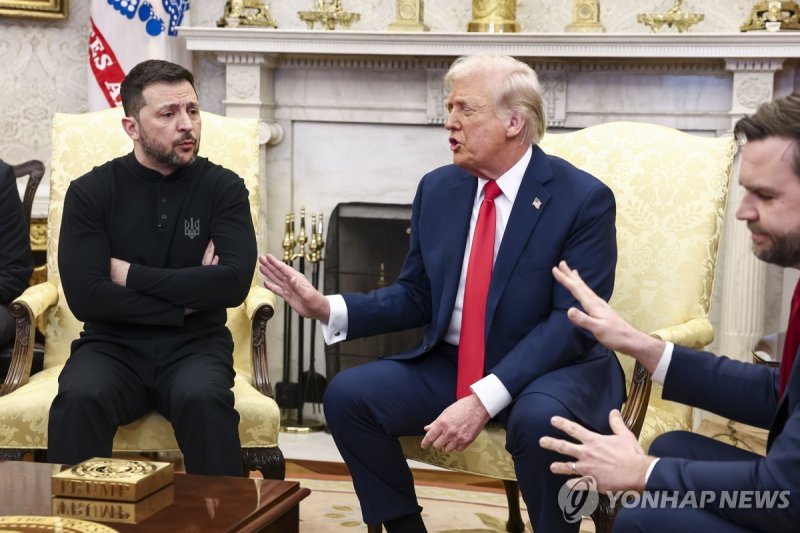
"In my opinion, Marco will go down as the greatest secretary of state in history. That is my view, of course. I may be a little biased because I like him.""Marco subdues his counterparts with a gentle touch, but in the end he delivers the decisive blow.""He [Vance] was in a different place from me philosophically on striking Iran. He was less enthusiastic than I was about participating in the Iran operation, but he was still pretty passionate."After the strikes began, this is how President Trump assessed Vice President Vance and Secretary Rubio. In the span of a year, the dynamic had shifted. From the operation to capture Venezuelan leader Nicolás Maduro at the start of the year, Rubio had been playing a central role.Within the MAGA movement supporters, Vice President Vance has been a standard-bearer for "neo-isolationism." That stance was his core political asset. While President Trump was ordering and personally directing the strikes on Iran, Vance was largely out of sight. A few days after the air raids, he appeared on Fox News and said this:
"I said this before the war began, and I will say it again. There is no way President Trump will allow this country to be dragged into years of war without a clear end point or objective."
According to Cable News Network (CNN), Vance was the one who voiced the most serious concerns when Trump first raised the possibility of war with Iran. Once he realized war was inevitable, however, he did not resist and fell in line. Even so, at his core he remains deeply reluctant to see the United States intervene in foreign wars.
In early 2023, Vance published an opinion piece in The Wall Street Journal (WSJ) titled "Trump’s Best Foreign Policy? Not Starting Any Wars." The subtitle read, "I support him in 2024 because I know he won’t recklessly send Americans into foreign combat."
In that column, Vance wrote, "My entire adult life has been shaped by presidents who plunged America into unwise wars.""Despite enormous pressure from within his own party and even from inside his own administration, Trump did not start a war during his four years in office. Not starting wars may sound like a low bar. But it reflects the hawkish tendencies of Trump’s predecessors and of the foreign-policy establishment they followed so blindly."On the 2024 campaign trail, he also argued that "a war with Iran is not in America’s national interest and would be enormously costly."
The making of an Appalachian boy
Vance’s "neo-isolationism" did not spring from a simple political calculation. Its roots reach back much further, into his own personal history.
His childhood story is already well known. His memoir, "Hillbilly Elegy: A Memoir of a Family and Culture in Crisis," was a bestseller and was later adapted into a film.
In 1984, in Middletown, Ohio—a small Rust Belt city where Scots-Irish migrants from the hills of Appalachia in Kentucky had settled around factories—Vance was born. His mother was addicted to drugs. She drove while high and fell apart in front of her child.
In that chaos, it was his grandmother who held on to the boy. A devout Christian, she swore constantly and kept a loaded handgun hidden in the silverware drawer. It was there to protect her grandson. Vance enlisted in the Marine Corps, served in Iraq, and later attended The Ohio State University and Yale Law School.
Peter Thiel, and a fateful lecture
In 2011, at Yale Law School, Peter Thiel took the lectern. His message was this: "Students at elite schools like Yale are obsessed only with competing against one another, and pay no attention to creating real value. America is technologically stagnant, and the blame lies with elites who chase prestige without creating anything."
Vance later described this lecture as "the most important moment" of his time at Yale Law School. Afterward, he turned away from a conventional legal career and moved into venture capital, building a Silicon Valley network through his relationship with Thiel.
Thiel brought Vance into his venture capital firm, Mithril Capital, and wrote a blurb for Hillbilly Elegy. In Vance’s 2022 Ohio Senate race, Thiel poured in 15 million dollars—the largest single-donor contribution in the history of a Senate campaign.
It was during this period that Vance’s gaze shifted away from Washington and toward "America at home." He came to believe that the collapse of domestic communities posed a greater danger than wars overseas. That conviction later crystallized into his consistent message that "America is exhausted by endless wars."
In February 2021, Thiel took Vance to Mar-a-Lago and introduced him directly to Trump. It was Vance’s first meeting with the former president. There is no public record of what they discussed. The outcome, however, is clear: observers say Vance was assigned a new political role within the broader project of Silicon Valley billionaires.
As the 2024 election approached, Silicon Valley’s wallets opened in earnest. In June 2024, Vance worked with David Oliver Sacks and Chamath Palihapitiya to organize a Trump fundraiser in San Francisco. Tickets cost up to 300,000 dollars per person, and the event raised a total of 12 million dollars.
Then, on July 15, 2024, when Trump announced Vance as his running mate, Silicon Valley erupted. Immediately after Vance was named the vice-presidential nominee, a super PAC called America PAC was launched with participation from the Winklevoss twins, Joe Lonsdale of Palantir Technologies, Douglas M. Leone of Sequoia Capital, and others. More than 8 million dollars had already been raised.
Economist Samuel Hammond offered this diagnosis: "If there is one idea that unites the Silicon Valley right, it is the belief that the system is broken—and the conviction that they can build a better one."
The Rust Belt boy and the tech billionaires were expressing the same anger in different languages. And at the intersection of that anger, the politician named J. D. Vance was born.
[email protected] Lee Byung-chul Reporter