Gwanghwamun Fully Fortified: Metal Detectors and Body Searches Required for Entry [BTS Comeback]
- Input
- 2026-03-21 08:53:38
- Updated
- 2026-03-21 08:53:38
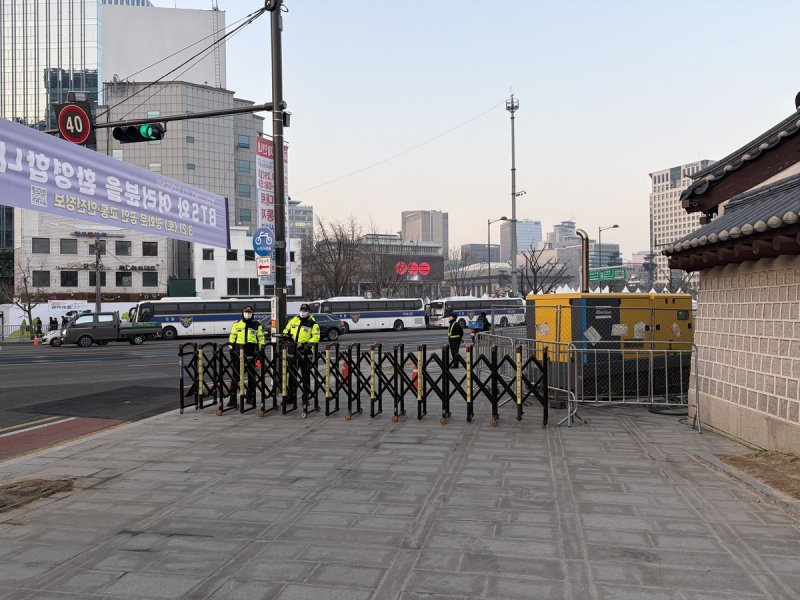
Safety fences have been set up over a 1.2-kilometer stretch from the front of the Gwanghwamun Woldae to City Hall Station on subway lines 1 and 2, and across a 200-meter east–west section. To pass through the square, people must go through one of 31 gates installed along the fences.
Walk-through metal detectors (MD) have been installed at the gates to screen for dangerous items, and police officers dispatched to the site are conducting body and belongings checks.
Access to 31 nearby buildings is also being restricted. The measure is intended to block indirect entry and rooftop viewing and to reduce the risk of falls and other safety accidents. As a result, the National Museum of Korean Contemporary History has been temporarily closed, and the Sejong Center for the Performing Arts has canceled performances.
Road controls that began the previous night are continuing. Sejong-daero will be completely closed to traffic until 6 a.m. on the 22nd, the day after the concert.
Sajik-ro and Yulgok-ro will be closed to traffic from 4 p.m. to 11 p.m. on the 21st, and Saemunan-ro and the Gwanghwamun Underpass will also be off-limits from 7 p.m. to 11 p.m.
The government has set up an on-site situation room at Government Complex Seoul and plans to monitor crowd density in real time.
A total of 15,000 personnel, including police, firefighters, and public officials, are being deployed to the site.
According to the Seoul Metropolitan Government, as of 7:25 a.m. on the 21st, about 8,000 to 8,500 people had already gathered around Gwanghwamun and Deoksugung Palace. This is an increase of 172.2% compared with three hours earlier and 42.7% compared with one hour earlier.
[email protected] Lee Hyun-jung Reporter