"Is 1,500 won already the peak for the exchange rate?" Oversold signals raise prospects of a pullback
- Input
- 2026-03-20 19:28:44
- Updated
- 2026-03-20 19:28:44
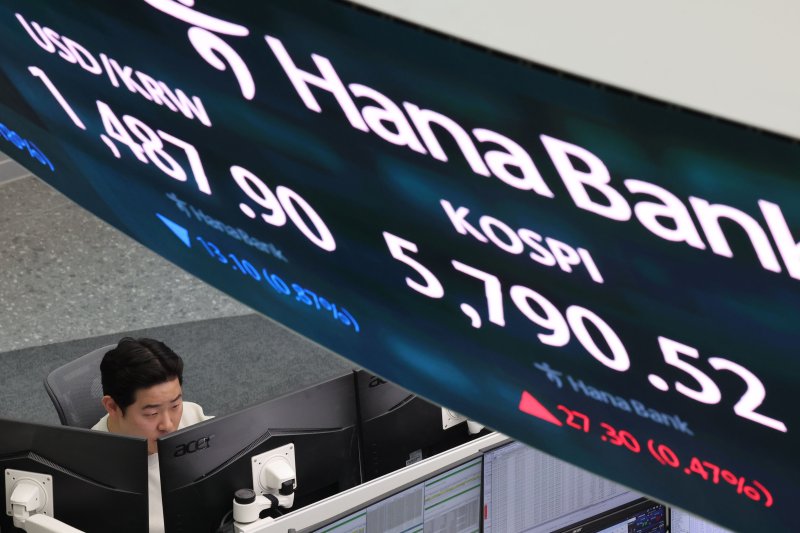
The Financial News reported that as the won–dollar exchange rate has reached the psychologically important 1,500-won level, tension is rising across financial markets. Investors are now focused on whether the rate, which spiked in a short period amid heightened geopolitical risks in the Middle East, will enter a new upward phase or mark a short-term peak and start to retreat.
According to the Korea Exchange on the 20th, the won–dollar rate closed at 1,500.1 won, up 5.1 won from the previous trading day. This is the second time in two sessions that the rate has climbed back above 1,500 won after first breaking through that level on the 18th.
Brokerages generally assess that "while further gains are possible, the current level is overheated." Many analysts point out that the rate has hit a key technical resistance level and that the won now appears excessively undervalued, suggesting it is more likely to fall back toward the 1,400-won range than to stabilize in the 1,500s.
In a report, Jeong Yong-taek, a researcher at IBK Securities, stated, "We judge that the won–dollar exchange rate, having surpassed 1,500 won, has reached a short-term peak," adding, "A temporary further rise is possible, but we see a higher probability of a pullback into the 1,400-won range than of a firm settlement above 1,500 won."
The immediate driver of the recent surge in the exchange rate has been geopolitical risk triggered by the Iran crisis. Heightened tensions in the Middle East have amplified concerns over oil supply, which, together with a stronger dollar, has put additional downward pressure on the won. Analysts note that volatility has been further magnified because the Korean economy is highly dependent on energy imports and particularly sensitive to developments in the region.
In addition, fading expectations for interest rate cuts by the Federal Reserve System (the Fed) have kept upward pressure on the dollar intact, contributing to the rise in the exchange rate.
However, market views are sharply divided over whether the rate will firmly hold above 1,500 won.
The upside scenario remains in play. If geopolitical risks persist, the preference for safe-haven assets could strengthen, providing further momentum for the exchange rate to climb.
On the other hand, there are also strong downward factors. The government's verbal interventions and its clear willingness to defend the currency, the capital inflows expected from the capital gains tax exemption on the Reshoring Investment Account (RIA), and Korea's inclusion in a global bond index in April could all exert downward pressure on the exchange rate. The strength of the domestic stock market, led by semiconductor shares, is another factor supporting a stronger won.
Although the won–dollar rate has been on a clear upward trend since 2022, the 1,500-won level serves as a primary resistance zone within that trend. In past surges, peaks have repeatedly formed around this level, which is why many see a correction as more likely than a further sustained rise.
Jeong analyzed, "The current exchange rate has reached a technically significant resistance level," and added, "If the Iran crisis does not escalate to an extreme degree, there is a high likelihood that we will see a short-term reversal and a pullback."
[email protected] Reporter Choi Doo-seon Reporter