"Reducing Reliance on China" U.S. and Japan to Jointly Build Critical Minerals Supply Chain
- Input
- 2026-03-20 10:59:15
- Updated
- 2026-03-20 10:59:15
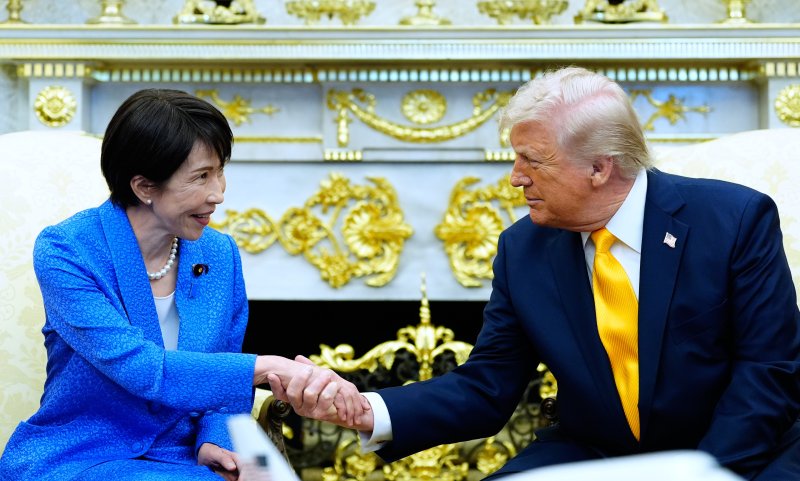
The United States of America (US) and the Government of Japan announced a joint project on the 19th (local time) to strengthen the supply chain for critical minerals. Four projects in the US are covered, including Mitsubishi Materials Corporation’s rare earths business and Mitsubishi Corporation’s copper mine investment.
According to Nihon Keizai Shimbun (The Nikkei) on the 20th, the announcement coincided with the U.S.-Japan summit held in Washington, D.C.
Details of the initiative were released in a joint fact sheet under the name "U.S.-Japan Critical Minerals Project." The projects include a rare earths refining project in the State of Indiana, a copper smelting project in the State of Indiana, a lithium mine development project in North Carolina, and development of the Copper World copper mine in the State of Arizona.
Mitsubishi Materials Corporation is considering investing in a rare earths project in the State of Indiana that is being promoted by a local company. The company also plans to discuss enhancing recycling and smelting capabilities. In addition, it is exploring opportunities to cooperate with British-Australian resources company Rio Tinto in the U.S. copper market.
Mitsubishi Corporation will invest in the Copper World copper mine project in the State of Arizona and pursue joint development. The goal is to produce up to 100,000 tons of copper per year starting around 2029.
Japanese participation is also being considered in a lithium project in North Carolina that is being developed by Albemarle Corporation, the world’s largest lithium producer.
The move is seen as a strategy to diversify supply chains in response to the People’s Republic of China (China) tightening export controls. China has recently restricted exports of rare earths and other critical minerals, increasing economic pressure on the US, Japan and other countries. A disruption in critical mineral supply chains could affect economic activity across the board.
The two governments have also drawn up an action plan to strengthen the resilience of critical mineral supply chains.
The action plan states, "Critical minerals are strategic assets essential to modern industry and the innovation-driven economy," adding, "Diversified, robust, and market-based supply chains are vital to economic and national security, and it is necessary to address existing vulnerabilities." To that end, the two countries plan to cooperate on joint stockpiling, research and development of new technologies, and sharing geological information on mineral deposits.
The United States government and the Government of Japan also signed a Memorandum of Understanding (MOU) on the development of marine mineral resources. They will establish a working group and explore opportunities for cooperation by sharing information on rare earths in the waters around the Ogasawara Islands and Minamitorishima in the Tokyo Metropolis.
[email protected] Seo Hye-jin Reporter