Israeli foreign minister: "Operations against Iran will continue until the Iranian threat disappears"
- Input
- 2026-03-20 09:48:46
- Updated
- 2026-03-20 09:48:46
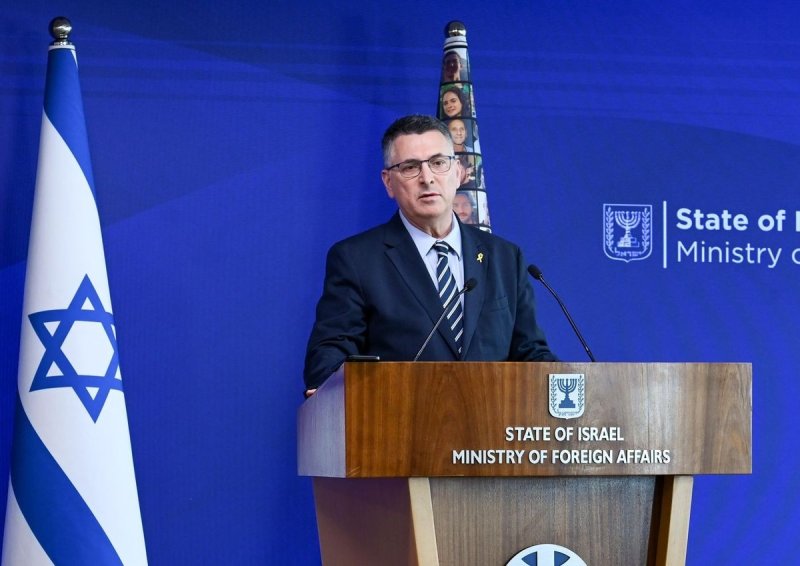
[Financial News, Tokyo = Correspondent Seo Hye-jin] Gideon Sa'ar, Israel's foreign minister, said on the 19th (local time) that joint operations by the United States of America (US) and Israel against the Islamic Republic of Iran would continue until the Iranian threat disappears, declaring, "Wars are driven by objectives, not by time."
Speaking in an exclusive interview with Japan's Yomiuri Shimbun at the Foreign Ministry in Jerusalem the same day, Foreign Minister Sa'ar made these remarks. He is a member of Israel’s Security Cabinet, alongside Prime Minister Benjamin Netanyahu and defense minister Israel Katz, and is in a position to approve military operations in the Islamic Republic of Iran and Lebanon.
Regarding the US and Israeli strikes on the Islamic Republic of Iran, Sa'ar argued that the operations were necessary acts of self-defense, saying, "The Iranian nuclear program and ballistic missile plans posed an imminent threat that would have entered an irreversible stage within weeks or months." He added that the Islamic Republic of Iran "was trying to move its nuclear program into very deep underground facilities that could not be destroyed by airstrikes," and insisted, "It was extremely important to act now."
Asked about criticism from the international community that the use of force without a United Nations Security Council (UNSC) resolution violates international law, he stressed that the operations were for self-defense, saying, "Article 51 of the Charter of the United Nations recognizes the right of self-defense for all states." He also argued that seeking a UNSC resolution is "not realistic" because of the possibility that China and the Russian Federation would exercise their veto power.
Sa'ar emphasized that the goal of the operations against the Islamic Republic of Iran is "to eliminate threats to Israel's existence." He continued, "First, we are targeting the destruction of the nuclear program, as well as ballistic missile production and the broader military-industrial sector."
On the political system of the Islamic Republic of Iran, he said, "We cannot change the Iranian regime," but added that "the regime itself is also a target," hinting at expectations that popular uprisings by the Iranian people could follow a weakening of the regime.
Regarding Israel's strike on gas facilities in southern Iran on the 18th, he explained that it was a response to the Islamic Republic of Iran targeting Israel's airports and energy infrastructure. "We have no intention of striking again, but if we choose to, we can destroy the entire facility," he said.
On the situation in the Gaza Strip in Palestine, he stated that "the key is the disarmament of the Islamist organization Hamas and the demilitarization of Gaza," and expressed willingness to cooperate with the second phase of the peace plan proposed by President of the United States Donald Trump.
Asked about criticism from the international community that more than 70,000 deaths in roughly two and a half years of fighting in the Gaza Strip amount to "genocide," he responded, "We have always acted to minimize civilian casualties."
Regarding relations with Japan, he said, "Israel can cooperate with Japan in a wide range of areas, including defense cooperation." In particular, on ensuring safe navigation in the Strait of Hormuz, he added, "We encourage US allies such as Japan to consider what contributions they can make."
[email protected] Seo Hye-jin Reporter