US, desperate to stabilize oil prices, signals it may lift Iran oil sanctions after Russia
- Input
- 2026-03-20 11:49:38
- Updated
- 2026-03-20 11:49:38
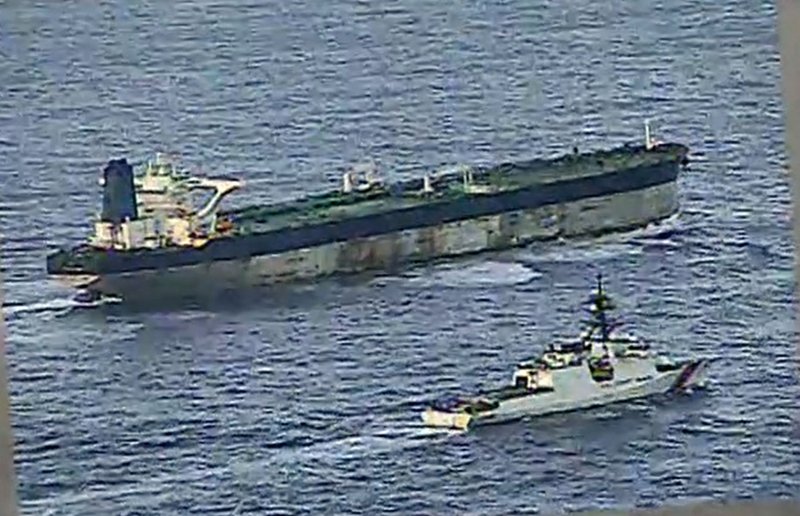
The Financial News reported that the government of the United States of America (US), which is currently carrying out airstrikes on the Islamic Republic of Iran (Iran), has signaled it may lift sanctions on Iranian oil to cool international oil prices that have surged due to the Iran crisis. Sanctions on Russia’s oil are already scheduled to be lifted starting on the 19th (local time).
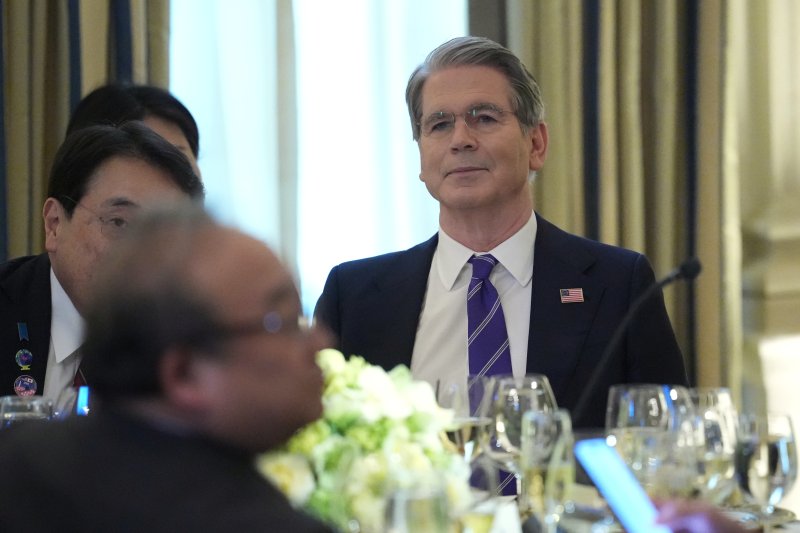
Scott Bessent, head of the U.S. Department of the Treasury (Treasury Department), said in an interview with Fox News on the 19th, "Within the next few days, we may lift sanctions on Iranian crude oil that is currently at sea," adding that the volume involved is "about 140 million barrels."
He noted that the exact figure depends on how it is calculated, but explained that this is oil Iran has been pushing out to sea and is equivalent to roughly 10 days to two weeks of supply, which otherwise "would all have gone to China." Bessent described the easing of sanctions as a move that is "essentially about using Iranian crude to keep Iran in check while keeping oil prices low for the next 10 to 14 days."
He further explained that if the blockade of the Strait of Hormuz results in a daily shortfall of 10 to 14 million barrels, this volume could help stabilize the market for about three weeks. Bessent stressed, "We have a range of tools at our disposal, and there is much more we can do if necessary."
Since taking office last year, the Trump administration has steadily added companies involved in Iran’s oil sales and related tanker operators to its sanctions list. Once designated by the Office of Foreign Assets Control of the U.S. Department of the Treasury (OFAC), all assets located in the US or controlled by US persons are frozen, and transactions with US individuals and institutions are broadly restricted.
On January 23, OFAC added nine tankers that had secretly transported Iranian oil by falsifying their nationality, along with the companies that own and operate those vessels, to its sanctions list. The "Iranian crude oil at sea" that Bessent referred to on the 19th is oil produced in Iran and loaded onto tankers but effectively stranded because sanctions make it difficult to trade or unload.
The latest move comes as Iran has responded to US attacks by blocking the Strait of Hormuz, through which about 20% of the world’s seaborne oil trade passes, sending international oil prices sharply higher. In a report on the 17th, The New York Times (NYT) claimed that when the Treasury Department temporarily eased sanctions on Russia’s oil on the 12th, it also relaxed sanctions on ships and companies linked to Iran. The Trump administration had imposed sanctions on Russian oil companies and officials over the war in Ukraine, but after launching strikes on Iran, it decided to temporarily lift some Russia-related oil sanctions to stabilize prices. In a statement on the 19th, OFAC said it would authorize, until 12:01 a.m. on April 11 Eastern Time, transactions related to the sale, transport, and unloading of Russian crude oil and petroleum products that were loaded before 12:01 a.m. on March 12. However, it explicitly banned transactions involving Iran, North Korea, Cuba, and the Crimean Peninsula, Ukraine, which is occupied by Russia.
Bessent also mentioned national oil stockpiles around the world, saying, "Some countries will make additional releases," and added, "The US may unilaterally release more from its strategic petroleum reserve (SPR) to bring prices down." On the 11th, the Trump administration announced that it would release 172 million barrels from the US SPR over roughly four months to help stabilize prices. Bessent dismissed speculation that the Treasury Department might intervene in the oil futures market, saying, "There is speculation that the Treasury Department will step into the (oil) futures market, but we will never do that," and emphasized, "We intervene in the physical market, not in the financial market."
[email protected] Jong-won Park Reporter