WTO warns trade growth will be halved as wars cool the global economy
- Input
- 2026-03-20 06:13:32
- Updated
- 2026-03-20 06:13:32
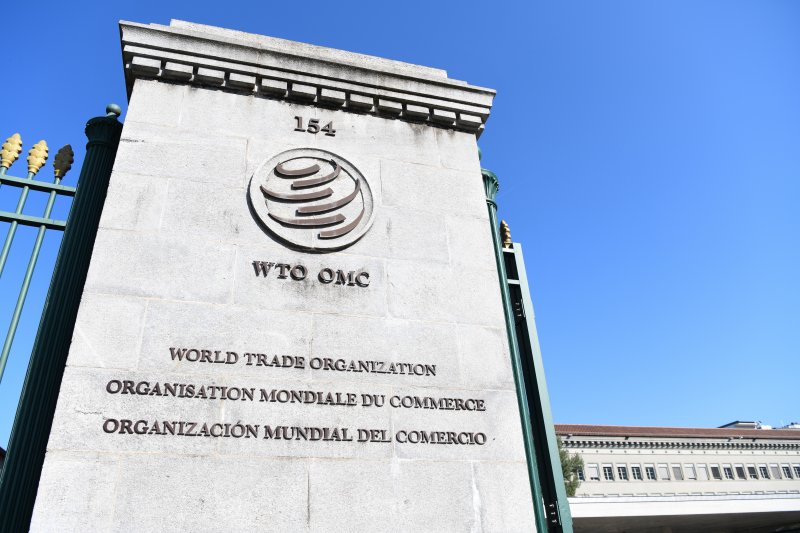
According to The Financial News, the World Trade Organization (WTO) has warned that global trade growth will slow markedly this year as energy prices rise in the wake of the war in the Middle East. It noted that if the conflict drags on and crude oil and Liquefied Natural Gas (LNG) prices remain elevated, trade growth could weaken even further.
In its semiannual trade outlook released on the 19th (local time), the WTO forecast that global merchandise trade will grow by 1.9% this year. This is a steep drop from last year’s 4.6%. The organization also projected that services trade will expand by 4.8%, down from 5.3% last year.
WTO Director-General Ngozi Okonjo-Iweala stated, "Rising energy prices are threatening food security and increasing costs for consumers and businesses, thereby amplifying risks to global trade." She stressed that uncertainty in the trade environment has surged as the war in the Middle East continues.
In the new outlook, the WTO presented two scenarios. Under the baseline scenario, which assumes a gradual stabilization of trade conditions, merchandise trade is expected to grow by 1.9% and services trade by 4.8%. Global economic growth is projected at 2.8% for both this year and next, slightly below last year’s 2.9%. This scenario factors in stronger demand for artificial intelligence (AI)-related technologies and digital services, as well as a broad easing of trade tensions.
The alternative scenario assumes that energy prices remain high throughout the year, in which case the outlook deteriorates further. Merchandise trade growth would fall by 0.5 percentage points to 1.4%, while services trade growth would drop by 0.7 percentage points to 4.1%. Global Gross Domestic Product (GDP) growth would also be revised down to 2.5%.
The WTO assessed that higher energy prices are not just raising costs, but could also put broad pressure on global supply chains and demand structures. In particular, rising crude oil and LNG prices are likely to push up both transportation and production costs, potentially accelerating the contraction in trade.
Ngozi Okonjo-Iweala emphasized, "Members need to maintain predictable trade policies and strengthen the resilience of supply chains," adding, "This will help cushion the blow to the global economy."
[email protected] Reporter Kim Kyung-min Reporter