Five Years of Qatar LNG Disruption Looms: Will South Korea Face a Direct Hit on Gas Prices?
- Input
- 2026-03-20 06:35:01
- Updated
- 2026-03-20 06:35:01
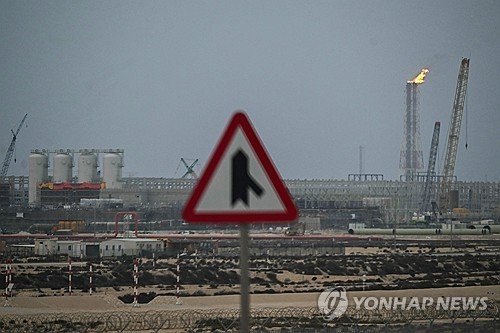
[Financial News] State-owned QatarEnergy has said it may declare force majeure for up to five years on long-term Liquefied Natural Gas (LNG) supply contracts, including those with South Korea, after major LNG facilities were struck. The conflict in the Middle East is now shaking not only global oil prices but also the long-term LNG contract market, adding uncertainty to South Korea’s winter gas procurement and city gas tariffs.
Saad Sherida al-Kaabi, chief executive officer (CEO) of QatarEnergy, said on the 19th (local time), "We may have to declare force majeure on long-term supply contracts to South Korea, China, Italy and Belgium." He explained that the attack damaged 17% of Qatar’s LNG export capacity and that repairs could take three to five years. The damage amounts to about 12.8 million tons a year, he noted, adding that two of the 14 LNG production lines at the Ras Laffan facility and one of its two Gas-to-liquids (GTL) facilities were directly hit.
Al-Kaabi said the annual revenue loss from the three damaged facilities alone reaches 20 billion dollars (about 29.842 trillion won). These facilities are core national infrastructure that cost 26 billion dollars (about 38.7946 trillion won) to build, and he criticized the attack, saying they are "facilities that should never have been targeted." Because of the damage, exports of not only LNG but also condensate, Liquefied Petroleum Gas (LPG) and helium are expected to decline.
The main concern is South Korea. South Korea is one of the largest importers of Qatari LNG. If QatarEnergy actually suspends performance of its long-term contracts, South Korea will likely have to make up the shortfall on the spot market. Spot LNG is typically far more volatile in price and more expensive than long-term contract volumes. Higher fuel costs for power generation and industrial use would eventually feed through into higher city gas and electricity bills.
Korea Gas Corporation (KOGAS) says its dependence on Qatari supplies is below 20% and that it currently holds inventories above the mandatory stockpile level, giving it room to cope at least through the end of the year. However, if the Middle East conflict drags on and overlaps with peak winter demand, upward pressure on procurement costs will be hard to avoid. In the near term, the more realistic risk is not a shortage of volumes but a sharp spike in prices.
The crisis has exposed structural vulnerabilities in the global LNG market, going beyond a temporary supply disruption. Qatar accounts for about 20% of global LNG supply, and most of its exports pass through the Strait of Hormuz. Earlier this month, Qatar had already declared force majeure on LNG loadings due to the escalating conflict. If importers in Europe and Asia move more aggressively to secure cargoes from the United States, Australia and Canada, South Korea could face fiercer competition for supplies.
The fallout is even greater because global majors such as ExxonMobil and Shell plc also hold stakes in the damaged assets. Al-Kaabi said ExxonMobil owns 34% of the S4 LNG production line and 30% of the S6 line that were affected. This shows the issue is not confined to a single Qatari facility but is evolving into a broader risk for the global energy supply chain.
[email protected] Kim Kyung-min Reporter