ECB holds rates steady, sharply raises inflation outlook on Middle East war risks
- Input
- 2026-03-20 05:43:50
- Updated
- 2026-03-20 05:43:50
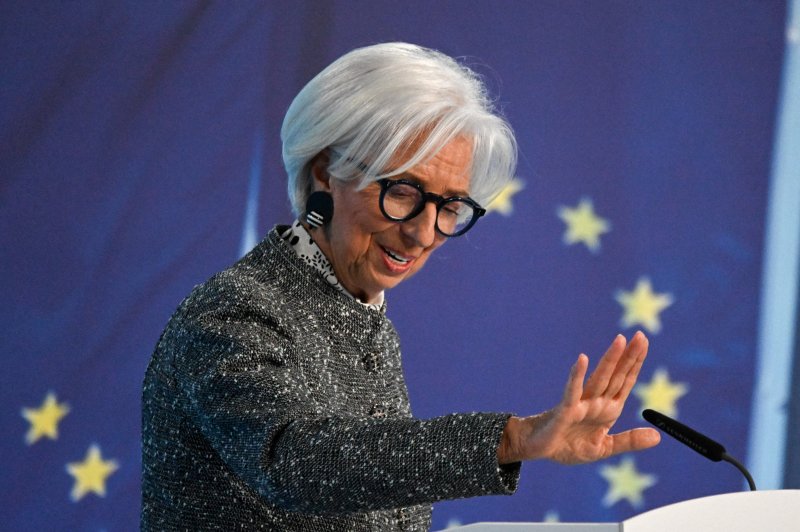
[Financial News] The European Central Bank (ECB), wary of potential energy-driven inflation shocks stemming from the war in the Middle East, kept all three of its key policy rates, including the deposit rate, unchanged on the 19th (local time). However, it sharply raised its inflation outlook for the Eurozone this year while cutting its growth forecast, prompting markets to shift quickly from expecting rate cuts within the year to considering the possibility of further tightening.
At its monetary policy meeting in Frankfurt, Germany, the ECB left the deposit facility rate at 2.00%, the main refinancing rate at 2.15%, and the marginal lending facility rate at 2.40%. ECB President Christine Lagarde said the decision was unanimous. The ECB had lowered the deposit rate by a total of 2.00 percentage points over one year through June 2025, and since July last year has kept rates unchanged for six consecutive meetings.
At the same time, in its quarterly economic projections, the ECB sharply raised its forecast for Eurozone consumer price inflation this year from 1.9% to 2.6%, compared with its estimate last December. It also lifted next year’s forecast from 1.8% to 2.0%. By contrast, it cut this year’s growth outlook from 1.2% to 0.9%, and trimmed next year’s forecast from 1.4% to 1.3%. The ECB assessed that the war in the Middle East has greatly increased uncertainty around its projections, creating upside risks for inflation and downside risks for growth.
Energy is the key variable. The ECB expects the war to push up energy prices and have a tangible impact on inflation in the short term. Lagarde warned, "If energy prices remain elevated, they could feed through into broader inflation via indirect and second-round effects." The ECB also presented an alternative scenario assuming a sharp spike in international oil and gas prices, under which it projected that inflation this year could surge to the mid-4% range in the worst case.
Market expectations have shifted rapidly as well. As recently as last month, investors largely anticipated additional rate cuts by the ECB within the year, but the recent surge in oil and gas prices has strengthened expectations of a rate hike instead. According to Reuters, financial markets are now pricing in the possibility of more than two additional rate increases by the ECB this year. Investment bank Barclays also noted that if Brent crude oil stabilizes at around $100 per barrel and European gas prices hover near €70 per megawatt-hour, the ECB could move to raise rates.
The ECB is also under pressure not to repeat the criticism it faced in 2022 for reacting too slowly to the war in Ukraine. Although inflation and labor market conditions in the Eurozone are now far more stable than they were then, a prolonged energy shock could again fuel wages and service prices, potentially reigniting broad-based inflation. The ECB has maintained that it will make decisions meeting by meeting based on incoming data, but many observers view this meeting as a hawkish hold rather than a neutral one.
[email protected] Kim Kyung-min Reporter