Trump Asks Japanese Leader, “Why Didn’t You Tell Me About Pearl Harbor?” in Surprise Remark
- Input
- 2026-03-20 03:57:01
- Updated
- 2026-03-20 03:57:01
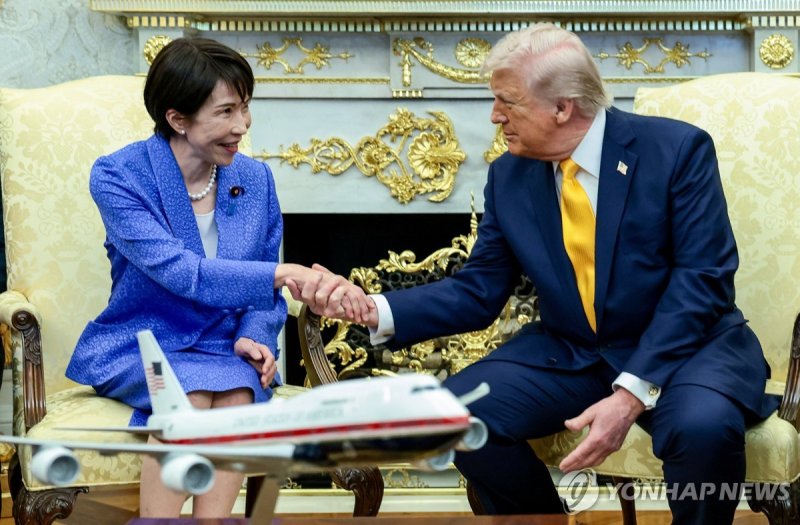
【Financial News, New York = Correspondent Lee Byung-chul】U.S. President Donald Trump brought up the Pearl Harbor attack during his summit with Japanese Prime Minister Sanae Takaichi. He raised a historically sensitive issue in a public setting, something U.S. presidents have traditionally avoided.
On the 19th (local time), during talks with Prime Minister Takaichi in the Oval Office at the White House in Washington, D.C., Trump referred to Japan’s 1941 attack on Pearl Harbor while explaining why the United States and Israel had not given advance notice to allies about their military operation against Iran.
“We didn’t tell anybody because we wanted it to be a surprise,” he said. “And who knows more about surprise attacks than Japan? Why didn’t you tell me about Pearl Harbor?” He then added, “Japan seems to value surprise attacks even more than we do.”
Some in the room laughed, but Prime Minister Takaichi remained silent and showed little visible reaction. According to foreign media reports, she was seen widening her eyes and taking a deep breath.
Observers say the remark runs counter to the basic principles of U.S. diplomacy in the postwar era. Since World War II, as it integrated Japan as a key ally, the United States has reframed the Pearl Harbor attack as a “historic tragedy” and has generally avoided direct criticism.
In fact, President Harry S. Truman invoked Pearl Harbor to justify the postwar occupation of Japan and the introduction of its pacifist constitution. But after the start of the Cold War, Washington lowered the temperature of its rhetoric as it made Japan a central pillar of its Asia strategy. It was during this period that a structure emerged in which Japan limited its own military power and relied on U.S. security guarantees.
Former President Barack Obama likewise visited Pearl Harbor in 2016 with then–Prime Minister Shinzo Abe to honor the victims, but he focused on highlighting reconciliation and cooperation between the two countries.
Experts noted that Trump’s comments broke with established diplomatic norms.
Mireya Solís, director of the Center for Asia Policy Studies (CAPS) at the Brookings Institution, told The New York Times (NYT), “There has been a very deep process of reconciliation between the United States and Japan,” adding, “To dwell at length on Pearl Harbor in front of a Japanese leader is something that has been deliberately avoided until now.”
[email protected] Reporter Lee Byung-chul Reporter