Middle East LNG Shock Triggers Energy Emergency, Asia Turns Back to Coal
- Input
- 2026-03-19 15:34:24
- Updated
- 2026-03-19 15:34:24
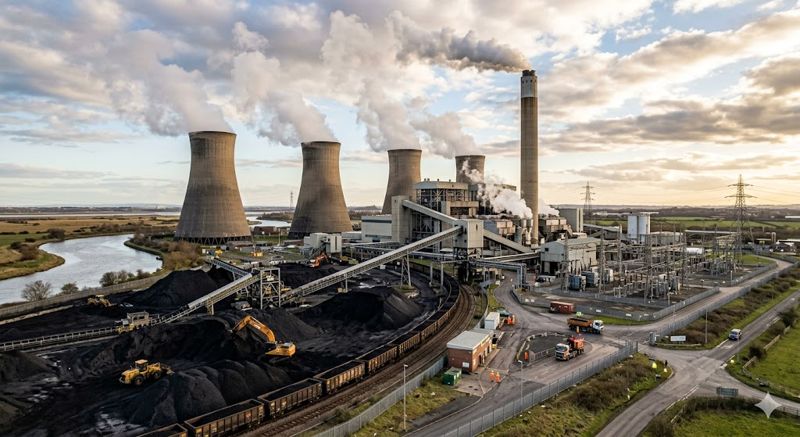
[Financial News] Asian countries that have long been criticized by the international community for the slow pace of their coal phase-out are now, ironically, reaping unexpected benefits from an unprecedented energy supply crisis triggered by the war in the Middle East.
On the 18th (local time), energy outlet Oilprice.com reported that coal power is filling the gap created by an unprecedented gas shortage after the State of Qatar, Asia’s key Liquefied Natural Gas (LNG) supplier, halted production and exports.
As a result of the Middle East war, the Ras Laffan Industrial City in the State of Qatar, the world’s largest LNG complex, has shut down, and passage through the Strait of Hormuz has been effectively blocked. The Asian market, which absorbs 85% of Qatar’s export volumes, has been hit immediately.
Spot LNG prices in Asia have surged 70% in a flash, reaching their highest level in three years.
In response, countries across Asia, including South Korea, China, Japan, and India, have begun using their existing coal power capacity as an emergency buffer.
Oilprice.com noted that analysts are saying Asia’s insistence on prioritizing energy security and supply diversification over emissions reductions is proving its worth in this crisis.
According to energy analytics firms Kpler and Vortexa, countries in Southwest Asia in particular have been hit especially hard.
Pakistan relies on the State of Qatar and the United Arab Emirates (UAE) for 99% of its LNG imports, Bangladesh for 72%, and India for about 53%, leaving them with virtually no alternative sources of supply.
China, with a 6% dependence on the State of Qatar, and Japan, at 5%, are in a relatively better position, but South Korea, Taiwan, and the Republic of Singapore are fully exposed to the spike in spot prices.
These countries rely on gas for at least 25% of their power generation. If the supply disruption from the State of Qatar drags on, they will have little choice but to sharply increase coal plant utilization to avoid power shortages.
Laura Page, an analyst at Kpler, said, "Spot prices are now so high that countries like Pakistan and Bangladesh have stopped buying and entered a stage of demand destruction, where demand is forcibly reduced. In the end, switching to coal-fired power or restricting gas supplies to industry is the only solution."
Coal prices have also risen due to the war, but the increase is around 14%, far more moderate than the 70% jump in LNG.
Global consulting firm Wood Mackenzie forecasts that, because of this supply shock, LNG demand in Northeast Asia will fall by about 4 million to 5 million tons below previous projections in the third and fourth quarters of this year.
Gas demand that had been expected to grow is now being curbed by soaring prices, and coal is stepping in to fill the gap.
Experts point out that this crisis has major implications for the global energy transition.
Oilprice.com analyzed that, while the goal of carbon neutrality is important, the situation has clearly demonstrated just how risky it is to depend heavily on a single fuel when geopolitical risks are ever-present.
jjyoon@fnnews.com Yoon Jae-joon Reporter