SMEs Say Plastic Price Hikes Have Hit a 'Limit' as Petrochemical Firms Report Shortages Despite Prioritizing Domestic Supply
- Input
- 2026-03-19 12:14:42
- Updated
- 2026-03-19 12:14:42
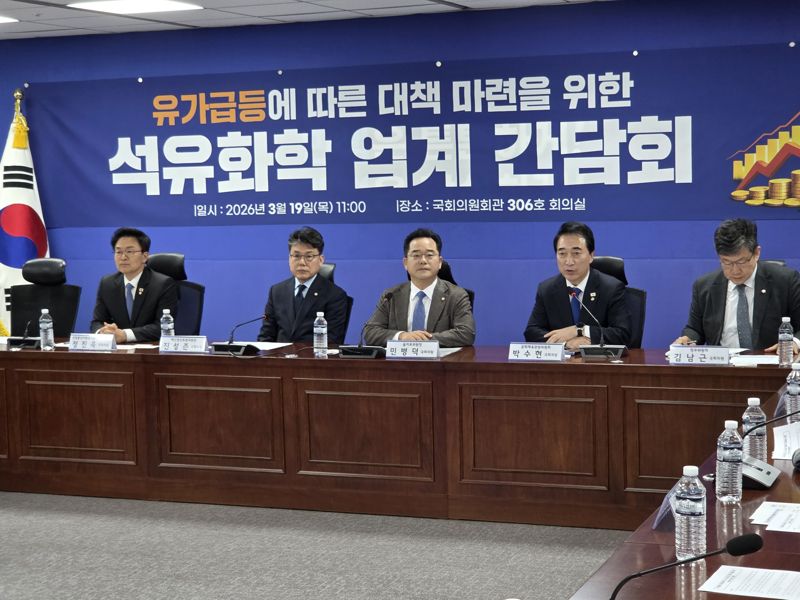
[Financial News] As international oil prices have surged, the cost of synthetic resins has risen repeatedly, increasing the management burden on small and medium-sized plastic manufacturers. In response, the government and industry are moving to devise countermeasures. Large corporations have reduced export volumes and expanded domestic supply due to disruptions in naphtha procurement, yet SMEs on the ground report that shortages and cost pressures are both intensifying.
The Democratic Party of Korea's Euljiro Committee held a "Petrochemical Industry Roundtable on Measures to Respond to Surging Oil Prices" at the National Assembly Members' Office Building in Yeouido, Seoul, on the morning of the 19th.
The roundtable brought together major petrochemical companies such as LG Chem, Hanwha Solutions, Lotte Chemical, and YeoChun NCC. Representatives from the Korea Federation of Plastic Industry Cooperative, the Korea Federation of SMEs (KBIZ), the Ministry of Trade, Industry and Energy, the Ministry of SMEs and Startups, the Ministry of Economy and Finance, the Korea Fair Trade Commission (KFTC), and the Financial Services Commission also attended in large numbers.
Recently, major petrochemical companies have been raising prices for synthetic resins as feedstock costs, including naphtha, have climbed. However, critics at the scene argue that these price hikes are being implemented without fully considering the time lag before cost changes are reflected in actual production costs or the current inventory situation. On top of this, increases in raw material costs are not being properly reflected in supply contract prices, concentrating the burden on small and medium-sized enterprises.
Min Byung-deok, head of the Euljiro Committee, stated, "For plastic manufacturers, about 80% of total cost is raw materials, so they are under what is essentially 'sandwich pressure' between soaring costs and supply prices that do not reflect those increases." He added, "We organized this meeting to hear the position of large corporations and to explore ways to achieve mutual growth."
Chae Jeong-muk, president of the Korea Federation of Plastic Industry Cooperative, explained, "Since the outbreak of the war, prices have risen by about 200,000 won per ton, and supply volumes have been adjusted. We have even been notified of the possibility of further price hikes and supply suspensions." He proposed measures including stabilizing plastic supply, preventing sudden price spikes, and introducing a system that links raw material prices to contract prices.
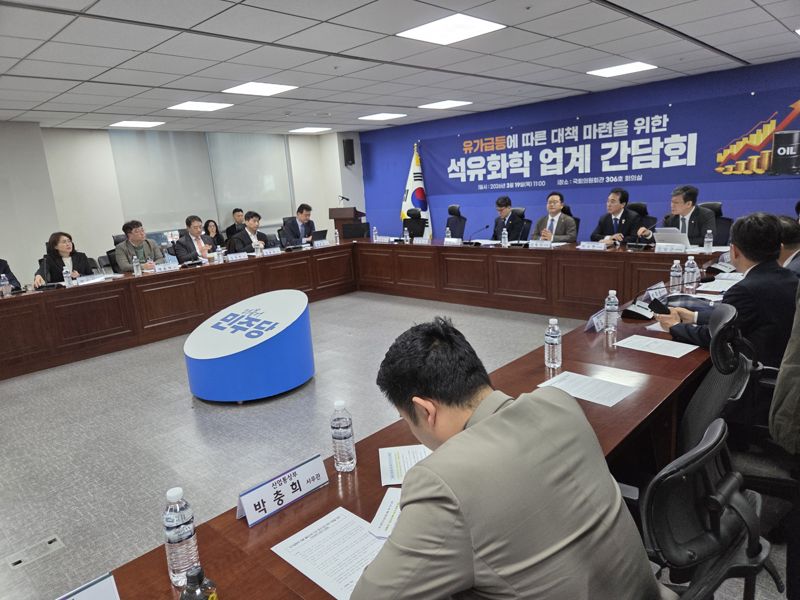
The petrochemical industry, which is already undergoing government-led restructuring, expressed its intention to do its utmost to stabilize domestic supply, while at the same time voicing concerns over difficulties in securing naphtha.
Jung Jong-eun, an executive director at LG Chem, said, "Due to the situation in the Middle East, securing naphtha has become difficult, and we are effectively in an emergency." He continued, "We are prioritizing domestic supply to stabilize the local supply chain, but if the situation drags on, it could take considerable time for conditions to normalize." He stressed, "Just like crude oil or LNG, we need a government-level stockpiling system for naphtha."
Kim Young-beon, an executive director at Lotte Chemical, noted, "We are pursuing government-led business restructuring amid a downturn caused by increased global supply, and the additional variable of the Middle East situation is making things even more difficult." He added, "For synthetic resins, we have reduced export volumes as much as possible in March and April and increased the share allocated to the domestic market from 45% to 90%, contributing to the stability of the domestic industrial ecosystem."
Bae Yong-jae, a senior executive at YeoChun NCC, said, "With the Strait of Hormuz effectively blocked, naphtha supplies have been cut off and prices have more than doubled, leaving us no choice but to keep cracker operating rates at a minimum in this emergency." He went on, "Upstream companies are maintaining supply while absorbing losses, so we need to discuss, across the entire value chain, how to share costs and ensure supply stability."
[email protected] Koo Ja-yoon Reporter