Oil at $100 Sends Shockwaves as U.S. Economy Faces Stagflation Warning Signs
- Input
- 2026-03-19 11:24:40
- Updated
- 2026-03-19 11:24:40
"The economy cannot withstand $100 oil"...Inflation fears mount
In an interview with the Financial Times (FT) on the 18th (local time), EJ Antoni, chief economist at The Heritage Foundation, stated, "The current U.S. economy is not in a position to withstand oil at $100 a barrel."
In August last year, Trump nominated Antoni, the chief economist at the conservative think tank The Heritage Foundation, to serve as commissioner of the Bureau of Labor Statistics (BLS). The move came right after he dismissed the previous commissioner, citing weak employment reports that he claimed were "rigged." However, Antoni’s nomination was abruptly withdrawn a month later.
Antoni argued, "The economy is weaker than we thought, and inflation is more severe," adding, "Last year, low energy prices helped hold down inflation, but now the situation has reversed and they will instead exert broad upward pressure on prices."
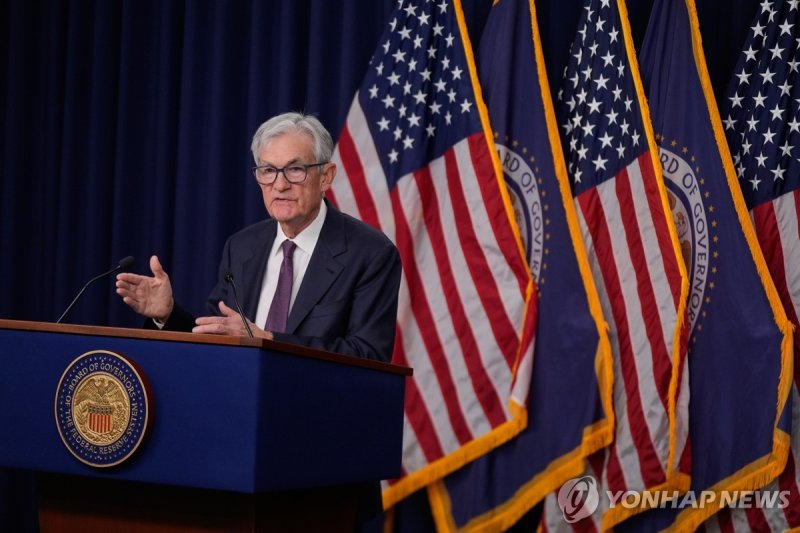
Jerome Hayden Powell, chair of the Federal Reserve System (Fed), also remarked at a press briefing that, "Over the past five years we have gone through tariff shocks and a pandemic, and now we are facing an energy shock of considerable magnitude and duration." He continued, "We do not know how that shock will actually play out," and added, "We are concerned that this situation could negatively affect inflation expectations."
Barclays recently estimated that if oil prices rise by 10%, inflation in the U.S. will climb by about 0.2 percentage points within one to two months. It warned that if oil stays above $100 a barrel for two to three months, inflation could surge to an annualized 3.5% by this summer and end the year slightly above 3%.
Data released the same day showed the Producer Price Index (PPI) for February rising 0.7% from the previous month, far exceeding the market consensus of 0.3%.
Growth slows, jobs deteriorate...Fears of stagflation becoming reality
Warning signs are already visible across the economy. U.S. growth in the fourth quarter of last year slowed sharply to an annualized 0.7%, down from 4.4% in the previous quarter. Labor market conditions are also cooling rapidly. In February, U.S. nonfarm payrolls fell by 92,000 from the prior month, the largest decline since December 2020, when jobs dropped by 185,000 in the immediate aftermath of the COVID-19 pandemic.
Joseph Eugene Stiglitz, Nobel laureate in economics and professor at Columbia University, warned that the U.S. economy is facing the risk of stagflation—high inflation combined with recession—saying, "Prices are rising due first to tariffs and now to the impact of war, while growth momentum is weakening."
Economists at Goldman Sachs forecast that if oil prices rise by $10 a barrel and remain elevated through the end of the year, the annual Gross Domestic Product (GDP) growth rate will fall by about 0.1 percentage points.
Concerns over stagflation, in particular, are spreading rapidly. The war with the Islamic Republic of Iran is putting simultaneous pressure on energy and financial markets, bringing both inflation risks and growth slowdown into sharp focus. Some analysts warn that if energy costs stay high for an extended period, stagflation—where recession and rising prices occur at the same time—could become a reality.
Caspar Hense, a portfolio manager at RBC BlueBay Asset Management, told Reuters, "The risk of a repeat of the 1970s is increasing," and cautioned, "If the war drags on and oil prices rise much further, the safe-haven status of government bonds could be shaken, and all asset classes could be affected."
pride@fnnews.com Reporter Lee Byung-chul Reporter