U.S.-Japan summit overshadowed by the ‘Iran factor’: 5 key issues
- Input
- 2026-03-19 11:14:09
- Updated
- 2026-03-19 11:14:09
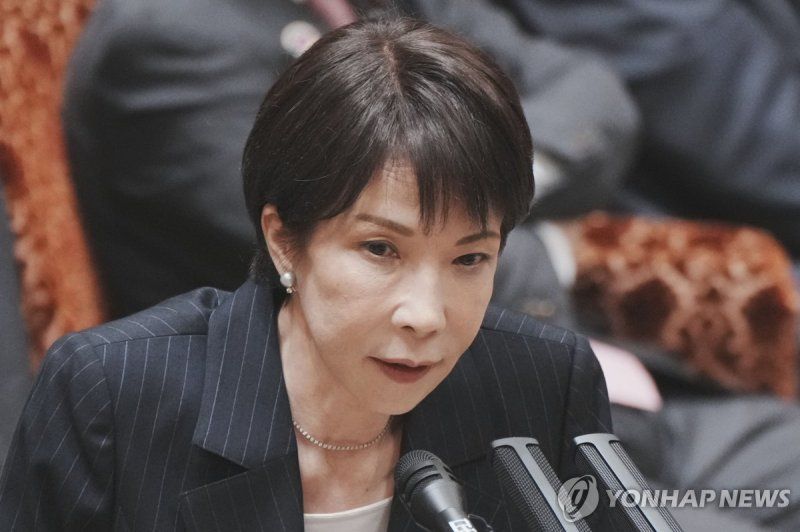
Tokyo — Correspondent Seo Hye-jin of The Financial News reports that Prime Minister Takaichi Sanae departed for Washington, D.C., on the night of the 18th aboard the government aircraft for a summit with President Donald John Trump. The U.S.-Japan summit is taking place amid an unexpected attack by the Islamic Republic of Iran, turning the question of whether Washington will ask Tokyo to dispatch naval vessels to the Strait of Hormuz into a central issue. The Japanese government is going into the talks on high alert, without a clear grasp of what specific demands Trump might raise. A complex mix of core security and economic issues is on the table, and the following five topics are expected to dominate the summit agenda.1) Iran crisis: Legal limits on JSDF deployment... room for a post-conflict roleThe U.S.-Japan summit will be held at The White House on the 19th local time.
Speaking before the Budget Committee of the House of Councillors on the 18th, Prime Minister Takaichi said regarding a possible dispatch to the Strait of Hormuz, "Under Japanese law, we will do what we are able to do, but we will clearly convey that we cannot do what we are not allowed to do."
President Trump had previously pressed Japan and several European countries to send naval vessels, but on the 17th he remarked that he "does not want help." According to The Asahi Shimbun, this briefly eased concerns within the Japanese government, yet there is no guarantee that he will refrain from making such a request once the leaders sit down face to face.
An official at the Ministry of Foreign Affairs of Japan stated, "We will not know what he will ask for until we meet him in person." A source at the Prime Minister's Official Residence of Japan also noted cautiously, "Even within the U.S. government, they do not fully grasp President Trump's intentions."
Tokyo’s basic plan is to stress the importance of freedom of navigation in the Strait of Hormuz and to express support for U.S. efforts to de-escalate the situation.
However, sending the Japan Self-Defense Forces (JSDF) into an active combat zone is legally difficult, and many in the government believe the risks would be excessive, especially when even the United States has not dispatched its own warships. In Europe as well, opposition and calls for caution are widespread.
Even so, Takaichi left the door open to a role after the fighting stops, saying the previous day, "I would not go so far as to say there is absolutely nothing we can contribute once a full cease-fire agreement is in place."2) Investment in the U.S.: Second-round package worth 108 trillion won, twice the firstLarge-scale Japanese investment in the United States will also be a major item on the summit agenda.
The Japanese government plans to present projects such as building Small Modular Reactors (SMRs), a next-generation nuclear power technology, in the United States as a kind of "gift" to President Trump.
Previously, in return for a bilateral tariff agreement, Japan pledged roughly 550 billion dollars (about 82.5 trillion won) in investment in the United States and has already announced a first batch of projects, including synthetic diamond production, export infrastructure for U.S. crude oil, and gas-fired power plants. The first-round projects totaled 36 billion dollars (about 53 trillion won), and the second-round package now under discussion is expected to reach up to 73 billion dollars (about 108 trillion won), roughly double the initial amount.
The second-round list under consideration includes SMR construction by GE Hitachi Nuclear Energy, cooperation on projects by Westinghouse Electric Company, investment to boost output at Alaska oil fields, and joint stockpiling of U.S. crude oil.
Tokyo is also preparing other gifts, such as a proposal to increase imports of crude oil from Alaska.
At this summit, the two leaders are expected to agree on a plan under which Japanese investment would help expand U.S. crude production, with the additional volumes jointly stockpiled in Japan. The Alaska oil fields are seen as the most likely investment destination, while shale oil fields in the U.S. mainland are also being discussed as candidates.
The Yomiuri Shimbun reported, "The Trump administration is touting an expansion of crude oil production," adding, "If Japan’s demand for stockpiling can be secured on a stable basis, it is expected to have a positive impact on further development."3) New tariffs: Can Tokyo secure a Trump pledge amid pressure for a 15% rate?At the end of last month, the United States introduced a flat 10% tariff to replace its previous system of reciprocal tariffs. This came immediately after the Supreme Court of the United States (SCOTUS) ruled that reciprocal tariffs imposed under the International Emergency Economic Powers Act (IEEPA) were unlawful and therefore void. Because the new measure is not exempted under the existing U.S.-Japan agreement, it is increasing the burden on Japanese companies.
President Trump has also hinted that the tariff rate could be raised to as high as 15%.
On top of that, the Office of the United States Trade Representative (USTR) announced in the Federal Register on the 11th that it was launching an investigation under Section 301 of the Trade Act of 1974, naming 16 economies as targets, including Japan, South Korea, China, the European Union (EU), Vietnam, and India.
According to The Asahi Shimbun, the Japanese government has asked Washington to exempt Japan from any hike to a 15% tariff rate, and whether Tokyo can secure a clear "pledge" from President Trump at the summit will be a key point to watch.4) Supply-chain resilience: ‘De-risking from China’ in REE and LithiumThe two countries also plan to discuss economic-security cooperation, including development of key minerals such as rare-earth elements (REE) and copper, strengthening supply chains, and stabilizing prices. The aim is to reduce dependence on low-cost critical minerals from China and to reinforce supply chains under U.S.-Japan leadership.
According to Nihon Keizai Shimbun (The Nikkei), this cooperation will proceed under the name "U.S.-Japan Critical Minerals Project," with the leaders designating four priority projects. These are: a REE refining project in Indiana; a copper smelting project in Indiana; development of a Lithium mine in the State of North Carolina (North Carolina); and development of the Copper World copper mine in the State of Arizona.
A "Japan-U.S. Action Plan for Ensuring the Resilience of Critical Mineral Supply Chains" will also be drawn up. One key option under consideration is a "minimum price guarantee" mechanism, which would use tariffs and other tools to curb inflows of low-priced Chinese minerals.
The two governments further intend to sign a Memorandum of Understanding (MOU) on developing marine mineral resources and to set up a working-level task force. Discussions are expected to cover manganese collection in waters near Hawaii and REE extraction near Minamitorishima (also known as Marcus Island) in the Ogasawara Islands (also known as the Bonin Islands).5) Strategy on China and Taiwan: Can Japan draw the U.S. deeper into the Indo-Pacific?Japan’s original goal for this visit was to coordinate its China strategy with Washington ahead of President Trump’s planned trip to Beijing on the 31st. However, that plan was derailed when the U.S.-China summit was postponed due to the need to respond to the situation involving the Islamic Republic of Iran.
A Ministry of Foreign Affairs of Japan official commented, "President Trump’s mind is filled with the Iran issue," and said that under such circumstances it will not be easy for Japan to have its views fully reflected. A source at the Prime Minister's Official Residence of Japan also voiced concern, saying, "Even if Japan tries to push back against China, the impact will be weaker now that the U.S.-China summit has been delayed."
Nonetheless, Japan intends to use the summit to align U.S.-Japan views on China policy and the Taiwan issue, and to reaffirm the importance of the alliance. According to The Asahi Shimbun, Tokyo also plans to signal that it is ready to shoulder a more active share of the security burden, which has so far fallen heavily on the United States, in order to encourage Washington to remain firmly engaged in the Indo-Pacific region.
One of the major issues in this context will be Japan’s defense spending. President Trump has consistently demanded that allies bear a commensurate share of costs, and attention is focused on whether he will press Japan for a concrete increase in its defense budget.
In its National Defense Strategy (NDS) released in January, the United States Department of Defense (DoD) called on allies, including Japan, to raise defense spending to around 5% of Gross Domestic Product (GDP). The Japanese prime minister is expected to convey a plan to revise three key security documents ahead of schedule within the year and to increase defense spending autonomously to above 2% of GDP.
sjmary@fnnews.com Seo Hye-jin Reporter