Yen Weakens to 159.90 per Dollar, Lowest in 1 Year and 8 Months
- Input
- 2026-03-19 09:05:44
- Updated
- 2026-03-19 09:05:44
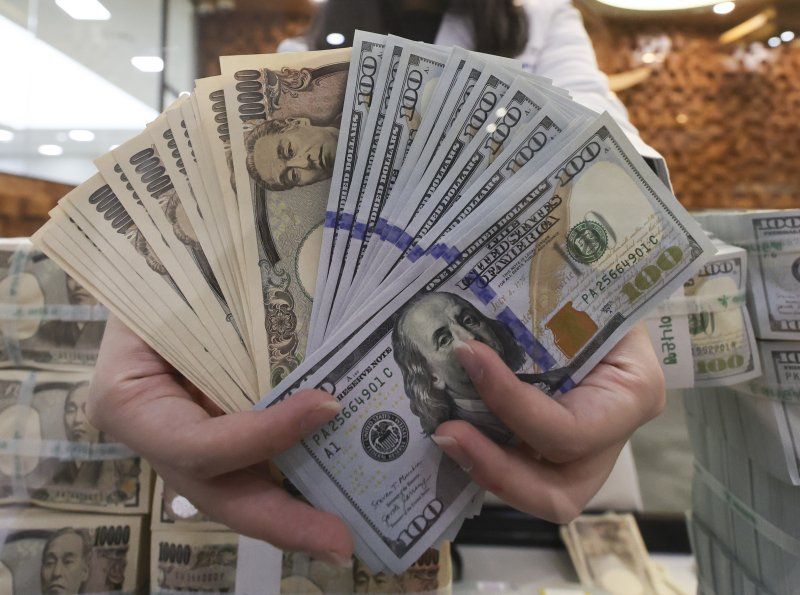
In Tokyo, correspondent Seo Hye-jin of Financial News reported that the Japanese yen (JPY) weakened sharply on the 18th (local time), with the exchange rate at one point during trading climbing to 159.90 JPY per United States dollar (USD), the highest level in about one year and eight months.
On the New York foreign exchange market that day, the JPY-USD rate closed at 159.85–159.95 JPY per USD, up 0.90 JPY from the previous session, meaning a further decline in the yen’s value. During intraday trading it touched 159.90 JPY per USD, the highest exchange rate level—and thus the weakest yen—since July 2024, roughly one year and eight months ago.
The Federal Reserve System (Fed) raised its inflation outlook at the Federal Open Market Committee (FOMC) meeting held that day, fueling expectations that interest rate cuts will be delayed. This in turn encouraged selling of yen and buying of dollars.
The Fed projected that this year’s Personal Consumption Expenditures Price Index (PCE Price Index) will rise 2.7%. That is 0.3 percentage points higher than its forecast in December last year.
This effectively reflects the view that the recent surge in international oil prices driven by the war involving the Islamic Republic of Iran will have a short-term negative impact on inflation. The PCE Price Index forecast for next year was 2.2%, roughly in line with the 2.1% projection released last December.
In its statement, the Fed assessed that "inflation remains somewhat elevated."
At a press conference the same day, Fed Chair Jerome Hayden Powell stressed that "the impact of developments in the Middle East on the U.S. economy is uncertain." He also stated that if inflation does not ease as expected due to factors such as higher tariffs, "there will be no rate cuts." Many market participants judged that the overall tone of the meeting cast doubt on the likelihood of rate cuts within this year.
The weaker yen was also driven by the U.S. Producer Price Index (PPI) for February, released the same day, which came in above market expectations.
The February PPI rose 0.7% from the previous month, far exceeding the consensus forecast of 0.3%. This reinforced the perception that U.S. inflationary pressures remain strong even before energy prices rise further amid heightened tensions in the Middle East.
However, as the JPY-USD rate approached the psychologically important threshold of 160 JPY per USD, the pace of the yen’s decline appeared to slow. Market participants grew more wary of possible intervention in the foreign exchange market by the Government of Japan and the Bank of Japan (BOJ).
Some analysts also argued that in an environment of elevated geopolitical risk, it is easier for the dollar to strengthen, making actual intervention more difficult. A wait-and-see mood emerged ahead of the U.S.-Japan summit scheduled in Washington, D.C., on the 19th and the outcome of the upcoming Monetary Policy Meeting of the Bank of Japan.
[email protected] Seo Hye-jin Reporter