Powell Says Iran War Fuels Inflation in the Short Term, but High Oil Prices Could Be Offset by Higher Energy Output
- Input
- 2026-03-19 04:15:05
- Updated
- 2026-03-19 04:15:05
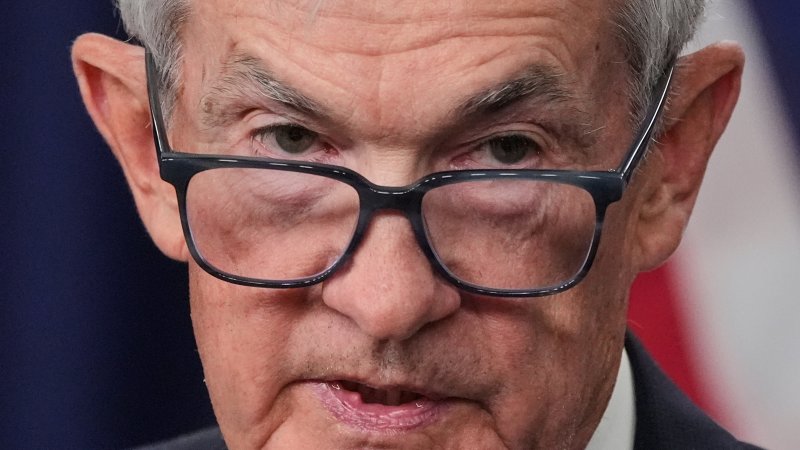
Jerome Hayden Powell also expressed concern that the surge in oil prices triggered by the Iran War will push inflation higher in the near term.
At its two-day Federal Open Market Committee (FOMC) meeting, the Fed left the benchmark interest rate unchanged at 3.50–3.75%, as widely expected. Powell made these remarks at the press conference that followed.
Short-term price increases seen as unavoidable
According to Consumer News and Business Channel (CNBC), Powell said, "Short-term inflation expectations have risen in recent weeks," and added, "This likely reflects the sharp increase in oil prices driven by supply disruptions in the Middle East."
He went on, "In the short term, higher energy prices will push up overall inflation," while stressing that the outlook remains uncertain. Powell said, "It is still too early to know the range and duration of the potential impact on the economy."
Inflation slowdown proving sluggish
Powell warned that, with the war layered on top of existing pressures, inflation is unlikely to fall as quickly as previously hoped.
He said that, in the Fed’s projections, inflation will ease this year, but the pace of that decline will be slower than expected.
Powell explained, "Inflation will make progress, but not as much as we had expected," while adding, "There will still be some progress."
Price pressures may ease by midyear
He said tariffs will give inflation a one-off boost, but that this effect will fade, and he expects the pace of price increases to weaken from around the middle of the year.
However, Powell cautioned that, even though the dot plot signals further rate cuts, that path could change if inflation fails to come down. He said, "If we judge that such progress is not occurring, rate cuts could be taken off the table."
No one knows the full impact of the Iran War
Powell pointed out that no one can know exactly how the Iran War will affect the U.S. economy. The uncertainty surrounding higher oil prices makes the eventual outcome hard to predict, he suggested.
“The U.S. economy is doing quite well,” Powell said, “but no one really knows what effect this uncertainty will ultimately have.”
High oil prices could be offset by higher energy production
Powell said that today’s high oil prices are clearly a burden on the U.S. economy, but that this shock could be offset by expanding energy production.
He added a caveat: "The net effect of an oil price shock is to put downward pressure on spending and employment, and upward pressure on inflation."
Even so, he said that this kind of shock can be offset to some extent by increased U.S. energy output.
“The United States is a net exporter of energy,” Powell said. “Any effects on employment, economic activity, and spending can be offset to some degree.” In other words, higher production of oil and natural gas could help absorb the blow.
At the same time, Powell noted that oil companies would need sustained high prices to justify drilling more wells, and stressed that any production increase ultimately depends on corporate decisions.
Fears of stagflation seen as overblown
Powell dismissed as exaggerated the concern that high oil prices caused by supply disruptions will lead to stagflation, a situation in which inflation rises while growth slows.
He said he would not use the term "stagflation" to describe the U.S. economy.
“As I have often said, that term really applies to the 1970s,” Powell said. “Back then, the unemployment rate was in the double digits, and inflation was extremely high.” He then pointed out, “The U.S. unemployment rate is actually close to its long-run normal level, and inflation is about 1 percentage point above that long-run normal.”
“If it were up to me, I would reserve the term ‘stagflation’ for a much more severe situation,” Powell emphasized.
dympna@fnnews.com Song Kyung-jae Reporter