[Editorial] Samsung Electronics Union Approves Strike: Avert Disaster Through Dialogue and Compromise
- Input
- 2026-03-18 18:33:58
- Updated
- 2026-03-18 18:33:58
At the heart of the union’s demands is the abolition of the cap on performance bonuses. It wants to revise the current rule, under which up to 50% of annual salary can be paid as a bonus within 20% of excess profits when results exceed targets. The earlier decision by SK hynix to remove its own cap likely influenced this stance. The union rejected the company’s compromise proposal, and the dispute has now escalated to a strike vote.
Samsung Electronics experienced its first strike in 2024, but the current situation is different. Participation was low during the initial strike, whereas this time the unionization rate has surpassed 50%, and three separate unions have formed a joint struggle committee. Around 50,000 of all union members belong to the semiconductor Device Solutions Division (DS Division). If a strike actually goes ahead, it will inevitably cause serious disruptions to production.
The union is warning that a strike would halt production lines and inflict losses of 10 trillion won. The chosen strike period is also said to coincide with the ramp-up of mass production of High Bandwidth Memory 4 (HBM4) that Samsung Electronics plans to supply to Nvidia. If the company fails to deliver on time or faces delays, it could easily lose customers that it has worked hard to secure.
For the company, this is an agonizing dilemma. If it accepts the union’s demands, it is obvious that future investment will be constrained. Samsung Electronics is not solely a semiconductor business; it also has the Consumer Electronics Division and the IT & Mobile Communications Division, so issues of fairness across divisions cannot be brushed aside.
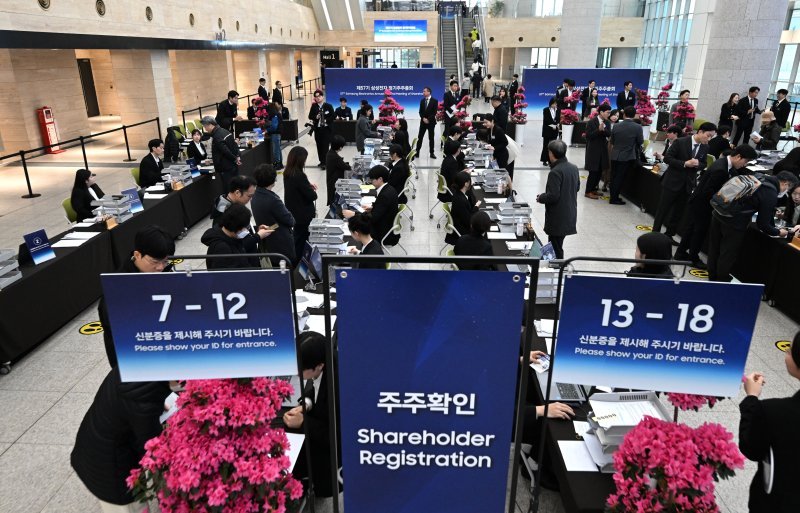
Samsung Electronics is expected to boost sales and profits by shoring up areas where it has fallen behind competitors in semiconductors. Its share price has also risen sharply in recent days. Coincidentally, the day the strike ballot concluded was also the day of the shareholders’ meeting, where the company presented its future vision and strategy to investors. However, the outlook for the Consumer Electronics Division and the IT & Mobile Communications Division is not bright, and management has already shifted into an emergency mode.
There are still roughly two months left before the planned start of the strike, but a breakdown must be prevented. Labor and management should each take a step back and seek a compromise. If the strike goes ahead, the damage will extend beyond Samsung Electronics to the entire economy. The idea that Samsung Electronics’ semiconductor lines could come to a halt is almost unimaginable. It would be tantamount to the collapse of a key pillar supporting the Korean economy.
The broader internal and external environment is also extremely unfavorable. No one knows when the crisis in the Middle East will be resolved. It is no exaggeration to say that soaring international oil prices and exchange rates could push entire industries to the brink of collapse. The petrochemical industry is already in such a situation. The union is surely aware of this reality. Under any circumstances, production lines must not be allowed to stop.
The union also sparked controversy by declaring, "Employees who work during the general strike will be given priority for forced transfers or dismissal." This is an unreasonable threat that goes beyond the union’s authority. It is unacceptable to coerce union members in how they exercise their choice.