"Beyond Using AI to Becoming 'AI Natives'... Start by Changing University Education" [Editorial News Analysis]
- Input
- 2026-03-18 18:30:41
- Updated
- 2026-03-18 18:30:41
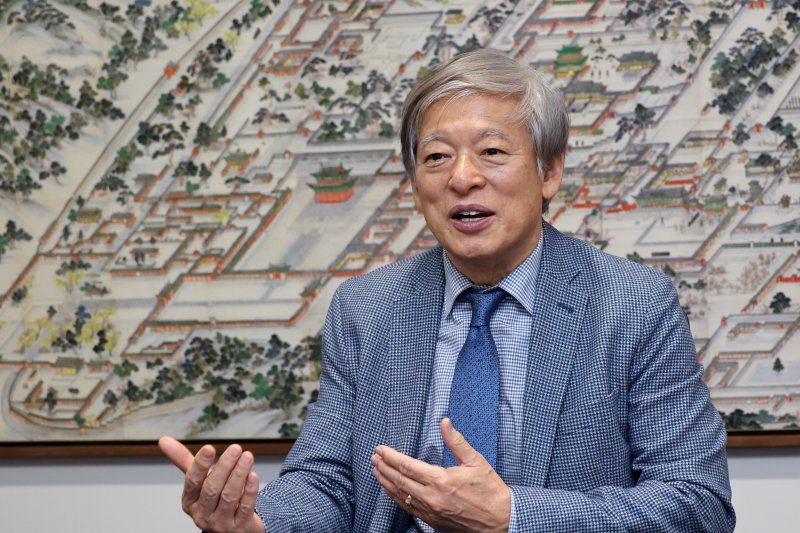
Q. Many universities are rushing to incorporate AI into their curricula. Yet the concept of AI education is still vague, and it requires investment and internal reform, which makes institutions hesitant. Why is there so much confusion around adopting AI on campus?
A. When I visit universities overseas, I am often asked about using AI to write academic papers. In the 1970s, engineering schools debated whether students should be allowed to use calculators. From today’s perspective, of course they should. At Stanford University these days, people use the term "AI native." It means using AI as fluently as a native language speaker. There was a time when people wrote by hand on manuscript paper and then retyped it on a typewriter. They claimed they could not think unless they first wrote by hand. Now we think and type on a computer keyboard at the same time. I believe a time is coming when we will think and process everything through AI. In that sense, university education is facing multiple challenges and shocks. Today, science and engineering students at top universities in Seoul often ask AI, not their professors, for experimental knowledge, because AI holds far more information. Debating whether to introduce AI into university education is like arguing in the late 19th century about whether to adopt modern education at all. The adoption of AI is irreversible, and we cannot deny that it will transform every aspect of our lives.
Q. AI can improve learning efficiency, but some worry it will weaken students’ critical thinking and memory.
A. When I was a university student in the 1970s, I could memorize about 100 phone numbers. Now I can’t even remember two. I don’t believe my memory or intellectual ability has declined because of smartphones. Human capabilities are simply changing. In the past, being good at memorizing was considered an outstanding talent. Would anyone today regard winning an abacus competition by doing complex mental calculations as a top-level skill? Just as past technologies reshaped history, AI will fundamentally transform human civilization. From an old-fashioned perspective, this may look like a serious problem, but it is not. AI will not reduce human ability; it will shift us away from developing useless skills and push us toward cultivating higher-order capabilities. That is why universities and education must change.
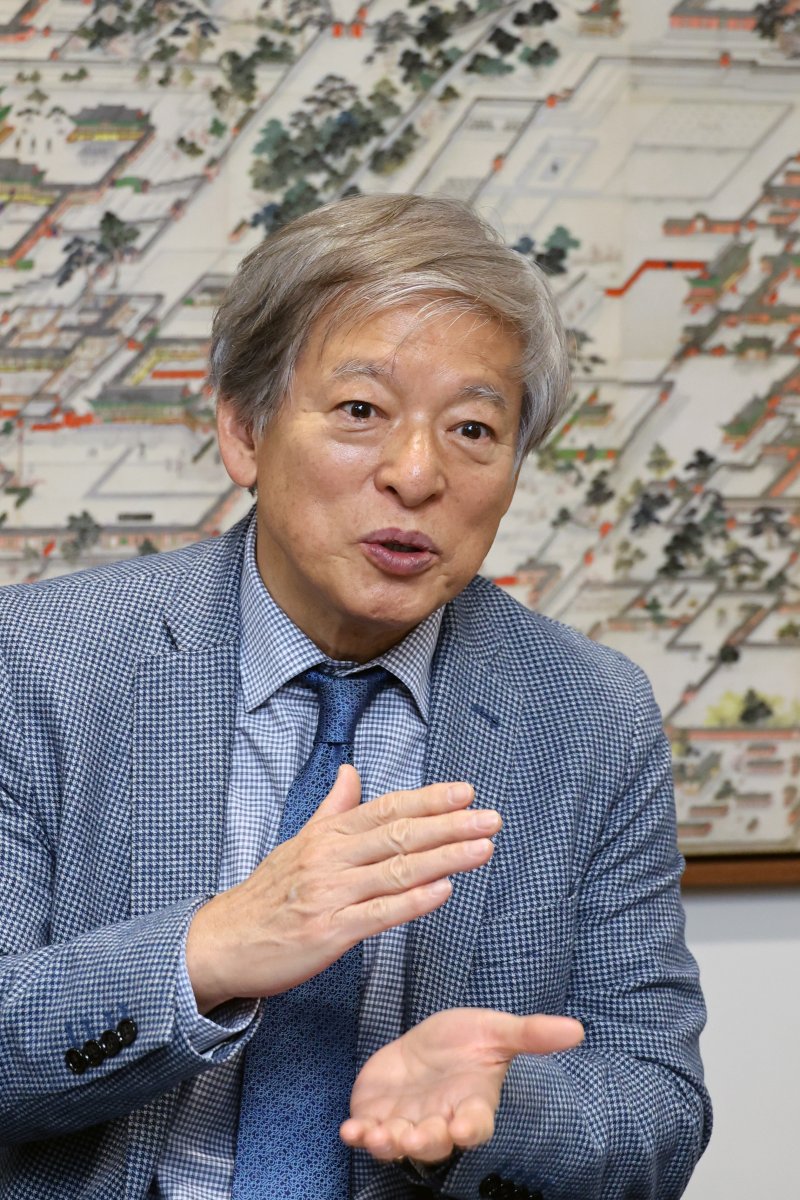
A. The abilities we need change with the times. Japan established universities and began modern education with the Meiji Restoration in 1868, but in Korea we continued to attend village Confucian schools and take civil service exams until the late 19th century. Korea University began in 1905 as Bosung College, which was not a university but a vocational school. It had two departments—law and economics—which were then considered practical skills rather than academic disciplines. Today, those two fields are among the most prestigious areas of study. Elon Musk predicts that the medical profession will become less central. As times change, what we teach must also change. Imagination, creativity, and even seemingly off-the-wall ideas are now far more important. The key is the ability to solve complex problems; simple, repetitive skills have little value. In that sense, Taejae University places a strong emphasis on building fundamental capabilities. Students can specialize in graduate school or later, when they truly want to. First they must develop basic competencies so they can think logically and creatively. There are now countless ways to learn independently, driven by one’s own curiosity, yet students are still expected to attend campus for four full years. Companies like Palantir are already hiring high school graduates, and Microsoft no longer cares about academic pedigree. What matters is ability.
Q. Leading universities abroad, such as Harvard University and Stanford University, are actively embracing AI as a learning accelerator. What are the latest AI trends at top global universities?
A. In fact, even elite American universities are struggling to overhaul their systems. These institutions have grown so large—like aircraft carriers—that they cannot easily change their existing structures. That is why Taejae University is pursuing directions that established schools like Stanford or Harvard University do not yet see. For example, both Stanford and Harvard still teach primarily through in-person lectures in classrooms. A professor’s live lecture is ephemeral; it disappears. That means there is no learning data left behind. At Taejae, all courses are delivered online, and students listen to lectures from professors around the world. This creates data that can be analyzed through coding and AI. We track each student’s speaking time and what they say, analyze it with AI, and provide feedback. This allows us to nurture students individually. A few small universities abroad are experimenting with such innovative models, but large institutions have not yet changed. They still focus heavily on research and are relatively weak when it comes to building undergraduates’ basic academic strength.
Q. In reality, university education systems and curricula have become largely rigid. With the AI era upon us, existing content needs to change, yet we have not seen major shifts.
A. Tuition at American universities is five to ten times higher than in Korea, and many people now question whether it is worth paying that much just to obtain a degree. That is why companies like Palantir have started hiring high school graduates. Do we really need to attend university for four years and sit for midterms and finals just to develop knowledge and thinking skills? In truth, some subjects can be learned in six months, and people can now choose and study the knowledge they want. On online platforms like Coursera, you can take courses from Stanford or Harvard University, or selectively learn only what you need. So why must you be tied to a four-year program, pay tuition, and hold a degree before your abilities are recognized? This system will eventually break down. College enrollment rates in the United States are steadily falling, and the situation in Korea is also very serious. For the past 20 to 30 years, faculty and university evaluations have been based almost entirely on research output. As a result, professors pay little attention to undergraduate teaching and focus mainly on writing research papers with graduate students. Undergraduates are taught from textbooks, and midterms and finals simply test how much they have memorized. What meaning does this approach have today? University education—especially at the undergraduate level—must be completely transformed.
Q. Outdated university systems are holding back innovation. How can we break with the past and launch AI-driven talent programs?
A. Large organizations are extremely hard to change. But now they have no choice. I recommend that universities at least start an internal experiment that changes 10% of what they do. In the undergraduate program, they could teach at least 10% of students through personalized instruction, use AI support, and introduce online courses or global rotation models. This will require significant investment, but even starting with 10%, or just 5%, will create a huge competitive difference. Innovation has to begin small; if you try to overhaul everything at once, it becomes nearly impossible to achieve real change.
Q. Universities have traditionally focused on producing graduates who can immediately work in companies. As the concepts of talent and jobs change, how should universities redefine their goals for cultivating talent?
A. If the goal of existing education was to produce functional human beings, that goal will shift to a very different dimension. Just as people say that 1% of the population supports an entire nation, we may see new systems created by top 1% talents who aim for that level. Industry–university cooperation has evolved through the eras of hunting, agriculture, and industrialization, and has been the final form of the relationship between universities and companies. In the AI era, the traditional meaning of industry–university collaboration will fade. We will move beyond a model where universities and companies simply work together to develop technologies. At the same time, governments may take on only minimal roles, while companies assume far greater responsibility for setting social agendas.
Q. The age of Homo sapiens itself seems to be under strain. How do you think industries, jobs, and human labor will change?
A. In the 18th century, many people starved to death. Until the 19th century, we grew plants and raised animals at home, working to support ourselves and our families. In the 20th century, with the rise of specialization and mass production, people began doing work that had nothing to do with their own lives. In human history, the period during which people have lived by receiving a salary from a company is only about 100 years. It has been the most exceptional era in human life. Yet people now think that failing to get a job is a disaster. With the advent of the AI era, we may be freed from this model. The world itself could change. We may see the introduction of universal basic income. If that happens, people will no longer fear starving, freezing for lack of clothing, or being homeless. Then what will humans do? As AI and physical AI take over the tasks that turned humans into machine parts, people will have to do something different. We will move into an era where individuals start their own ventures and create new works.
Q. The rise of AI is even challenging traditional notions of leadership. What capabilities will future leaders need?
A. If humans once functioned as cogs that kept society running, in the future the focus will be on the ability to solve problems. We need to cultivate the capacity to ask good questions and to imagine new possibilities. Doing the same things as everyone else will no longer suffice. In that sense, I pay attention to those who "lead change." To foster global leaders who drive change, universities must help students build strong foundational capabilities. Learning and experiences gained by traveling through different countries will produce individuals who can stand on their own. Even in a world where AI replaces many human roles, such new types of talent will stand out in any organization.
Profile: Yeom Jae-ho was born in 1955. He earned his bachelor’s degree from the Korea University College of Law and a Ph.D. in political science from Stanford University. He served as the 19th President of Korea University, chaired the board of SK, and is now an honorary professor at the Korea University College of Political Science and Economics. He is vice chair of the National Artificial Intelligence Committee and currently serves as President of Taejae University.
[email protected] Reporter