Nvidia steps up push into China: restarts H200 production and weighs exporting Groq chips
- Input
- 2026-03-18 12:17:28
- Updated
- 2026-03-18 12:17:28
According to Financial News, Nvidia Corporation, which is once again targeting the Chinese market amid improving relations between the United States of America (U.S.) and China, has announced that it will restart production lines for artificial intelligence (AI) chips intended for export to China. The company is also reportedly preparing to sell its latest product, Groq, in the Chinese market.
H200 production restarts as orders surge
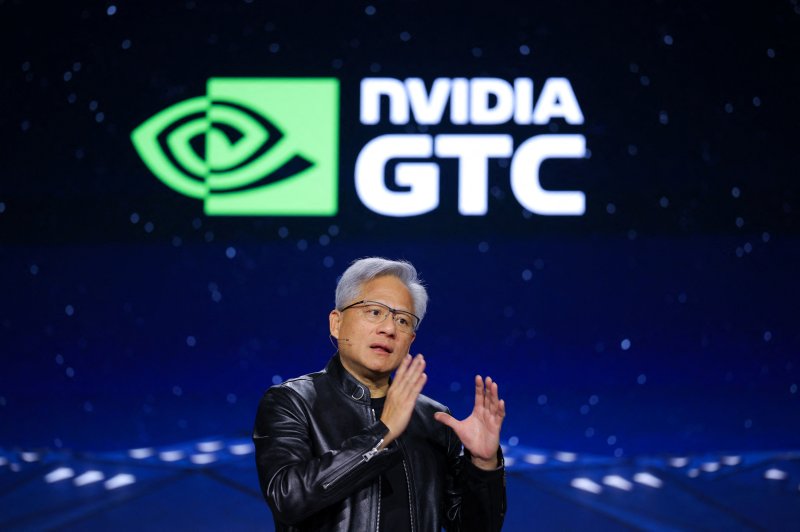
According to The Wall Street Journal (WSJ) and other local media, Jensen Huang of Nvidia Corporation spoke about the Chinese market and the NVIDIA H200 GPU at a press briefing for the AI conference NVIDIA GTC 2026 held on the 17th (local time) at the Signia by Hilton San Jose in San Jose, State of California. He said, “We have secured a large number of export licenses for Chinese customers, and we have received many orders from China. We have restarted production, and our supply chain has become very busy.” He went on to stress, “The situation is completely different from two weeks ago.” Some foreign media outlets reported on the 17th, citing sources, that the Chinese government has approved domestic companies to purchase the NVIDIA H200 GPU.The NVIDIA H200 GPU, unveiled by Nvidia Corporation in 2023, is not the company’s newest AI chip, but it is still regarded as a highly capable AI processor.
Previously, in 2022, the administration of U.S. President Joseph Robinette Biden Jr. barred Nvidia Corporation and other U.S. companies from exporting high‐performance chips to China. In response, Nvidia Corporation developed and exported a lower‐spec AI chip, the NVIDIA H20 chip, specifically for the Chinese market. After taking office last year, Donald Trump launched a trade war with China in April and announced that even these China‐specific chips would be subject to new restrictions, but in July he eased those curbs in line with improving relations with Beijing.
China, however, moved in the opposite direction. From August last year, Beijing banned imports of U.S. AI chips, including the NVIDIA H200 GPU, as part of efforts to reduce its dependence on foreign semiconductors. Trump and Chinese President Xi Jinping met in South Korea in October last year, agreed to pause the trade war, and discussed semiconductor issues. In January, Trump signed an executive order allowing exports of the NVIDIA H200 GPU to China, while requiring that 25% of sales proceeds be paid into the U.S. Treasury. Industry observers expected Chinese AI companies such as Alibaba Group, ByteDance, and Tencent to place large orders for the NVIDIA H200 GPU. Nvidia Corporation projected demand for more than one million units.
However, David Peters, U.S. Assistant Secretary of Commerce for Export Enforcement at the United States Department of Commerce (U.S. Department of Commerce), testified before the House Committee on Foreign Affairs on the 24th of last month that, “As far as I know, there have been no sales so far,” when asked about records of NVIDIA H200 GPU sales to China. Nvidia Corporation temporarily halted production of the NVIDIA H200 GPU earlier this year due to regulatory uncertainty.
New LPU exports also possible... Message to South Korea: “Leap directly into the AI revolution”
At the briefing on the 17th, Jensen Huang emphasized, “Trump’s intention is for the United States to maintain leadership over Nvidia Corporation’s most advanced technologies.” He added, “But I believe Trump also wants us to compete in the global market without unnecessary constraints.”Nvidia Corporation did not disclose a specific forecast for revenue from NVIDIA H200 GPU sales to China. However, WSJ estimated that annual revenue could reach tens of billions of dollars. Referring to his keynote speech the previous day, in which he projected a 1 trillion dollar (about 1,500 trillion won) market opportunity for AI chips by next year, Huang said, “We still have 21 months to go, so the actual figure could be even higher.”
He explained that this estimate covers only products based on the NVIDIA Blackwell architecture and the Rubin GPU architecture. It does not include central processing units (CPU), Groq Language Processing Units (LPU) designed solely for inference, or the next‐generation Feynman GPU architecture that will follow Rubin.
Asked about plans to secure manufacturing capacity over the next five years, he replied, “We are working with TSMC, the world’s leading company, and we are also collaborating with Samsung Group on Groq semiconductor production.” He added, “We need an enormous amount of memory, so we are working with all major memory manufacturers as well.”
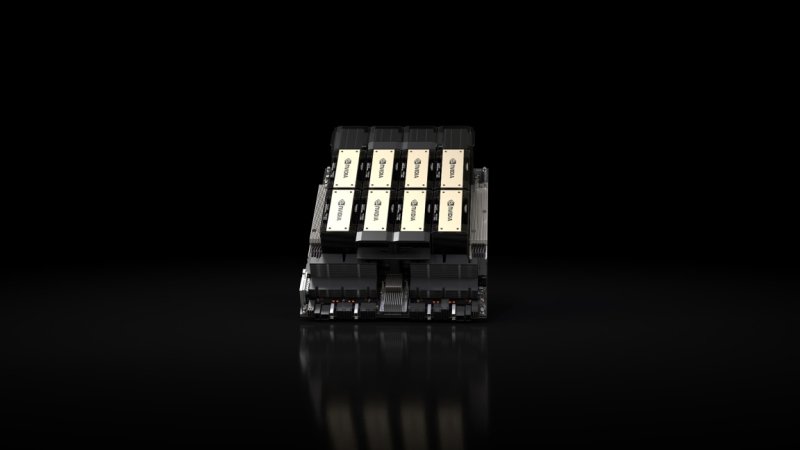
Last year, Nvidia Corporation acquired U.S. AI company Groq and moved to mass‐produce the Groq 3 Language Processing Unit (LPU) that Groq had been developing. LPUs are better suited than traditional GPUs used in Nvidia Corporation’s AI chips for running AI inference, but they are not optimized for training AI models.
British media outlets reported on the 17th, citing sources, that Nvidia Corporation is developing a new derivative version of the Groq semiconductor for export to China. According to one source, the new Groq version will not be a downgraded chip like the NVIDIA H20 chip that was tailored specifically for China, nor is it being designed solely for the Chinese market, and it is expected to launch in May.
In his speech that day, Jensen Huang also said that manufacturing powerhouses such as South Korea, Germany, and Japan can seize new opportunities through AI. He argued that these countries fell behind the U.S. in the IT revolution because of a culture that demands products be perfect before launch, and added, “You can skip the IT revolution and leap straight into the AI revolution. That is the message I deliver every day to South Korea, Germany, Sweden, and others.”
pjw@fnnews.com Park Jong-won Reporter