Japan plays 'freedom of navigation' card, weighs backing U.S. efforts instead of sending JSDF
- Input
- 2026-03-18 09:41:11
- Updated
- 2026-03-18 09:41:11
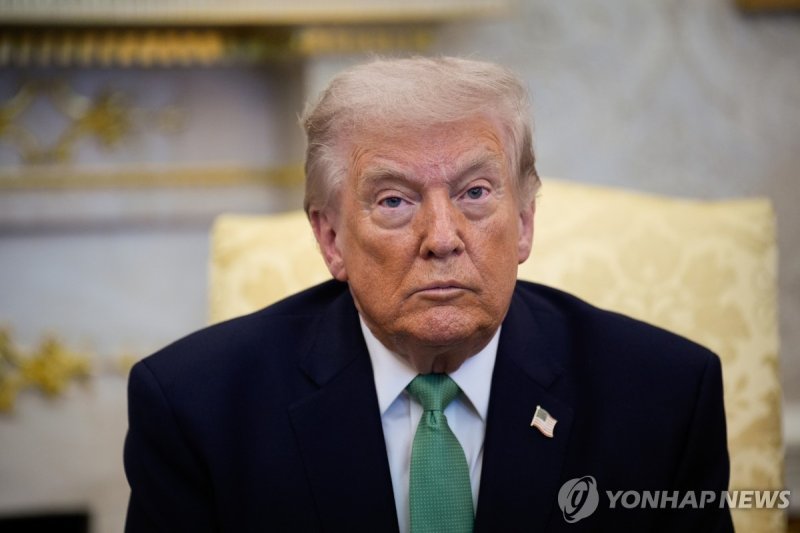
The Asahi Shimbun reported on the 18th that the Japanese government is considering having Prime Minister Takaichi Sanae, at the U.S.-Japan summit on the 19th (local time), stress to President Donald Trump the importance of freedom of navigation in the Strait of Hormuz and express support for U.S. efforts to calm the situation.
According to multiple government officials, Japan has begun coordinating to deliver this message to the U.S. side during the summit.
Within the Japanese government, there is a strong view that the Japan Self-Defense Forces (JSDF) cannot be sent to regions where combat is underway, in connection with President Trump’s request to dispatch warships to the Strait of Hormuz. In response, The Asahi Shimbun reported that Prime Minister Takaichi plans to tell President Trump that ensuring safety in the Strait of Hormuz and achieving an early de-escalation of the situation are both essential, while urging a diplomatic resolution of tensions with the Islamic Republic of Iran.
However, Prime Minister Takaichi is expected to avoid offering an assessment under international law of the U.S. attack on the Islamic Republic of Iran itself and to refrain from stating a clear position for or against it.
Earlier, on the 17th, Prime Minister Takaichi appeared before the Budget Committee of the House of Councillors and was asked how she would respond if a request were made at the U.S.-Japan summit to dispatch the JSDF. She replied, "Within the scope that is currently legally possible, the government is actively examining what we can do."
She went on to say, "There are missions that require the approval of parliament," adding, "In such cases, we intend to fully explain the matter as broadly as possible to the leaders of each party and parliamentary group."
Cases in which JSDF dispatch would require parliamentary approval include a Situation of Existential Threat to the Nation, which allows the exercise of the right of collective self-defense, and an Important Influence Situation, under which Japan can provide rear-area support to U.S. forces. However, the government’s position is that the current circumstances do not fall under these categories.
Meanwhile, President Trump, who had been calling for the dispatch of warships to the effectively blockaded Strait of Hormuz to escort commercial vessels, claimed on the 17th that such support is no longer needed, prompting various interpretations of his true intentions.
On that morning, President Trump wrote on the social media platform Truth Social, "The United States of America (U.S.) has been notified by most of our NATO allies that they do not want to be involved in our military operations against the terrorist regime in the Islamic Republic of Iran."
He said that military operations against the Islamic Republic of Iran had achieved significant results and continued, "Because of this military success, we no longer need or want the support of NATO member states," adding, "We never have. The same goes for Japan, Australia, or South Korea." He went on, "As President of the United States of America (U.S.), the most powerful country in the world, I can tell you we do not need anyone’s help!"
This is being interpreted as an expression of frustration that allies have not responded to his calls to cooperate by sending warships to escort merchant ships in the Strait of Hormuz.
Germany and several other allies have publicly ruled out participation, and many other countries are maintaining a cautious stance.
At the same time, some observers say that, given he mentioned NATO, Japan, Australia, and South Korea in succession while stressing that he needs no one’s help, there may be a shift in the Trump administration’s plan for a "Hormuz coalition."
In a situation where it is difficult to secure allied cooperation, Washington may turn its attention from pushing ahead with forming a Hormuz coalition to asking partners to provide other forms of support.
The previous day, President Trump had also remarked, "We have the strongest military in the world and we do not need them (our allies). It is not that we need them, but that we want to see how they respond."
sjmary@fnnews.com Seo Hye-jin Reporter