Causes of death change five years after esophageal cancer surgery: "Managing second cancers and cardiopulmonary disease is crucial"
- Input
- 2026-03-18 09:28:17
- Updated
- 2026-03-18 09:28:17
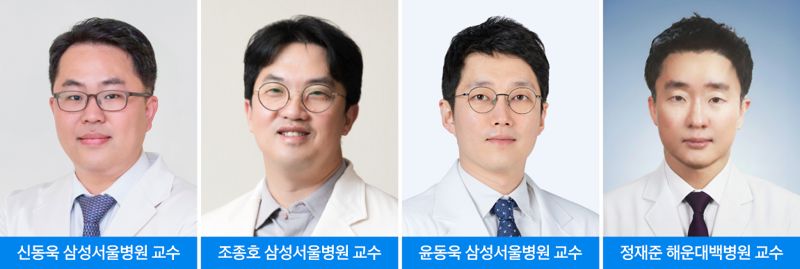
According to Financial News, the longer patients live after surgery for esophageal cancer, the less often they die from cancer recurrence and the more often they die from second primary cancers and cardiopulmonary diseases. Experts therefore argue that care must go beyond simple surveillance for recurrence and move toward comprehensive management strategies for long-term survivors. Samsung Medical Center announced on the 18th that its research team — Professor Dong Wook Shin, Professor Jong Ho Cho, and Professor Dong Wook Yoon of Samsung Medical Center, together with Professor Jae Joon Jung of Inje University Haeundae Paik Hospital — has published an analysis of causes of death among esophageal cancer surgery patients in the International Journal of Surgery.
Using data from the National Health Insurance Service (NHIS), the study compared 5,406 patients who underwent esophageal cancer surgery between 2010 and 2017 with 16,218 individuals from the general population, and followed them through 2022 in a large-scale analysis.
The analysis showed that more than five years after surgery, esophageal cancer accounted for only about 33% of all deaths. In contrast, deaths due to second primary cancers arising in other organs steadily increased, from 2.9% within one year after surgery to 25.3% beyond five years.
Among long-term survivors, the risk of dying from a second primary cancer was 2.6 times higher than in the general population.
Deaths from second primary cancers were most commonly due to lung cancer (3.1%), followed by stomach cancer (2.6%) and oral cancer (1.5%). The research team suggested that shared risk factors such as smoking and alcohol consumption, along with the long-term effects of anticancer treatment, may be acting together.
Deaths related to cardiopulmonary disease also increased markedly. Cardiovascular deaths rose from 1.1% within the first year after surgery to 5.8% after five years, while deaths from respiratory diseases climbed from 0.3% to 13.5%. In particular, the risk of death from respiratory disease was twice that of the general population, and up to 3.5 times higher among patients who had received chemotherapy or radiation therapy.
The team concluded that reduced lung function after esophagectomy, lung toxicity from chemotherapy and radiation, and infectious diseases likely contributed to these outcomes.
Professor Yoon stressed, "Patients who undergo surgery for esophageal cancer need management that covers not only surveillance for recurrence but also early detection of second primary cancers and prevention of cardiopulmonary disease." Professor Cho noted, "As immune checkpoint inhibitors improve survival rates, the proportion of deaths from non-cancer causes is likely to grow even further," highlighting the importance of tailored long-term follow-up strategies for survivors.
Professor Shin stated, "After treatment for esophageal cancer, regular cancer screening, smoking cessation, and vaccinations are essential to prevent second primary cancers and cardiopulmonary diseases."
vrdw88@fnnews.com Reporter Kang Jung-mo Reporter