U.S. and Japan seek joint stockpiling of Alaskan crude oil in Japan
- Input
- 2026-03-18 08:05:08
- Updated
- 2026-03-18 08:05:08
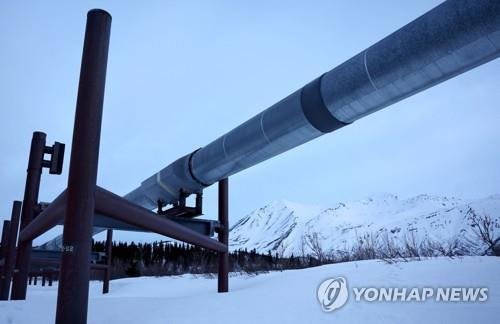
The Financial News reported from Tokyo that, according to the Yomiuri Shimbun on the 18th, the United States of America (U.S.) and Japan are expected to reach an agreement at the U.S.-Japan summit on the 19th to expand U.S. crude oil production using Japanese investment and to jointly stockpile the increased volumes in Japan. The move comes as oil prices surge due to the de facto blockade of the Strait of Hormuz by Iran and is intended to stabilize prices and diversify Japan’s oil procurement sources.
According to multiple government officials, the plan will be pursued as part of a 550 billion dollar investment package in the U.S., following an agreement in bilateral tariff negotiations. The exact size of the investment will be finalized later, but oil fields in Alaska are being strongly considered as the primary target. Shale oil fields in the U.S. mainland are also among the candidates.
The government of Japan currently relies on the Middle East for about 90% of its crude oil supply. A senior government official stated, "If crude oil is shipped from Alaska, tankers would only need to cross the Pacific, cutting transport time by about a week compared with routes from the Middle East, which is highly significant for Japan’s energy security."
For the U.S. as well, securing a stable export destination for domestically produced crude oil is a key priority. Shipments of Alaskan crude oil are equivalent to more than 10% of Japan’s annual oil consumption, but most of that oil is currently consumed within the U.S.
Since the 2000s, the U.S. has become the world’s largest oil producer thanks to the shale revolution. The Yomiuri Shimbun noted, "The Trump administration is advocating an expansion of crude oil production, and if Japan’s demand for stockpiling can be secured on a stable basis, it is expected to have a positive impact on further development."
The crude oil stockpiled in Japan is also expected to be available for sale, allowing the facilities to serve as a supply hub for other countries in Asia.
Japan plans to use existing spare storage facilities for the stockpiles. In an emergency, the oil could be released for Japan’s use, helping both the U.S. and Japan secure stable energy supplies.
The Yomiuri Shimbun reported, "The U.S. and Japanese governments are concerned that the deterioration of the situation in the Middle East has driven up crude oil prices and begun to negatively affect their economies," adding, "At the U.S.-Japan summit, joint measures to stabilize fuel prices are expected to be a central agenda item."
Meanwhile, at the summit the two countries are also expected to agree on joint development of rare-earth elements (REE), Lithium, and copper.
This cooperation, to be carried out under the name "U.S.-Japan Critical Minerals Project," will designate four priority projects once confirmed by the two leaders: a rare-earth refining project in the State of Indiana; a copper smelting project in the State of Indiana; a Lithium mine development project in the State of North Carolina; and development of the Copper World copper mine in the State of Arizona.
Under the rare-earth refining project, REE and other rare metals will be recovered and recycled from waste permanent magnets used in home appliances, automobiles, and industrial equipment. Mitsubishi Materials Corporation is coordinating an equity investment and participation in the project.
For the copper smelting plan, Japan will work with a British company that uses waste electronic circuit boards from smartphones, PCs, and household appliances as raw material.
The Lithium mine development will take place in Kings Mountain in the State of North Carolina. Mitsui & Co. is considering cooperation with the major U.S. chemical company Albemarle.
For the Copper World copper mine project, Mitsubishi Corporation will invest about 87 billion yen to participate and will jointly secure mining rights with a company from Canada.
The two countries will also draw up the "Japan-U.S. Action Plan for Ensuring the Resilience of Critical Mineral Supply Chains." As a key measure to curb inflows of low-priced minerals from China, they are considering introducing a minimum price guarantee scheme, including the use of tariffs.
In addition, the two governments plan to sign a Memorandum of Understanding (MOU) on the development of marine mineral resources and to establish a working-level task force. Discussions are expected to cover manganese extraction in waters near Hawaii and REE mining near Minamitorishima (also known as Marcus Island) in the Ogasawara Islands (also known as the Bonin Islands) of Japan.
According to the Ministry of Economy, Trade and Industry of Japan (METI), China accounts for about 60% of global REE mining and about 90% of refining. China is also responsible for roughly 80% of global Lithium refining.
[email protected] Seo Hye-jin Reporter