Redeploying THAAD on the Korean Peninsula? U.S. defense official touts "flexible asset employment"
- Input
- 2026-03-18 06:51:51
- Updated
- 2026-03-18 06:51:51
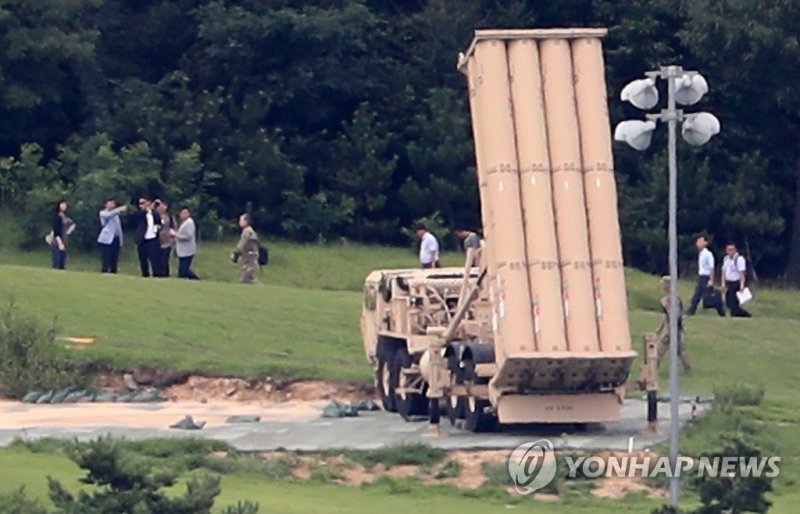
[Financial News] As the United States keeps open the possibility of redeploying the Terminal High Altitude Area Defense (THAAD) system currently stationed with U.S. Forces Korea to respond to the war in the Middle East, concerns are growing about a potential air defense gap on the Korean Peninsula. However, the United States Department of Defense (DoD) has stressed the "flexible employment of assets" while declining to confirm whether any actual movement is planned.
Under Secretary of Defense for Acquisition and Sustainment Michael Duffy told a House Committee on Foreign Affairs hearing on the 17th (local time), when asked about the possibility of deploying the THAAD battery from U.S. Forces Korea to the Middle East, that "the ability to redeploy assets to meet the most urgent needs around the world is a strength of the U.S. system." He nevertheless avoided commenting on whether such a redeployment will occur or how long it might last.
Representative Ami Bera, who raised the question, recalled China’s economic retaliation when THAAD was first deployed in Korea and warned, "With the threat from the Democratic People's Republic of Korea (DPRK) still present, I am concerned about any weakening of South Korea’s defense capabilities." While acknowledging the need to defend the Middle East, he specifically asked, "If a redeployment takes place, how long would it continue?"
Fueling the controversy are recent observations that some THAAD launch vehicles from the Seongju, North Gyeongsang Province site have been moved to Osan Air Base in Gyeonggi Province. Osan Air Base serves as a hub for the movement of strategic assets, making it a likely staging point for any deployment to the Middle East.
The South Korean government is seeking to draw a clear line. Minister of National Defense Ahn Gyu-back told the National Assembly of the Republic of Korea, "There may be some minor adjustments, but there is no meaningful change in major assets," adding, "This is not a situation that should cause concern."
Ultimately, the core issue is less about whether assets are actually moved and more about the fact that they can be moved at any time. By publicly underscoring that its air and missile defense assets can be redeployed according to global battlefield priorities, the United States is signaling that the Korean Peninsula’s defense posture is not fixed in place. This, in turn, throws the tension between alliance trust and strategic flexibility back into sharp relief.
km@fnnews.com Kim Kyung-min Reporter