Vietnamese government aims to start operating two Ninh Thuan nuclear units by 2035
- Input
- 2026-03-18 08:00:00
- Updated
- 2026-03-18 08:00:00
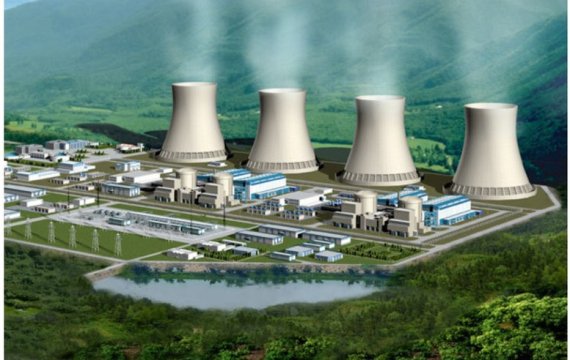
According to local media reports on the 18th, Vietnamese Deputy Prime Minister Nguyen Chi Dung signed a decision approving the "Strategy for the Peaceful Development and Application of Nuclear Power by 2035, with a Vision to 2050."
The core of this strategy is to finish construction of Units 1 and 2 of the Ninh Thuan Nuclear Power Plant by 2035 and operate them safely. In particular, the Government of Vietnam plans to raise the share of domestic companies in construction and installation of auxiliary facilities for the nuclear project to around 30% of the total investment.
In addition to large-scale nuclear plants, the country will also accelerate the introduction of next-generation technology in the form of Small Modular Reactors (SMR). The Government of Vietnam intends to launch at least one SMR project by 2035. Through this, it aims to complete nuclear power infrastructure, strengthen national energy security, and contribute to achieving its net zero target.
By 2035, Vietnam also plans to grow the use of radiation and radioactive isotopes by an average of 10–15% per year, localize advanced nuclear and radiation technologies, and build up domestic production capacity for related equipment. In the medical sector, the government envisions establishing advanced systems such as computed tomography (CT), Magnetic Resonance Imaging (MRI), and radiotherapy equipment so that the country can reach a leading level within Southeast Asia.
On the research infrastructure side, Vietnam will establish two national key laboratories dedicated to nuclear power technology and core technologies related to rare earths, uranium, and titanium. It also plans to invest in university education facilities that meet international standards to train specialized personnel.
The long-term vision for 2050 calls for developing nuclear energy into a core national industry that supports energy security and sustainable development. Specifically, the plan proposes raising nuclear power’s share to 6–8% of total electricity generation and adding four large reactors and 10–15 SMRs.
If economic viability and technological conditions are met, the government will also consider further expanding the share of nuclear power.
Over the long term, Vietnam aims to achieve self-reliance in nuclear technology and foster leading companies with strong expertise, while expanding the use of radiation and nuclear technologies across various industries. The country also plans to build a major particle accelerator center.
In addition, Vietnam has set a goal of raising its nuclear science and technology capabilities to a mid-level among advanced countries and emerging as a regional hub for nuclear research and education in Southeast Asia. The government intends to pursue its nuclear power program through a flexible roadmap that combines large reactors and SMRs, while systematically putting in place the necessary policies and regulatory framework.
vuutt@fnnews.com Bu Thi Tien Reporter