War Risks Deepen Internal Divisions at Fed Ahead of Rate Decision
- Input
- 2026-03-17 12:06:55
- Updated
- 2026-03-17 12:06:55
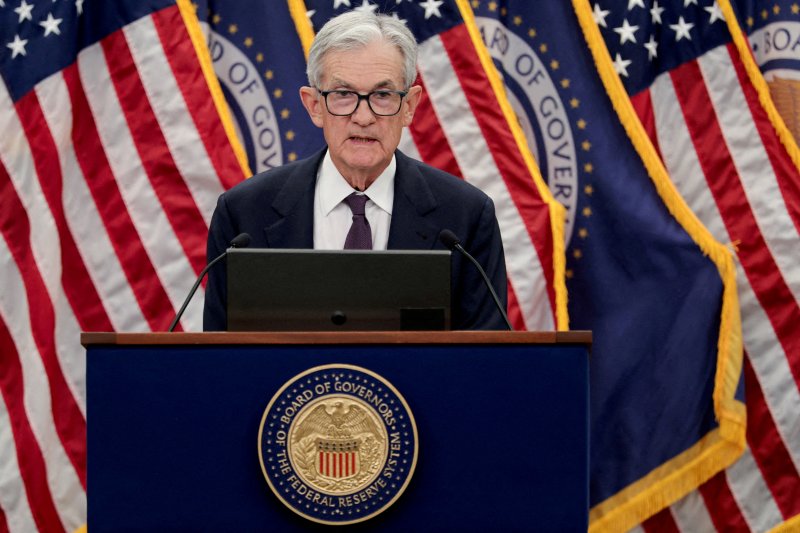
According to The Financial News, the Federal Reserve System (Fed), which is scheduled to hold its next Federal Open Market Committee (FOMC) monetary policy meeting on the 17th and 18th (local time), has been hit by a new shock: war involving the Islamic Republic of Iran (Iran). Conflicting signals of rising inflation and a weakening economy are making the Fed’s policy deliberations even more difficult.
On the 17th, The New York Times (NYT) reported that the Fed had already been debating internally whether to prioritize inflation or a softening labor market. The outbreak of war involving Iran now forces policymakers to reassess and clarify their positions.
After attacks by the United States of America (U.S.) and Israel on Iran, international crude prices climbed above 103 dollars per barrel. Gasoline prices across the U.S. have surged by 70 cents per gallon (3.8 liters) in just one month. As a result, divisions within the Fed are becoming even more entrenched.
The Fed’s inflation-focused “hawks” worry that the combination of new tariffs and higher oil prices will push the 2% inflation target even further out of reach.
By contrast, the employment-focused “doves” believe elevated energy costs will dampen consumer spending and further expose vulnerabilities in the labor market.
Eric Rosengren, former President of the Federal Reserve Bank of Boston, said, "Both sides will insist that their view is correct," adding, "The worst-case scenario, in which inflation rises while employment weakens, is highly likely to unfold."
Jerome Hayden Powell is widely expected to keep the federal funds rate unchanged at 3.5% to 3.75% at this FOMC meeting. However, President of the United States Donald John Trump has ramped up pressure just before the meeting, openly demanding an "emergency rate cut."
The road ahead also looks rocky for Kevin Warsh, who has been nominated to succeed Powell. Even if he wins confirmation in the United States Senate, he will still face the challenge of dispelling market doubts that he is merely a figure who aligns with Trump’s preferences.
Experts warn that in an environment where the oil shock has unsettled inflation expectations, a new Fed chair who yields to pressure from The White House and rushes to cut rates could inflict irreparable damage on the Fed’s external credibility.
Markets generally expect the Fed to leave rates where they are and to extend the wait-and-see stance it adopted in January.
Inside the institution, however, sentiment is far more complicated.
Eric Rosengren, former President of the Federal Reserve Bank of Boston, noted, "We are in a phase where inflation readings are rising and employment indicators are weakening, so both sides can argue that conditions have deteriorated for them," and added, "Because both arguments are valid, policy decisions become even harder."
Indeed, throughout last year inflation drifted further away from the 2% target. The Trump administration’s broad-based tariffs and large-scale deportation policies have created a double burden of upward price pressure and labor shortages.
The Fed’s standard models generally advise policymakers to look through energy shocks. They assume that energy prices are highly volatile and that such swings have only a limited impact on the underlying inflation measures the central bank monitors most closely.
Some economists, such as David Saif of Nomura Holdings, argue that policymakers should stick to exactly this approach.
Saif said he would only reconsider his outlook for Fed policy if oil prices rose much further, to around 120 dollars per barrel, and stayed there for an extended period. For now, he maintains his earlier forecast that the Fed will deliver additional rate cuts in June and September, when Warsh’s term as chair is set to begin.
Other economists, however, believe the sharp rise in energy prices has at least partially complicated the Fed’s policy choices.
Traders in the federal funds futures market, who before the war had expected two rate cuts in the second half of the year, now largely see no rate cuts at all in the current year.
As Jerome Hayden Powell’s term draws to a close, market attention is shifting to his designated successor, Warsh. Because he was nominated under Trump’s pledge to appoint only those who support rate cuts, the key question is whether he can win market confidence and anchor inflation expectations.
Karen Dynan, a professor at Harvard University, commented, "Uncertainty is extremely high and policy signals are mixed," and advised, "Until it becomes clear whether employment or inflation is the dominant factor, a 'wait and see' strategy is the most rational course."
With the Fed having missed its 2% inflation target for five consecutive years, Rosengren warned that "each time the Fed postpones achieving its goal, the risk of losing public trust grows," suggesting that this leadership transition could be a critical turning point for the Fed’s credibility.
[email protected] Yoon Jae-joon Reporter