Israel launches ground operation in southern Lebanon, prepares for prolonged conflict
- Input
- 2026-03-17 11:04:25
- Updated
- 2026-03-17 11:04:25
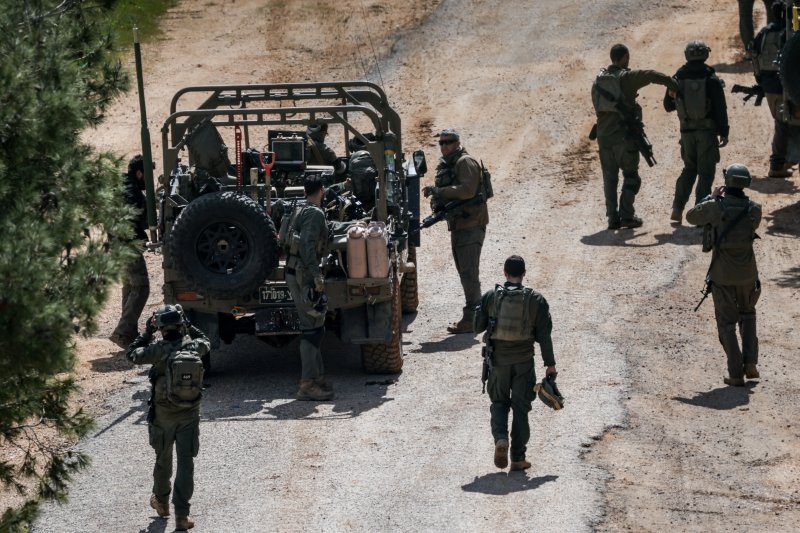
According to The Financial News, Israel has abruptly launched a ground operation in southern Lebanon, moving to neutralize Hezbollah, Iran’s most powerful proxy force.
On the 16th local time, The Wall Street Journal (WSJ) reported that after Hezbollah fired hundreds of rockets and drones at Israel last week, the IDF has been preparing for a long campaign, and questions are mounting over its ability to fight on multiple fronts.
Israeli Minister of Defense Israel Katz suggested that the operation would resemble the Gaza Strip campaign, in which entire urban areas were flattened. Referring to last week’s large-scale rocket and drone attacks by Hezbollah, he declared, "The residents of southern Lebanon will not be able to return until we determine that the Hezbollah threat has been completely eliminated."
His remarks imply that the IDF may indefinitely occupy parts of Lebanese territory, a prospect expected to have far-reaching repercussions. Israel is already occupying and controlling more than half of the Gaza Strip, parts of Syria, and the West Bank, while maintaining an extremely aggressive posture toward neighboring countries.
Experts are questioning whether Israel can sustain a long-term, multi-front war.
After two and a half years of continuous war in the Gaza Strip, the IDF, which relies heavily on reservists, is reaching its limits.
Israel is also rapidly depleting interceptor missiles needed for homeland defense, while its air force is pouring vast resources into maintaining 24-hour flights over Iranian airspace.
Ofer Guterman, a researcher at the Institute for National Security Studies (INSS) in Tel Aviv, assessed, "Short-term tactical victories are possible, but there is a high risk that Israel will fail to turn them into strategic changes that alter its overall position."
The situation in the Middle East has already escalated into a broad war involving more than ten countries. Iranian authorities have closed the Strait of Hormuz, turning regional tensions into a global oil shock. In response, President of the United States Donald Trump has asked allied nations to cooperate in reopening the waterway.
Randa Slim, a director at the Washington, D.C.-based think tank Stimson Center, argued, "You cannot defeat a homegrown armed movement through ground operations or airstrikes alone," citing the United States’ past failure in Afghanistan and Israel’s 1982 invasion of Lebanon to question the effectiveness of the current campaign.
On the 11th, Hezbollah launched more than 200 projectiles, effectively nullifying the cease-fire agreement that had been concluded in November 2024.
At the time, Israel believed it had weakened Hezbollah by killing its leader Hassan Nasrallah, but former navy commander Eliezer Marom judged that "Hezbollah has managed to regroup faster than expected."
In retaliation, Israeli strikes have extended not only to the southern outskirts of Beirut but also to Corniche, a popular tourist waterfront in the city center. According to the Ministry of Public Health of Lebanon, the death toll has already exceeded 800, and the United Nations estimates that about one million people have been displaced. Civilian casualties are mounting, particularly after beach hotels used as shelters were hit in the bombardment.
Inside Lebanon, criticism of Hezbollah is also growing. Sami Gemayel, leader of a Christian political party, condemned the group, saying, "Hezbollah is willing to commit suicide to defend Iran, even at the cost of Lebanon’s destruction."
Meanwhile, diplomatic efforts to avert catastrophe are beginning to surface.
WSJ reported that both the Lebanese leadership and the Israeli government are said to be open to direct, government-level talks mediated by France, raising hopes that this could provide a breakthrough for dramatic de-escalation.
[email protected] Reporter Yoon Jae-joon Reporter