"They Wanted a Leader Who Would Avenge"...Mojtaba's Succession Goes Through Despite Moderates' Opposition
- Input
- 2026-03-17 10:38:42
- Updated
- 2026-03-17 10:38:42
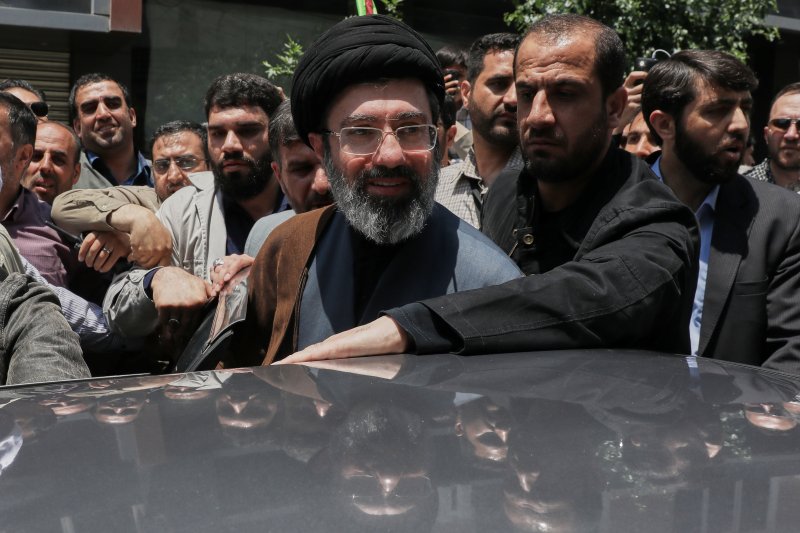
On the 16th (local time), The New York Times (NYT) reported that the Islamic Revolutionary Guard Corps (IRGC), led by Commander in Chief Ahmad Vahidi, threw its support behind Mojtaba Khamenei. In contrast, Ali Larijani, secretary of the Supreme National Security Council (SNSC), President Masoud Pezeshkian and others put forward former president Hassan Rouhani and several other figures as alternative candidates.
Senior officials in the Islamic Republic of Iran told NYT, "As the war dragged on, the clerics became more interested in a leader who would avenge Ali Hosseini Khamenei, who was 'martyred,' than in a leader who would resolve the national crisis."
According to the report, when the Assembly of Experts chose Mojtaba Khamenei in its first vote on the 3rd, Ali Larijani put the public announcement on hold, citing the risk of a U.S. attempt to "eliminate the successor." Moderates also protested, arguing that "remote voting is unconstitutional" and that "hereditary succession violates the spirit of the revolution."
The IRGC then moved quickly to strike back. Members contacted all 88 clerics in the Assembly of Experts and tried to persuade them to support Mojtaba Khamenei, insisting that "voting for the son of the supreme leader is a religious duty."
NYT reported, "In the end, at the Assembly of Experts reconvened on the 8th, Mojtaba Khamenei was elected supreme leader with 59 out of 88 votes, and congratulations and pledges of loyalty poured in even from those who had opposed him."
[email protected] Hong Chae-wan Reporter