Hyundai Motor Group Expands Autonomous Driving Partnership With Nvidia: "Level 2 Technology to Be Deployed in Advance"
- Input
- 2026-03-17 08:25:13
- Updated
- 2026-03-17 08:25:13
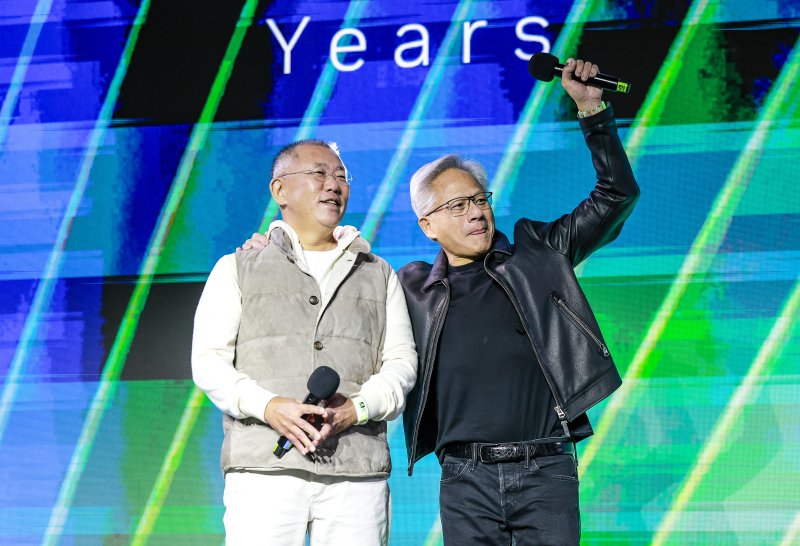
The two sides will combine Hyundai Motor Company and Kia Corporation’s in-house SDV capabilities with Nvidia’s autonomous driving technologies to jointly develop next-generation autonomous driving solutions. Hyundai Motor Company and Kia Corporation, which are developing SDV-based vehicles grounded in a strong philosophy of quality and safety, plan to preemptively apply Nvidia’s Level 2 and above autonomous driving technologies to selected models.
Over the mid to long term, they aim to build a cooperation framework that extends to Level 4 robotaxis. Centered on Motional, an autonomous driving joint venture headquartered in the United States, the companies will begin full-scale discussions to further advance Level 4 robotaxi technologies and strengthen their competitiveness in both technology and services.
The expanded collaboration with Nvidia is seen as a strategic decision at the Hyundai Motor Group level to accelerate the internalization of autonomous driving technologies. Hyundai Motor Group is introducing NVIDIA DRIVE Hyperion to establish a new integrated architecture that can scale from Level 2 to Level 4 autonomous driving.
NVIDIA DRIVE Hyperion is a reference (standard) architecture that bundles essential autonomous driving hardware such as high-performance central processing units (CPUs), graphics processing units (GPUs), sensors, and cameras. By adding the extensive experience accumulated by Hyundai Motor Group, one of the world’s top three automakers, to this standard architecture, the group can develop an optimized SDV architecture in-house.
From the perspective of internalizing artificial intelligence (AI), the strategic collaboration with Nvidia is also expected to greatly benefit Hyundai Motor Group. Leveraging the introduction of NVIDIA DRIVE Hyperion, the group plans to build a virtuous data cycle that covers data collection for video, language, and behavior, AI training and performance improvement, application to real vehicles, and continuous enhancement of data quality, according to Hyundai Motor Group.
In addition, Hyundai Motor Group intends to actively utilize Nvidia’s extensive datasets and AI technologies to integrate data obtained across the group into a single training pipeline. A pipeline is a data processing structure in computing that handles instructions and graphics, and an AI-based supercomputer can process massive volumes of data simultaneously through one large pipeline. Hyundai Motor Group expects that its autonomous driving competitiveness will increase as high-performance AI autonomously collects, learns, and structures high-quality road data.
Executive Vice President Kim Heung-soo, Head of Hyundai Motor Group Global Strategy Office (GSO), said, "The expansion of our partnership with Nvidia will be an important momentum for realizing the 'safe and reliable' autonomous driving technologies that Hyundai Motor Group pursues," adding, "Based on a one-team cooperation framework across the entire group, we will secure differentiated technological competitiveness from Level 2 and above autonomous driving technologies to Level 4 robotaxi services."
Rishi Dhall, vice president of the NVIDIA automotive business, said, "By combining Hyundai Motor Group’s vehicle engineering capabilities with Nvidia’s computing and AI technologies, we are building autonomous driving systems that are both safe and intelligent," and added, "We will continue our collaboration from Advanced Driver-Assistance System (ADAS) functions at Level 2 and above to robotaxis."
[email protected] Kim Dong-chan Reporter