Could International Oil Prices Really Hit $200 a Barrel, as Iran Threatens?
- Input
- 2026-03-17 07:38:43
- Updated
- 2026-03-17 07:38:43
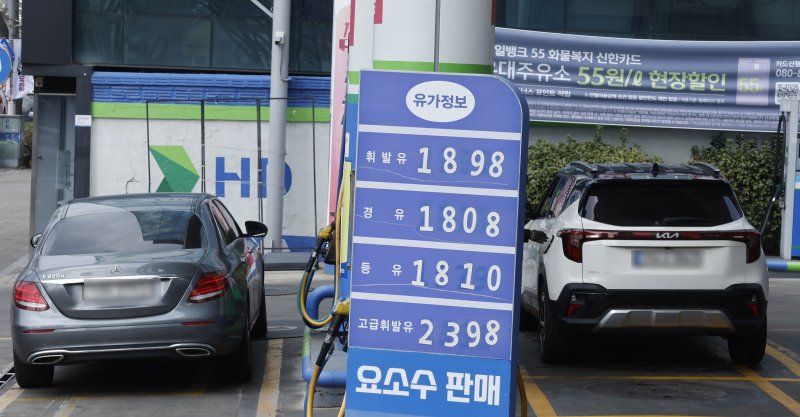
[Financial News] As the situation in the Middle East grows increasingly volatile, an unprecedented sense of crisis is spreading through the global energy market.
The Islamic Republic of Iran is now toying with the option of closing the Strait of Hormuz, through which one-third of the world’s seaborne oil trade passes, in retaliation for attacks by the United States of America (U.S.) and the State of Israel. This has triggered warnings that oil could surge toward $200 a barrel.
Recently, after its forces attacked a commercial vessel, the government of the Islamic Republic of Iran escalated its rhetoric, declaring that "the world should prepare for oil at $200 a barrel."
On the 16th (local time), energy outlet Oilprice.com analyzed the outlook and noted that the problem is that Iran’s threats are not mere bluff.
According to a source at the U.S. Department of the Treasury (Treasury Department), United States of America (U.S.) President Donald John Trump is extremely reluctant to deploy ground troops, which is effectively the only realistic way to secure the Strait of Hormuz.
The source explained, "Without ground forces, escorting commercial vessels solely with naval ships would be highly vulnerable to attacks by Iran’s drones, missiles, and fast boats, and would also require extensive mine-clearing operations in advance, which is a major challenge."
The Trump administration is currently exploring measures such as support for maritime insurance, but no concrete implementation plan has yet been announced.
Facing the risk of a supply-chain cutoff, the U.S. has moved to expand supplies on all fronts.
U.S. Secretary of Energy Chris Wright stated that President Trump has approved the release of 172 million barrels from the strategic petroleum reserve (SPR). This is part of a broader plan recommended by the International Energy Agency (IEA) to release 400 million barrels.
Of particular note is Washington’s more flexible sanctions policy.
To offset the supply shortfall, the U.S. has granted a 30-day temporary sanctions waiver on Russian oil until April 11.
This effectively opens the door for major countries, including India, to legally purchase oil from Russia.
Oil from Venezuela, where the Nicolás Maduro regime has been ousted, can also now be traded freely. However, years of underinvestment and aging infrastructure mean the country is in no position to ramp up output quickly.
Market experts warn that if the Strait of Hormuz were to be completely shut down, oil prices would spiral out of control.
Depending on the scale of the disruption to crude supplies, prices could rise to around $82 a barrel, and in a scenario similar to the first oil shock—with an 8 million barrel per day drop—prices are projected to reach about $127.
However, Vikas Dwivedi, a strategist at Macquarie Group Limited, argued, "A closure of the Strait of Hormuz would trigger a domino effect that could push oil prices above $150 a barrel."
For President Trump, high oil prices are more than just an economic indicator. With the midterm elections and the next presidential race looming in November, rising gasoline prices could be politically devastating. Statistically, every $10 increase in the price of a barrel of oil raises gasoline prices by about 25 to 30 cents per gallon (3.8 liters), leading to tens of billions of dollars in reduced consumer spending.
In past U.S. presidential elections, there has been only one instance in which the ruling party won when a recession occurred within the two years preceding the vote.
A European Union (EU) security official predicted, "President Trump is likely to declare that he has achieved his objectives in attacking Iran and then pull back within two to three weeks," adding, "Rather than a prolonged war, he will focus on managing the situation through pressure."
jjyoon@fnnews.com Yoon Jae-joon Reporter