"I Became Happier After My Husband Died"... Study Finds Life Satisfaction Rises for Some Widows
- Input
- 2026-03-17 08:16:10
- Updated
- 2026-03-17 08:16:10
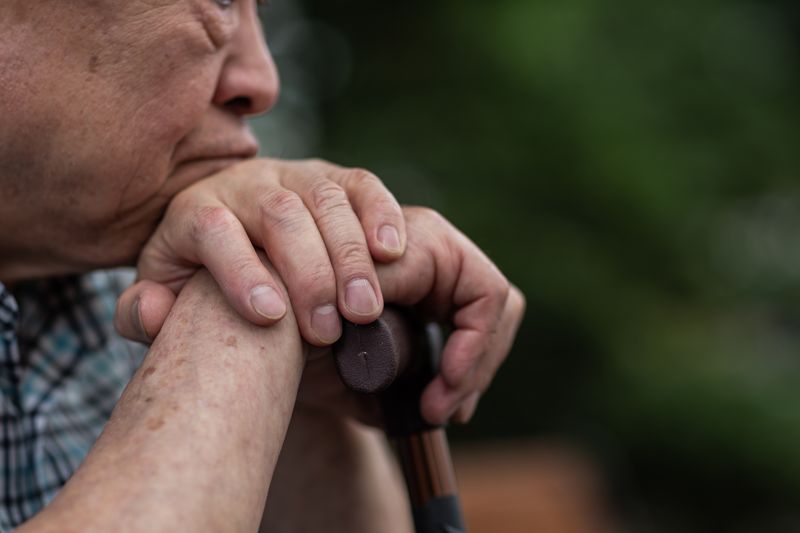
According to The Financial News, a new study has found that the impact of spousal bereavement on the health of older adults differs by gender. Men who lost their wives tended to experience declines in physical and mental health and in their overall quality of life. In contrast, women who were widowed saw a temporary drop in happiness, but over time many reported higher life satisfaction than before.
Boston University team analyzes 27 indicators after spousal loss
On the 16th, The Dong-A Ilbo and other outlets reported that researchers from the Boston University School of Public Health and Chiba University in Japan released findings from a study examining the effects of spousal bereavement among older Japanese adults.
The team used data from about 26,000 independently living adults aged 65 and older who participated in the Japanese Longitudinal Study of Aging, also known as the Japan Gerontological Evaluation Study (JAGES). Among them, 1,076 people experienced the death of a spouse during the study period.
Using survey data collected in 2013, 2016, and 2019, the researchers analyzed how spousal bereavement affected 37 health and quality-of-life indicators. They then compared differences by gender and how these effects changed over time.
Men who lost wives show more depression; women report greater happiness
The study found that men who lost their wives faced higher risks of dementia, death, and declines in their ability to perform daily activities. They also showed increased depressive symptoms and lower levels of happiness, while their social support — both emotional support and practical help from their networks — decreased.
By contrast, women who lost their husbands did not show an increase in depressive symptoms. Over time, many of them actually reported higher levels of happiness and life satisfaction.
Koichiro Shiba, an epidemiologist at the Boston University School of Public Health and lead author of the paper, explained, "In this study, we found that men suffered greater harm on almost every front, while women showed a remarkable degree of resilience."
Men rely emotionally on spouses, while caregiving wives feel a sense of release
The researchers suggested that these differences are likely tied to long-standing cultural expectations around gender roles.
Shiba noted, "In Japan and in many other cultures, men’s lives are often centered around work, and they tend to rely heavily on their spouses for both emotional and practical support."
He went on to point out that in Japan, wives are far more likely to serve as the primary caregivers for their husbands. For some women, the death of a spouse may therefore mean being freed from a heavy caregiving burden, which could in turn contribute to higher life satisfaction.
The research team concluded, "Men were more vulnerable to negative health outcomes after the death of a spouse, whereas women showed relatively high resilience." They added, "These findings suggest that gender-sensitive policy interventions are needed to support recovery and adjustment after spousal bereavement."
The study has been published online in Journal of Affective Disorders, the official journal of the International Society for Affective Disorders.
[email protected] Kim Su-yeon Reporter