U.S. car ownership costs break through critical threshold...Could they drag Trump down in the midterms?
- Input
- 2026-03-17 04:09:33
- Updated
- 2026-03-17 04:09:33
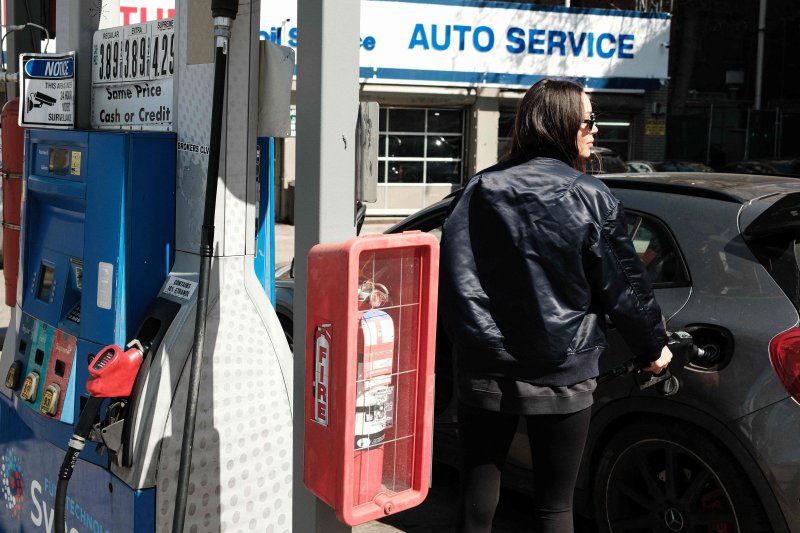
Car ownership costs in the United States of America (USA) have broken through a critical threshold, the Financial Times (FT) reported on the 16th local time.
After housing, car ownership is the second-largest expense for consumers, and it is emerging as a key factor that could shape the outcome of the November midterm elections. For Donald John Trump, who launched a war in the Islamic Republic of Iran (Iran), driving up oil prices and sharply increasing the cost of owning a car, this could turn into a serious liability.
Past the tipping point...no going back
According to the FT, the cost of owning and maintaining a car in the USA has now passed a tipping point. In other words, a structural barrier has formed that makes it difficult to return to the past.
Years of low oil prices led U.S. consumers to favor large pickup trucks and SUVs over sedans, causing small cars to disappear from the market.
As consumer preferences shifted, automakers stopped producing low-margin small cars. As a result, it is now virtually impossible to find a new car priced under $20,000 in the USA.
With small cars gone and sticker prices soaring, higher installment interest rates, repair costs, and insurance premiums are all adding fuel to the fire, pushing car ownership costs even higher.
Auto loan interest rates have jumped into the 8% range, and insurance premiums have surged by about 20%.
By the end of this year, households paying more than $1,000 a month in car loan installments are expected to account for around 40% of all borrowers.
Erin Keating of Cox Automotive Inc. said the car ownership model has been fundamentally reshaped, adding that the chances of ownership costs coming back down are very slim.
In effect, the psychological and economic red line for working- and middle-class Americans has been breached.
Tyson Jominy, senior vice president at J.D. Power, noted that with compact sedan models disappearing, the U.S. market had already crossed a tipping point in the 2010s, moving decisively away from the standard passenger car.
Trump’s self-defeating move
Donald Trump’s war in Iran and his rollback of fuel-efficiency regulations are turning into a self-defeating move that amplifies consumers’ car ownership costs.
Before the war in Iran, gasoline at U.S. gas stations cost less than $3 per gallon (3.78 liters). It has now soared to around $3.50.
In a country where the vast majority of people rely on cars to get around, a sharp spike in fuel prices translates almost immediately into falling approval ratings.
On top of this, Trump has fanned a return to fossil fuels by claiming that "the climate crisis is a hoax," and his relaxation of fuel-efficiency rules is magnifying the shock from higher oil prices.
These deregulatory moves by the Trump administration encouraged greater consumption of gasoline-powered internal combustion vehicles, leaving consumers more exposed to rising fuel costs. Had former President Joe Biden’s electric-vehicle expansion policies continued, the blow from higher gas prices at the pump would likely have been less severe.
All of this is squeezing disposable income, a core variable in the midterm elections.
Rashid Fahan, a car dealer in The Bronx in New York City, said he can feel that customers coming into his showroom are worse off financially. Many are disappointed to find that the cars they can actually afford fall far short of what they had hoped for, he added.
Trump’s own goal appears likely to work against the Republican Party in the November midterm elections.
[email protected] Song Kyung-jae Reporter