Ruling party and government: "Raise nuclear plant utilization to 80%"... Parties agree on Three Currency Stabilization Bills
- Input
- 2026-03-16 18:46:28
- Updated
- 2026-03-16 18:46:28
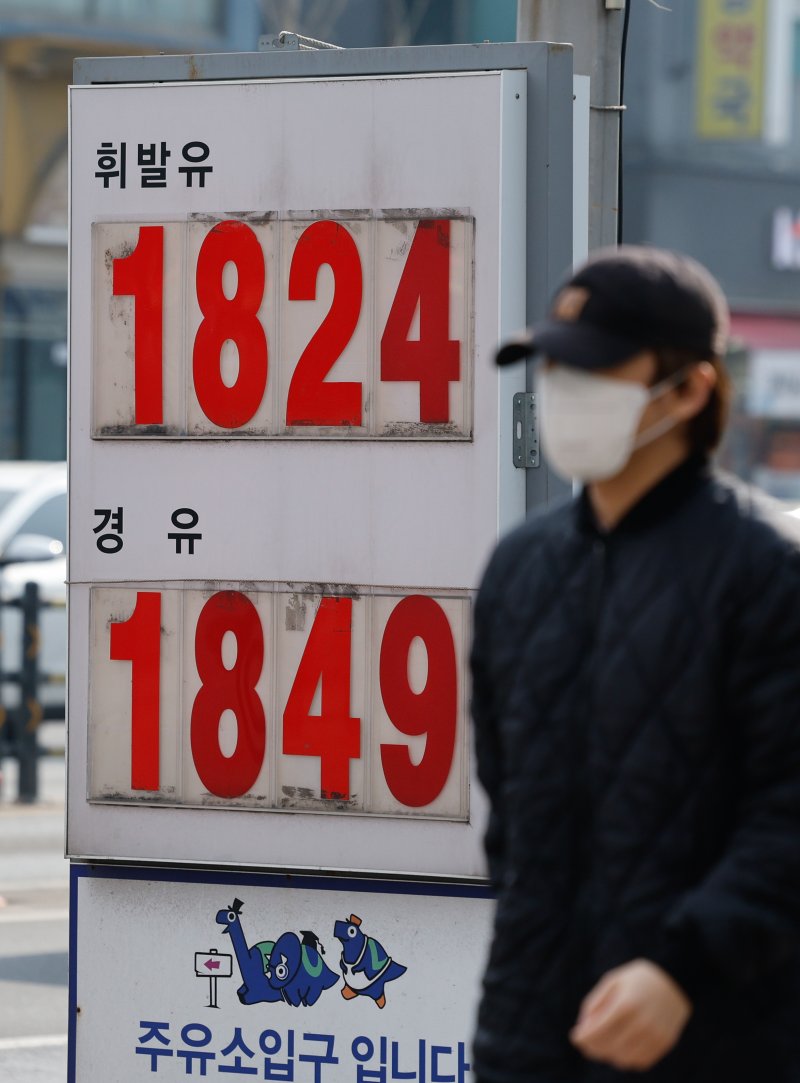
According to Financial News, on the 16th the ruling party and the government decided to raise the operating rate of nuclear power plants to 80% in response to the surge in oil prices caused by the war involving the Islamic Republic of Iran. They also agreed to expand investment in an energy transition centered on renewable energy, using a supplementary budget to strengthen long-term energy security.
The Democratic Party’s Task Force on Economic Response to the Middle East Crisis held a party–government consultation with the government at the Members’ Office Building of the National Assembly that day, where they discussed measures to respond to energy supply and demand, prices, and industrial risks stemming from the spike in oil prices. After the task force meeting, lawmaker Ahn Do-geol told reporters that the country has only nine days’ worth of liquefied natural gas (LNG) reserves and that the additional volume to be secured will cover only consumption through the end of the year. He explained, "We will adjust the power mix by increasing coal and nuclear generation and reducing LNG generation," and unveiled a response plan centered on lifting the 80% cap on utilization of coal-fired power capacity and completing maintenance on six nuclear reactors by May to raise the nuclear utilization rate from the high-60% range to 80%.
The decision to immediately increase the utilization rates of nuclear and coal-fired power plants reflects how tight the oil supply situation has become. While the country currently holds 208 days’ worth of crude oil reserves, the plan also includes, in consultation with the International Energy Agency (IEA), the phased release over four months of 22.46 million barrels of strategic reserves and the import of 3.35 million barrels from KNOC’s overseas development projects by June. Measures to ease logistics and other cost burdens caused by the oil price surge will also be strengthened. To stabilize the price ceiling system, gas stations that significantly cut prices will receive incentives such as public recognition, while violators will have their licenses revoked immediately without prior warning. The limit under the Export Voucher Program, which helps cover international shipping costs, will be raised from 30 million won to 60 million won, and a total of 10 billion won in emergency logistics support vouchers will be provided to about 1,000 exporters to the Middle East. Companies damaged by the Middle East crisis will receive 670 billion won in management stabilization funds, and for policy loans, maturities will be extended by one year without adding extra interest.
The budget for these support measures will be secured through a supplementary budget. The government will submit its supplementary budget proposal to the National Assembly by the end of this month so that deliberations can begin. The goal is to set the size within the 20 trillion won in expected excess tax revenue this year and have the bill pass the National Assembly as early as April. The supplementary budget will include funds to compensate refiners for losses incurred under the oil price ceiling system, as well as budgets for energy vouchers and logistics cost support for exporting companies.
A notable item in the budget is the expansion of investment and financing for an energy transition centered on renewable energy. As the surge in oil prices has shaken energy security and forced the government to turn back to nuclear and coal power, it now aims to accelerate the expansion of renewables to bolster future energy security. The Lee Jae-myung administration is pushing to expand nationwide solar and wind power generation and to roll out the Sunlight and Wind Pension nationwide, a scheme under which local residents share in the income from such projects.
As oil prices rise, the exchange rate is climbing as well, and the government plans to curb volatility through the "Three Currency Stabilization Bills." These three bills are being pushed with the aim of passing the plenary session of the National Assembly on the 19th. They cleared the subcommittee for bill review of the Strategy and Finance Committee that day by bipartisan agreement and will go through the full meeting of the Strategy and Finance Committee on the 17th and then the Legislation and Judiciary Committee. The package consists of amendments to the Restriction of Special Taxation Act, including: reducing capital gains tax when individual investors sell overseas stocks and reinvest in the domestic stock market; easing capital gains tax on overseas stock investments when individuals buy currency-hedged derivatives to hedge exchange-rate risk; and raising the non-taxable portion of dividends from overseas subsidiaries from 95% to 100% to encourage repatriation of funds.
The government is also moving to address not only oil but broader raw material supply issues. As it has become harder to secure naphtha—one quarter of which is imported from the Middle East—the already struggling petrochemical industry has come under even greater pressure. In response, the government will freeze exports of domestically produced naphtha at last year’s levels and seek alternative import sources. In particular, it is considering designating the Yeosu Petrochemical Industrial Complex as an Industrial Crisis Special Response Zone. This designation, made by the Ministry of Trade, Industry and Energy of the Republic of Korea when major industries face crisis and economic conditions deteriorate, would allow the government to provide subsidies, loans and contributions to companies and small business owners, as well as employment stabilization support for laid-off and retired workers.
[email protected] Kim Yun-ho, Kim Hyeong-gu, Song Ji-won Reporter