Samsung Electronics unveils HBM4E for the first time, strengthening alliance with Nvidia through a total memory solution
- Input
- 2026-03-17 05:30:00
- Updated
- 2026-03-17 05:30:00
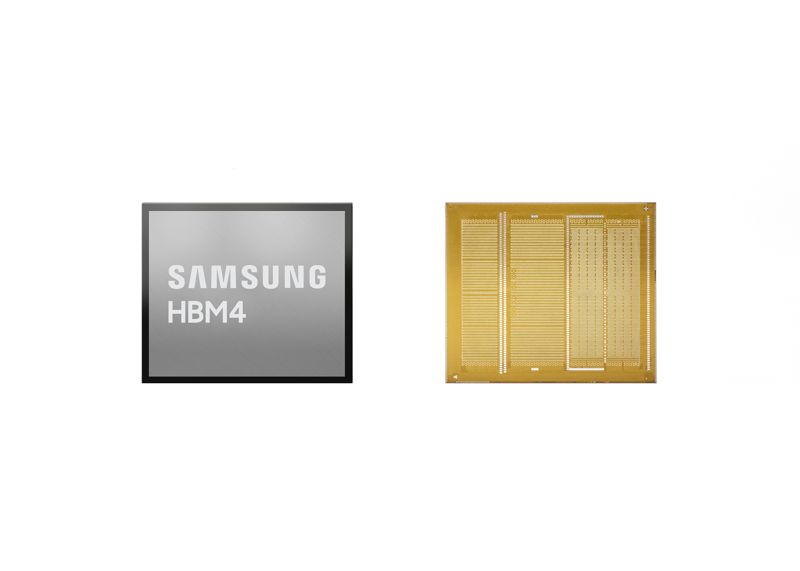
[The Financial News] Samsung Electronics has begun mass production and shipment of HBM4 (High Bandwidth Memory 4) for Nvidia’s next-generation artificial intelligence (AI) accelerator, the NVIDIA Vera Rubin platform, and is now revealing its follow-up 7th-generation HBM4E (High Bandwidth Memory 4E) technology. With this, the company is accelerating its “super-gap” strategy in the next-generation AI memory market. On March 16 (local time), at the NVIDIA GTC 2026 (NVIDIA GPU Technology Conference 2026) in San Jose, California, Samsung will showcase its HBM4 mass-production achievements and unveil a physical HBM4E chip for the first time. The company also plans to present its capability to provide a “total memory solution” by supplying all the memory and storage required for the NVIDIA Vera Rubin platform, including HBM, SOCAMM, and solid-state drives (SSD).
First public unveiling of HBM4E physical chip and core die wafer
According to industry sources on the 17th, Samsung Electronics is using this NVIDIA GTC 2026 exhibition to present, for the first time, a physical HBM4E chip and core die wafer. These are based on the technological competitiveness accumulated through mass production of 6th-generation 1c dynamic random-access memory (DRAM) processes and on Samsung’s 4-nanometer foundry base-die design capabilities.
Samsung Electronics’ HBM4E is expected to deliver a data rate of 16Gbps (gigabits per second) per pin and bandwidth of 4.0TB/s. This performance is achieved through optimized collaboration that brings together all of the company’s capabilities across memory, its own foundry and logic design, and advanced packaging technologies.
Through a video presentation, Samsung Electronics is also introducing its hybrid bonding technology, which improves thermal resistance by more than 20% compared with Thermal Compression Bonding (TCB) and supports stacking of 16 layers or more. By doing so, the company is underscoring its packaging technology leadership for next-generation HBM.
In addition, at this exhibition Samsung has placed the HBM4 chips and 4-nanometer foundry base-die wafers destined for the NVIDIA Vera Rubin platform at the forefront of its booth. The layout is designed so visitors can see Samsung’s full HBM lineup for implementing next-generation chips at a glance.
A Samsung Electronics representative stated, "By leveraging a total solution available only to an integrated device manufacturer (IDM), we plan to enhance development efficiency and establish a virtuous cycle of technology that delivers overwhelming performance and quality even in the era of high-performance HBM."
Timely supply of a total memory solution for the NVIDIA Vera Rubin platform
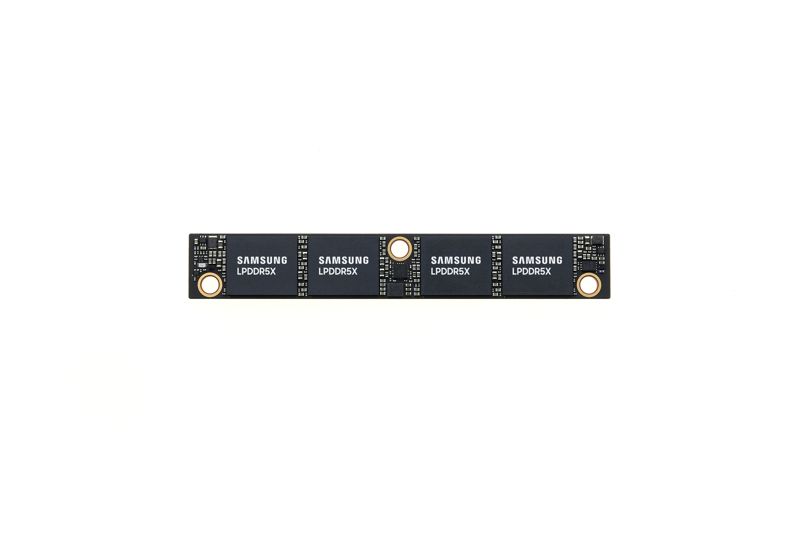
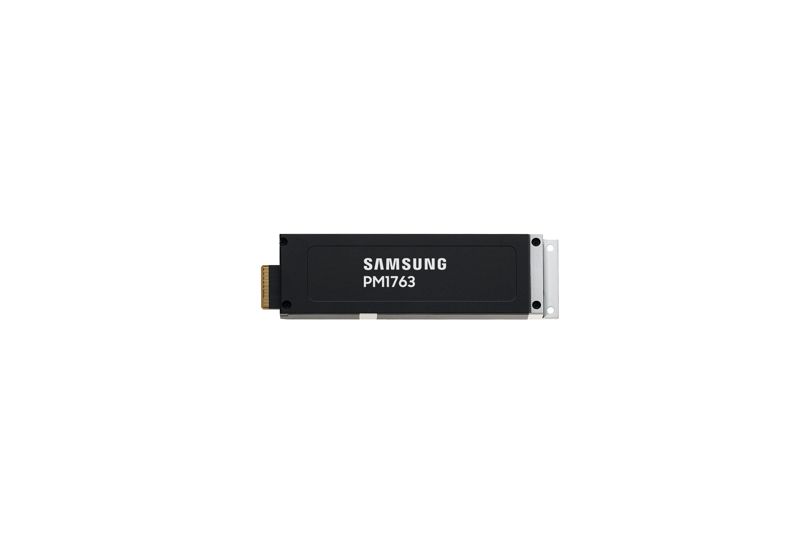
Through this exhibition, Samsung Electronics is also highlighting its unique capability to provide a total memory solution that can supply all memory and storage for the NVIDIA Vera Rubin platform on schedule. In a dedicated Nvidia gallery, the company is displaying HBM4 for the Rubin graphics processing unit (GPU), SOCAMM2 (Small Outline Compression Attached Memory Module) for the Rubin central processing unit (CPU), and the Samsung PM1763 enterprise SSD as storage, all integrated with the NVIDIA Vera Rubin platform to showcase the partnership between the two companies.
Samsung Electronics’ SOCAMM2 is an LPDDR-based server memory module that has completed quality verification and has entered mass production and shipment as an industry first. The Samsung PM1763 enterprise SSD, based on PCI Express 6.0 (PCIe Gen6), serves as the main storage for the NVIDIA Vera Rubin platform. At its booth, Samsung is running servers equipped with the PM1763 to demonstrate Nvidia’s Supervisory Control and Data Acquisition (SCADA) workloads, allowing visitors to experience top-tier performance firsthand rather than just hearing about specifications.
Moreover, to improve inference performance and power efficiency, Samsung Electronics plans to supply the Samsung PM1753 enterprise SSD, based on PCI Express 5.0 (PCIe Gen5), to the Context Memory eXtension platform (CMX) newly adopted in the NVIDIA Vera Rubin platform. Visitors can see this product in the AI factory zone within the booth.
Powerful AI systems such as the NVIDIA Vera Rubin platform are essential for innovation in AI factories, and Samsung Electronics intends to continue providing high-performance memory solutions that support these systems. "Building on this collaboration, the two companies will jointly lead a paradigm shift in global AI infrastructure," Samsung Electronics added.
[email protected] Lim Su-bin Reporter