"Cheonghae Unit: Send It to the Strait of Hormuz or Not?" Lee Administration Trapped in Dilemma Ahead of Talks With Washington
- Input
- 2026-03-16 12:23:45
- Updated
- 2026-03-16 12:23:45
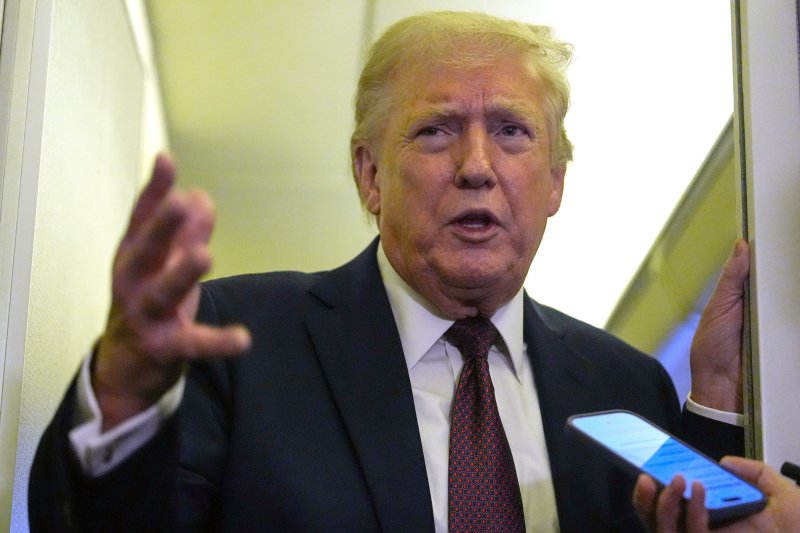
If Seoul decides not to send a warship, the biggest concern is that President Donald Trump could impose retaliatory tariffs or security-related penalties during the security and trade talks that are about to begin. United States Forces Korea (USFK) has already withdrawn key defense assets from the Korean Peninsula to the Middle East, including the Terminal High Altitude Area Defense (THAAD) system.
On top of that, the opposition is demanding approval from the National Assembly of the Republic of Korea, making it difficult for President Lee to decide unilaterally on a naval deployment. On the 16th, the People Power Party (PPP) urged, "The government must immediately bring the issue of dispatching forces to the Strait of Hormuz before the National Assembly and comply with the parliamentary approval procedures stipulated in the Constitution." The Foreign Affairs and Unification Committee of the National Assembly has also convened an emergency meeting for the 17th and plans to summon Minister of Foreign Affairs Cho Hyun to question the government’s response to the recent situation involving the Islamic Republic of Iran.
The biggest dilemma is that, at Seoul’s strong request, follow-up negotiations have begun on a Joint Fact Sheet that links security and trade between South Korea and the United States, reflecting agreements reached by the leaders of South Korea and the United States. Although the U.S. delegation canceled its visit to South Korea earlier this month due to the fallout from the conflict involving the Islamic Republic of Iran, the Lee Jae-myung administration notified Washington that it would instead send its own delegation to the United States. The Ministry of Foreign Affairs and related ministries are forming a negotiating team and plan to visit the United States soon.
In the midst of this, President Donald Trump has asked five countries—South Korea, Japan, China, France, and the United Kingdom (UK)—to send warships to help secure the Strait of Hormuz. If President Donald Trump openly moves into package negotiations that tie security and trade together, disadvantages for Seoul will be hard to avoid. Reports that Japan is considering dispatching the Japan Self-Defense Forces (JSDF) to the Strait of Hormuz are likely to deepen Seoul’s concerns, as the two countries face similar issues in both security and trade.
Japanese Prime Minister Sanae Takaichi will travel to the United States for four days starting on the 18th for talks with President Donald Trump. There is speculation that, during the U.S.-Japan summit, President Donald Trump may formally ask for a JSDF deployment.
President Donald Trump is also pushing to hold a summit with President of the People’s Republic of China Xi Jinping within the next few weeks. At that meeting, he could request that China send warships to the Strait of Hormuz as well. However, the prospects are uncertain, given China’s traditionally friendly ties with the Islamic Republic of Iran and the near absence of military cooperation between Washington and Beijing under the Trump administration.
Attention is now focused on whether President Lee Jae-myung will decide to rapidly dispatch the Cheonghae Unit without National Assembly approval, citing the precedent set by the Moon Jae-in administration. Overseas troop deployments require the consent of the National Assembly of the Republic of Korea. However, the motion already submitted to the National Assembly for the Cheonghae Unit’s deployment reportedly includes the phrase, "In the event of an emergency, activities to protect our nationals may extend to additional designated waters." The Moon Jae-in administration used this wording as the basis for sending the Cheonghae Unit to the Strait of Hormuz during the first Trump administration without seeking separate parliamentary approval. In January 2021, when the Islamic Revolutionary Guard Corps (IRGC) seized a South Korean ship, the destroyer ROKS Choi Young was urgently dispatched to the Strait of Hormuz.
Due to the recent blockade of the Strait of Hormuz by the Islamic Republic of Iran, about 20 South Korean vessels are reportedly stranded in the area. The Ministry of Foreign Affairs has been asking neighboring coastal states to help deliver supplies to the crews of South Korean ships.
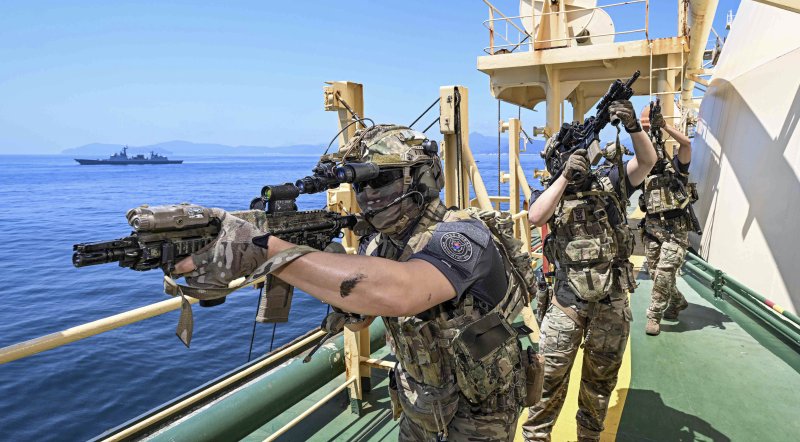
At present, South Korean forces are not permanently stationed around the Strait of Hormuz. The Cheonghae Unit, consisting of one Navy destroyer and about 300 personnel, is operating in nearby waters in the Gulf of Aden off the Federal Republic of Somalia. The Cheonghae Unit’s primary mission has been anti-piracy operations in the Gulf of Aden and the protection of commercial vessels. It is reportedly able to reach the Strait of Hormuz within three to four days if urgently dispatched.
[email protected] Kim Kyung-soo Reporter