Iran Says "No Negotiations With U.S., Other States Free to Use Hormuz"
- Input
- 2026-03-16 11:44:14
- Updated
- 2026-03-16 11:44:14
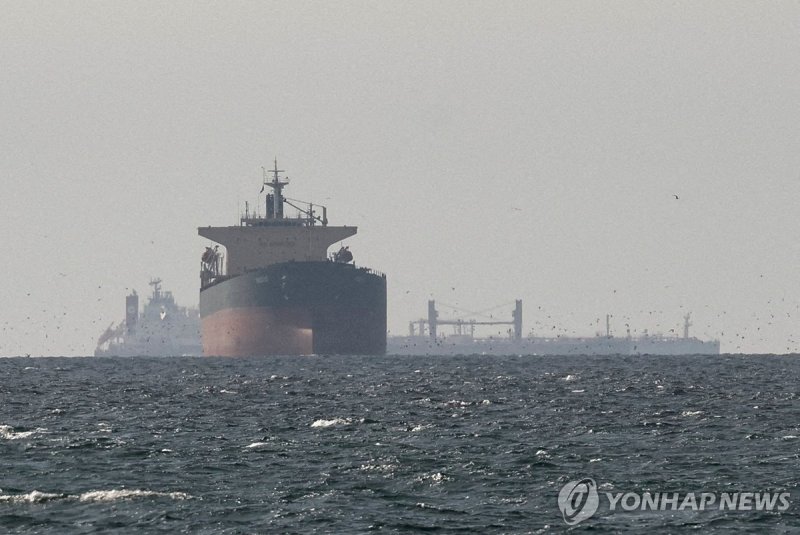
The Islamic Republic of Iran has publicly declared that it is prepared for a prolonged confrontation, dismissing any possibility of negotiations with the United States of America (U.S.). At the same time, it signaled that it could cooperate with countries other than the U.S. and the State of Israel on passage through the Strait of Hormuz, revealing a strategy aimed at driving diplomatic wedges.
Minister of Foreign Affairs of Iran Abbas Araghchi said in a Face the Nation interview with Columbia Broadcasting System (CBS) on the 15th (local time), "We have never asked for a ceasefire, and we have never even asked for negotiations," adding, "People are dying simply because Donald Trump finds it entertaining. This is a war chosen by Trump and the United States."
He went on, "We are prepared to defend ourselves for as long as it takes," stressing, "We will continue to defend ourselves until Trump realizes that this is an illegal war that cannot be won."
He drew a firm line in particular on the possibility of talks with the U.S. Araghchi argued, "We do not see any reason why we should talk to the U.S.," and added, "While we were in talks with them, they decided to attack us, and this has already happened twice."
On the Islamic Republic of Iran’s nuclear program, he said that more than 400 kilograms of enriched uranium remain under the supervision of the International Atomic Energy Agency (IAEA). However, he noted that there are currently no nuclear negotiations underway, saying, "Everything depends on the future."
His remarks came shortly after Donald Trump repeatedly claimed that the Islamic Republic of Iran "wants to negotiate," amounting to an open denial by the Iranian government of those assertions.
Araghchi nevertheless indicated that, on the issue of passage through the Strait of Hormuz, the Islamic Republic of Iran could cooperate with countries other than the U.S. and the State of Israel. "We have not closed the strait," he said, explaining, "For countries that request passage, we are guaranteeing safe navigation." He maintained that ships are staying away from the strait because of "U.S. aggression."
In practice, some countries are resolving the issue of ship passage through talks with the Islamic Republic of Iran. The government of the Republic of India (India) recently highlighted the passage of two Indian gas carriers through the Strait of Hormuz as a diplomatic achievement.
Indian Minister of External Affairs Subrahmanyam Jaishankar said in an interview with the Financial Times (FT) in the United Kingdom, "We are currently engaged in dialogue with the Islamic Republic of Iran, and that dialogue has produced some results," adding, "Reasoned persuasion and coordination to find solutions clearly produced better outcomes than the alternative."
In Europe as well, diplomatic contacts continue over the transport of energy. France and the Italian Republic have recently begun related consultations with the Islamic Republic of Iran, and Subrahmanyam Jaishankar is scheduled to share India’s negotiating experience at a meeting of European Union (EU) foreign ministers in Brussels in the Kingdom of Belgium on the 16th.
[email protected] Kim Kyung-min Reporter