Trump steps up pressure to send warships to the Strait of Hormuz... Europe weighs options, China opposes
- Input
- 2026-03-16 11:31:00
- Updated
- 2026-03-16 11:31:00
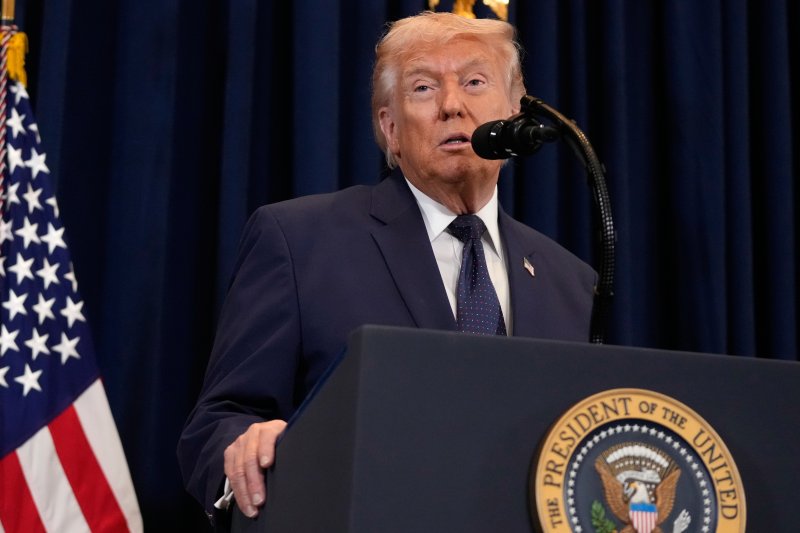
By Lee Byung-chul in New York City for Financial News.President Donald Trump has been pressing allied nations day after day on the 15th (local time) to resolve the Islamic Republic of Iran’s blockade of the Strait of Hormuz. The previous day, through the social media platform Truth Social, he called on South Korea, Japan, France, the United Kingdom (UK), China and others to send warships, but as these countries responded lukewarmly, he is now ratcheting up the pressure.
Trump discussed the issue with UK Prime Minister Keir Starmer, while U.S. Secretary of Defense Pete Hegseth held a phone call with Japan’s Defense Minister Shinjirō Koizumi. U.S. Treasury Secretary Scott Bessent met Chinese Vice Premier He Lifeng of the State Council at the end of March in Paris in preparation for the U.S.-China summit to be held in Beijing. Although the details of their talks have not been disclosed, observers believe the Hormuz issue was likely raised.
Trump intensifies pressure on allies, demands warship deployments
Speaking to reporters aboard Air Force One on his way back to Washington, D.C. from the state of Florida, Trump said he had asked seven countries to send warships to help lift the blockade of the Strait of Hormuz. The day before, on Truth Social, he had named South Korea, Japan, France, the UK and China, saying these countries would dispatch naval vessels.
“We made contact yesterday and today, and some countries responded positively while others said they did not want to get involved,” Trump said. He went on, “Some countries have minesweepers, and that would help us,” adding, “I want these countries to come to the place where they get their energy, on their own territory, and defend that territory together with us.”
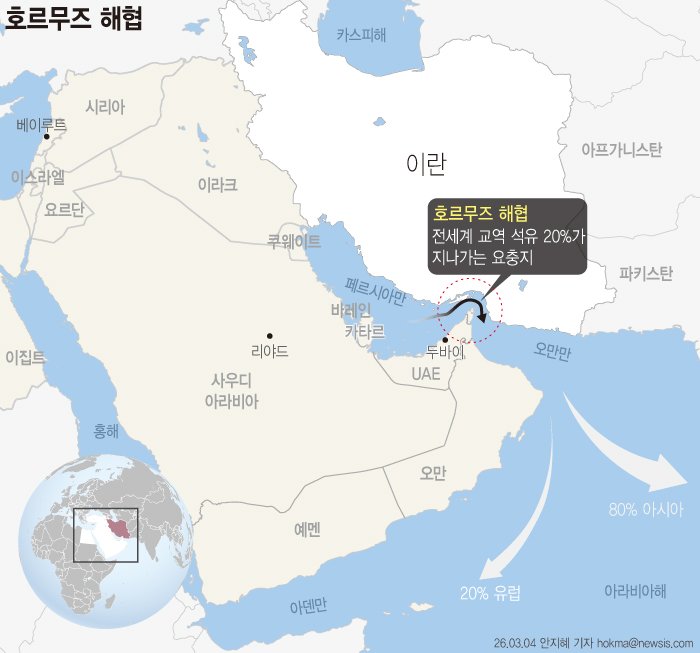
He specifically mentioned China’s participation as well. In a previous phone interview with the Financial Times (FT), he had urged China to join and even linked the issue to the U.S.-China summit scheduled for late March. “China gets about 90% of its oil from the Strait of Hormuz, while the United States gets only a very small amount,” Trump said.
U.S. steps up contacts with key countries
As Trump indicated, the United States has begun reaching out to major countries individually. The Prime Minister’s Office of the United Kingdom said, “The two leaders discussed the importance of reopening the Strait of Hormuz to end shipping disruptions that are driving up costs worldwide,” adding, “Prime Minister Starmer will discuss the situation in the Middle East with Canadian Prime Minister Mark Carney, who will visit the UK on the 16th.”
Secretary of State for Energy Security and Net Zero Edward Samuel Miliband appeared on BBC and stressed that safe passage through the Strait of Hormuz is crucial, saying, “There are various ways we can contribute, including mine-detection drones.” Earlier, The Times reported that the UK was considering deploying mine-detection drones and thousands of interceptor drones to the Strait of Hormuz region.
The Financial Times reported that the European Union (EU) is considering expanding its Red Sea mission, Operation ASPIDES, to the Strait of Hormuz. Operation ASPIDES is an EU naval defense mission launched in February 2024 in the Red Sea in response to attacks on international shipping by Houthi rebels in the Republic of Yemen. It conducts patrols, provides intelligence and carries out defensive tasks with the aim of protecting vessels and ensuring freedom of navigation. The EU is scheduled to discuss the expansion at a foreign ministers’ meeting in Brussels in the Kingdom of Belgium on the 16th.
During his phone call with Defense Minister Koizumi, Secretary Hegseth outlined the latest developments and outlook for the situation in the Middle East, including the Strait of Hormuz. He reaffirmed the commitment to strengthening the deterrence and response capabilities of the U.S.-Japan alliance and to regional peace, and stated that the situation in the Middle East does not require changes to the posture of U.S. forces stationed in Japan. According to the Ministry of Defense of Japan, Koizumi said the Self-Defense Forces are also doing everything they can to monitor and guard the areas around Japan.
However, the ministry did not clarify whether the issue of sending Japanese warships was formally placed on the agenda.
China, Australia and India remain skeptical
Some countries have effectively declined. Australia has virtually drawn a line under the U.S. request to send warships to the Strait of Hormuz. In an interview with ABC, Australian Transport Minister Catherine King said, “We will not be sending warships to the Strait of Hormuz,” adding, “We have not received any such request.” She noted, however, that Australia is providing aircraft to support the defense of the United Arab Emirates (UAE).
China has also reacted skeptically. Citing expert assessments, the Global Times, an English-language outlet under the People’s Daily of the Chinese Communist Party (CCP), reported, “The United States trying to drag more countries into the conflict distorts the essence of the problem.” In an editorial, the paper further argued, “Security in the Strait of Hormuz depends not on how many navies are patrolling, but on whether the guns fall silent.”
India likewise maintains that diplomatic negotiations should take precedence over a military response. In an interview with the Financial Times (FT), Indian External Affairs Minister Subrahmanyam Jaishankar said, “Dialogue with Iran has already produced some results,” stressing that negotiations are the realistic way to reopen passage through the strait. In fact, through talks between New Delhi and Tehran, two India-flagged gas carriers have passed through the strait. “Finding solutions through discussion and coordination is better than doing nothing,” he said, making clear that India will continue to seek diplomatic solutions rather than heightening military tensions.
[email protected] Lee Byung-chul Reporter