China Protests U.S. Section 301 ‘Forced Labor’ Investigation
- Input
- 2026-03-16 10:48:52
- Updated
- 2026-03-16 10:48:52
On the 16th, the Ministry of Commerce of the People's Republic of China (MOFCOM) issued a statement in the name of its spokesperson, criticizing the U.S. action as "an attempt to erect trade barriers" and "highly unilateral, arbitrary, and discriminatory."
After a ruling by the Supreme Court of the United States (SCOTUS) invalidated the use of reciprocal tariffs, Washington began seeking replacement tariff measures and is now conducting investigations, based on Section 301 of the Trade Act of 1974, into issues such as overcapacity and imports of goods produced with forced labor. The forced-labor-related probe covers 60 countries, including China, Japan, and South Korea. On the 12th, the Office of the United States Trade Representative (USTR) stated that the investigation is "related to the failure to effectively enforce the prohibition on imports of goods produced with forced labor."
In response, MOFCOM said, "The United States has previously fabricated facts and imposed a series of trade restrictions on China on the grounds of forced labor, and China has already stated its firm position on multiple occasions," adding, "China has consistently opposed forced labor." It went on to say, "China was a founding member of the International Labour Organization (ILO) and has ratified international labor conventions, whereas the United States has yet to accede to the Forced Labour Convention, 1930 (No. 29). Free from the constraints of international norms, it has long handled the forced labor issue entirely on its own terms."
MOFCOM also pointed out, "A World Trade Organization (WTO) panel has already ruled that the U.S. Section 301 tariffs against China violate WTO rules, yet the United States is once again abusing Section 301 of the Trade Act of 1974 in an attempt to let its domestic law override international law." It added that this "gravely undermines the security and stability of global industrial and supply chains and seriously disrupts the international trading order."
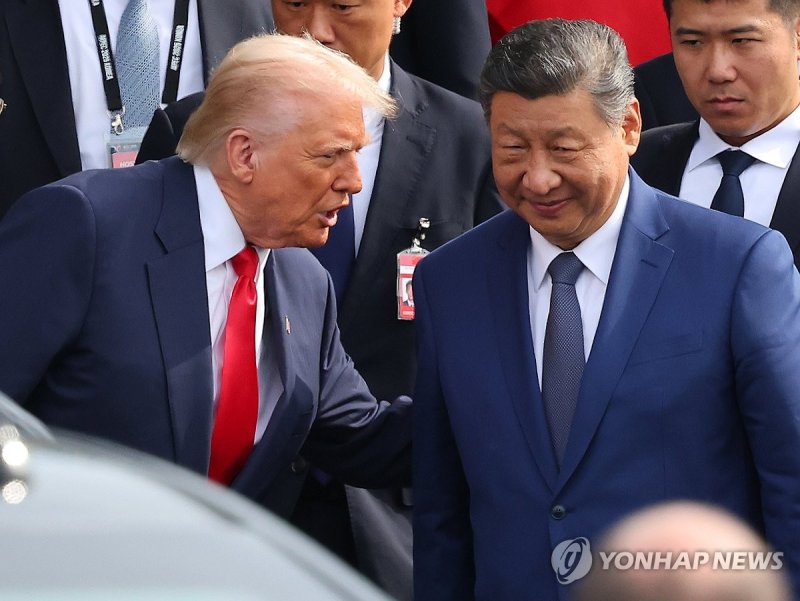
MOFCOM then referred to the high-level trade talks currently under way between the U.S. and China in Paris, France, ahead of President Donald Trump’s planned visit to China later this month. It stressed, "China has already requested consultations with the United States and urges the U.S. to immediately correct its wrongful approach."
[email protected] Hong Chae-wan Reporter