After Paying 11.8 Billion Won Over Fires, Told to Pay Another 32.1 Billion? BMW Defeats Environment Ministry’s ‘Penalty Bomb’
- Input
- 2026-03-16 11:35:44
- Updated
- 2026-03-16 11:35:44
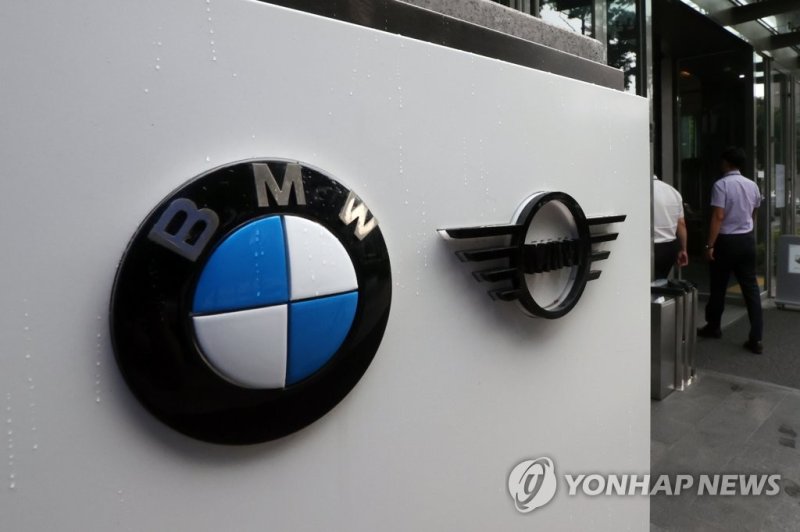
[Financial News] A court has ruled that a fine of more than 32 billion won imposed on BMW Korea for failing to report minor parts changes was unlawful. The court found that the changes were not subject to reporting under the relevant regulations and that liability cannot be based solely on a theoretical possibility of impact.
According to the legal community on the 16th, the 14th Administrative Division of the Seoul Administrative Court, presided over by Presiding Judge Lee Sang-deok of the 14th Administrative Division of the Seoul Administrative Court, ruled in January in favor of BMW Korea in its lawsuit seeking to overturn a penalty imposed by the Ministry of Climate, Energy and Environment (formerly the Ministry of Environment).
Around 2018, a series of fires broke out in vehicles imported and sold by BMW Korea. The Ministry of Land, Infrastructure and Transport investigated and concluded that cracks in the vehicles’ EGR cooler, a type of exhaust gas reduction device, caused coolant leaks that led to the fires. The ministry imposed a fine of more than 11.8 billion won on BMW Korea for failing to carry out a defect correction measure (recall).
During that investigation, the Ministry of Environment, now the Ministry of Climate, Energy and Environment, found that BMW Korea had replaced parts related to the EGR cooler without obtaining a change certification or filing a report. The ministry determined that from June 2014 to August 2018, BMW Korea had arbitrarily changed auxiliary components such as pipes, brackets and hoses within the EGR system on 23 models, and in March 2024 imposed an additional fine of about 32.15 billion won for violating the former Clean Air Conservation Act.
BMW Korea challenged the decision in court. The company argued that the changes did not fall under the statutory category of "manufacturing or selling vehicles in a manner inconsistent with certified specifications" and were merely minor measures to improve durability. The Ministry of Climate, Energy and Environment countered that any change that could affect the safety or durability of the EGR cooler and thereby influence certification results must be reported.
The court sided with BMW Korea. The panel held that the ministry had misinterpreted the relevant statutes and enforcement rules, and therefore the penalty decision was unlawful.
The judges noted that, at the time, the enforcement rules contained a proviso explicitly excluding brackets, hoses and pipes—components of the EGR cooler—from the scope of changes requiring certification. The court stated, "This provision is drafted in clear language, leaving virtually no room to apply alternative methods of interpretation."
The court also rejected the ministry’s argument that the proviso should not apply if the changes could affect the safety or durability of the EGR cooler. The panel pointed out, "It is difficult to find that there was a likelihood, beyond a vague level of possibility, that the changes had a meaningful adverse impact."
The court went on to say that, under the ministry’s interpretation, even extremely minor changes would all become subject to change certification, which would run counter to the very purpose of the proviso—namely, to ease the burden on manufacturers.
In addition, the court found it excessive that BMW Korea, having already been fined 11.8 billion won by the Ministry of Land, Infrastructure and Transport for selling defective vehicles, was hit with an additional fine more than twice that amount for failing to report the parts changes.
[email protected] Reporter Choi Eun-sol Reporter