US Dollar–South Korean Won exchange rate briefly tops 1,500 won again, first time in 17 years during intraday trading
- Input
- 2026-03-16 10:26:11
- Updated
- 2026-03-16 10:26:11
On the 16th, in the Seoul Foreign Exchange Market, the US Dollar–South Korean Won exchange rate opened at 1,501.0 won, up 7.3 won from the previous session’s closing price. It soon retreated to the 1,490-won range, but it remains in a highly sensitive zone.
This is the first time in 17 years that the rate has exceeded 1,500 won during intraday trading in the regular weekly session, since March 12, 2009, during the financial crisis, when the intraday high was 1,500 won. If the rate closes the day above 1,500 won, it would also mark the highest closing level since March 10, 2009, when it finished at 1,511.5 won.
The latest surge is widely seen as the result of investors heavily favoring the US dollar, the quintessential safe-haven asset, amid the Middle East conflict. On March 13 (local time), the U.S. Dollar Index (DXY), which measures the dollar against six major currencies on the Intercontinental Exchange Futures Exchange, had already climbed above 100.
At the same time, risk-off sentiment is driving investors away from risk assets, leading to a depreciation of the won and putting upward pressure on the exchange rate. The sharp rise in global oil prices is further weakening the won. South Korea imports about 80% of its crude oil from the Middle East, and all of it is paid for in dollars, so when oil prices rise, the country must spend more dollars to buy the same amount of oil.
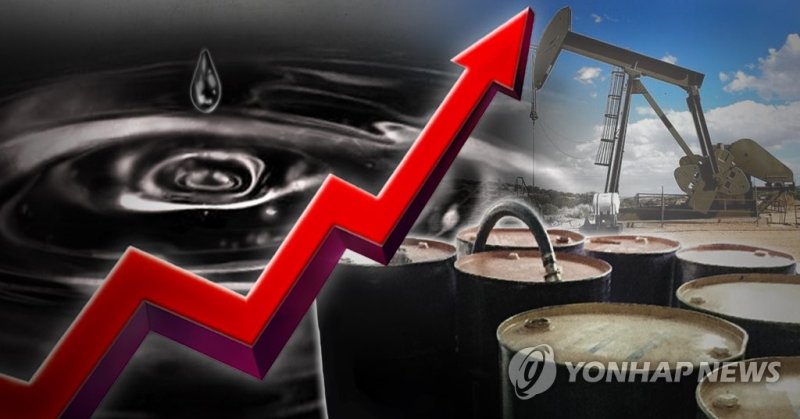
As a result, demand for dollars increases and the dollar’s value rises, while the won weakens. In fact, on the New York Mercantile Exchange, the price of West Texas Intermediate crude oil (WTI) futures for April delivery briefly spiked to 111.24 dollars per barrel on the 9th, Korea time. This was the first time in about four years, since July 2022, that the price had exceeded 100 dollars.
If the Middle East crisis drags on, there is also a risk that inflation will materialize. From the perspective of the Federal Reserve System (Fed), bringing inflation under control would take priority, leaving it little choice but to consider further rate hikes. In that scenario, global capital would flow into dollar assets, pushing up the dollar’s value and again exerting upward pressure on the US Dollar–South Korean Won exchange rate.
However, some experts caution against a simplistic formula that war automatically leads to a sharp jump in exchange rates. While conflict is certainly a factor that can push rates higher, there are also countervailing forces that can help stabilize them.
Choi Gwang-hyeok, a researcher at LS Securities, noted, "From a business-cycle perspective, the consensus forecast for economic growth is still more than double last year’s rate, and the recent rise in prices has not yet evolved into a channel that significantly slows growth." He added, "High expectations for the domestic stock market are also likely to act as a downward factor for the exchange rate."
Earlier, on the 9th, Ryoo Sangdai, Deputy Governor of the Bank of Korea (BOK), said at a meeting of the Middle East Situation Task Force, "Interest rates and the exchange rate are showing excessive volatility due to risks stemming from the Middle East, deviating from the fundamentals of our economy."
[email protected] Kim Taeil Reporter