"Send warships": Five nations including South Korea give unexpected response to Trump request
- Input
- 2026-03-16 07:07:17
- Updated
- 2026-03-16 07:07:17
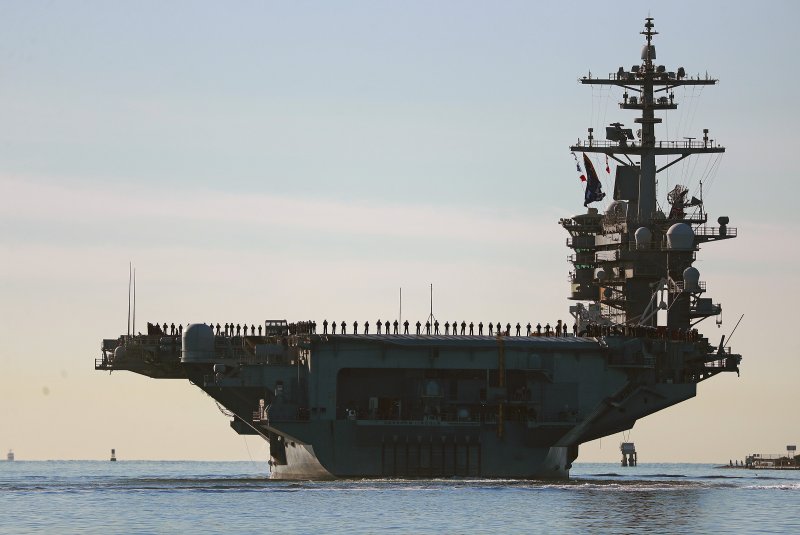
[The Financial News] Five countries that received a request from Donald John Trump, President of the United States, to dispatch warships to the Strait of Hormuz are all responding with caution.
In a post on Truth Social the previous day, President of the United States Donald John Trump wrote that he hoped China, France, Japan, South Korea, the United Kingdom of Great Britain and Northern Ireland (UK), and other nations would send naval vessels to the area.
On the 15th (local time), National Broadcasting Company (NBC) and The New York Times (NYT) reported that Japan, a key ally of the United States in the Indo-Pacific region, has not yet issued an official response to the President's request.
The Ministry of Foreign Affairs of Japan told Japan Broadcasting Corporation (NHK), "Japan makes its own decisions on how to respond, and independent judgment is our basic principle," indicating that it would not immediately dispatch naval vessels in response to President Trump's request.
A spokesperson for the Embassy of the People's Republic of China in the United States of America told Cable News Network (CNN) that "China is calling for an immediate halt to hostile actions," but did not give a direct answer regarding President Trump's request.
The United Kingdom of Great Britain and Northern Ireland (UK) said it is reviewing all options. Secretary of State for Energy Security and Net Zero Edward Samuel Miliband told British Broadcasting Corporation (BBC) that "safe passage through the Strait of Hormuz is important" and added, "There are various ways we can contribute, including through mine-detection drones."
President of France Emmanuel Macron had previously mentioned the possibility of escorting ships in the Strait of Hormuz in the future. However, the Ministry for Europe and Foreign Affairs of France stated on X (formerly Twitter) that "French naval vessels will maintain a defensive posture in the Eastern Mediterranean."
In South Korea's case, Cheong Wa Dae (the Blue House) said it "will maintain close communication with the United States and carefully review the matter before making a decision."
Foreign media on U.S. request to send warships: "Still too dangerous"
NBC commented that while it remains to be seen what measures these countries will ultimately take, their lukewarm responses appear to throw cold water on President Trump's expectation that the Strait of Hormuz blockade crisis will be resolved quickly.
The Guardian, citing a former naval admiral, pointed out that "for now, there are simply too many risks to guarantee the safety of oil tankers in the Strait of Hormuz." It warned that the warships sent to escort civilian vessels could themselves become targets.
Geopolitical and security analyst Michael Horowitz told NBC, "Protecting ships is a very big gamble," explaining, "From an operational perspective, you are deploying military assets in a very narrow strait, which could give the Islamic Republic of Iran numerous opportunities to launch close-range attacks."
Meanwhile, the Islamic Republic of Iran has mocked the request as a sign of Washington's desperation. According to The Associated Press (AP), Minister of Foreign Affairs of Iran Abbas Araghchi wrote on his social networking service (SNS) account that "the United States is in such a position that it is begging other countries, including China, for help to ensure security in the Strait of Hormuz."
The Strait of Hormuz, which connects the Persian Gulf with the open sea, is a key energy chokepoint through which about 20% of the world's crude oil shipments pass, with roughly 3,000 vessels transiting the waterway each month. At its narrowest point, the strait is only about 39 kilometers wide.
As military operations by the United States and the State of Israel against the Islamic Republic of Iran, and retaliatory attacks by Iran on U.S. military bases and civilian facilities in the Middle East, have continued for more than two weeks, Iran has effectively moved to blockade the Strait of Hormuz, driving international oil prices sharply higher.
[email protected] Moon Young-jin Reporter