"The KOSPI Could Break Below 5,000"...Retail Investors Scoop Up 11 Trillion Won of Samsung and SK hynix [MZ Money Diary]
- Input
- 2026-03-16 07:00:00
- Updated
- 2026-03-16 07:00:00
[The Financial News] As geopolitical tensions rise in the Middle East and market volatility widens, individual investors have made net purchases of more than 17 trillion won in the Korea Composite Stock Price Index (KOSPI) market so far this month. On a monthly basis, this is the second-largest amount on record. Analysts say retail investors have stepped in with massive buying whenever share prices plunged.
While foreigners and institutions dumped 18 trillion won, retail investors bought 17 trillion won
According to the Korea Exchange on the 16th, individual investors have recorded net purchases of 17.6133 trillion won in the main stock market so far this month. This figure excludes transactions in Exchange-Traded Funds (ETF), Exchange-Traded Notes (ETN), and Equity-Linked Warrants (ELW).
Retail investors showed net buying on 7 out of 9 trading days this month. In terms of monthly net purchases by individuals, this is the second-highest level ever. The largest month to date was January 2021, when net buying reached 22.3384 trillion won. That was during the COVID-19 pandemic, when the so-called "Donghak Ants Movement" drew a flood of individual money into the market. The previous second-place record of 11.1869 trillion won in March 2020 has already been far surpassed.
This month’s stock market has seen sharp swings as the United States of America (US) and Israel attacked the Islamic Republic of Iran, heightening geopolitical fears and driving up international oil prices. Over the same period, foreign investors and institutions were net sellers of 13.2396 trillion won and 5.1279 trillion won, respectively. As a result, whenever the index fell sharply, retail investors largely absorbed the shares that foreigners and institutions were offloading.
This pattern was particularly evident in trading on the 3rd. On that day, the KOSPI plunged 7.24% from the previous session, weighed down by foreigners’ net selling of 5.1487 trillion won. However, individuals alone posted net purchases of 5.7974 trillion won in a single day. Then on the 9th, while the index dropped another 5.96%, retail investors bought 4.6242 trillion won worth of shares, again moving in to buy on the dip. In contrast, foreigners and institutions that day were net sellers of 3.1735 trillion won and 1.5441 trillion won, respectively.
"We buy when it falls"...Changed retail investors scoop up 11 trillion won of Samsung and SK hynix in a sharp downturn
Retail investors’ money has flowed mainly into large-cap blue chips. In a highly volatile market, they appear to be choosing companies with relatively stable earnings.
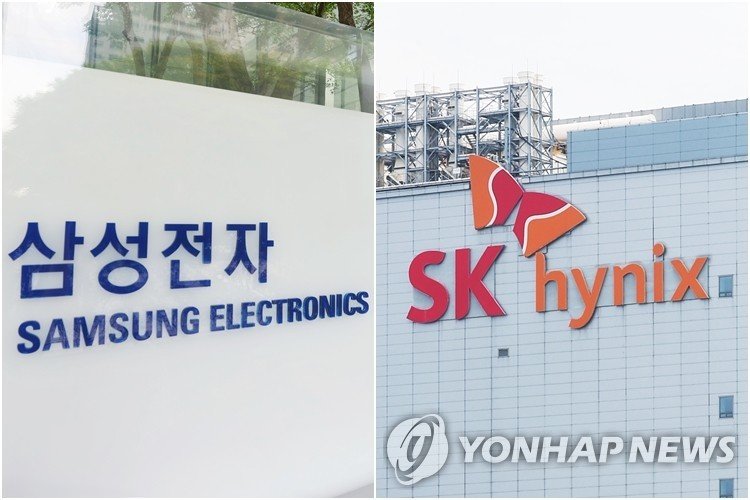
From the 3rd to the 13th, the stock most heavily bought on a net basis by individuals was Samsung Electronics, which attracted 7.9466 trillion won. SK hynix followed with 3.3501 trillion won in net purchases, ranking second. Hyundai Motor Company also drew 1.9433 trillion won, placing it among the top names. Stocks linked to risks in the Middle East also ranked high on the individual net-buy list. Retail investors bought 584.6 billion won of LIG Nex1 and 538.2 billion won of S-Oil. These are representative defense and refining plays, and the buying is seen as positioning for potential gains from shifts in the international situation.
The securities industry is paying close attention to how retail investors’ strategies are changing. In the past, individuals tended to chase stocks that were already surging. Recently, however, a pattern has emerged in which they move in to bargain-hunt large-cap names when prices fall sharply.
Prolonged Middle East risk remains a key variable
That said, there is concern that if "Middle East risk" drags on, volatility in the KOSPI market could expand even further.
As conflicts in the Middle East have continued for more than two weeks, growth in Investor Deposits—funds waiting on the sidelines to enter the market—has lost momentum. As of the 12th, Investor Deposits stood at 120.1461 trillion won, down about 8% from the record high of 132 trillion won reached on the 4th.
Some in the market even warn that, depending on how the Middle East situation unfolds, the KOSPI could fall below 5,000 points. In a report, Korea Investment & Securities researcher Dongchan Yeom wrote, "Although volatility has eased somewhat, war risks have not been removed and oil supply risks also remain, so this is a time when we need to think carefully about what would be a reasonable KOSPI bottom." However, he added, "Even if we plug in the worst-case scenarios from the past, there is not much downside left for the KOSPI," and continued, "Volatility is still not fully stabilizing, but judging from the index level, we see it as an area where investors can approach the market with a buy-on-dips strategy."
[email protected] Han Seung-gon Reporter