Seoul Metropolitan City as the Biggest Battleground; Daegu–Gyeongbuk (TK) and the Daejeon–South Chungcheong Region Shaped by Administrative Integration Wildcard [Curtain Rises on the June 3 Local Elections]
- Input
- 2026-03-15 18:40:17
- Updated
- 2026-03-15 18:40:17
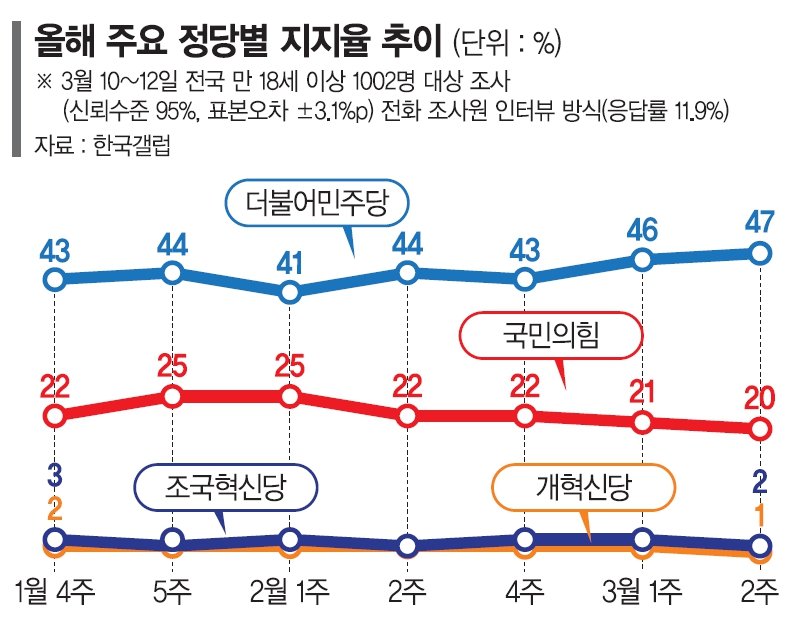
According to political circles on the 15th, many analysts view presidential approval as one of the most decisive factors in nationwide elections such as local and general elections. Voting patterns tend to track the sitting president’s approval trend quite closely. Party support is almost as influential, since backing for the president and the ruling party usually moves in tandem. In the poll that put President Lee’s approval at 66%, the Democratic Party of Korea recorded 47% support, outpacing the People Power Party (PPP), which stood at 20%, by a wide margin of 27 percentage points.
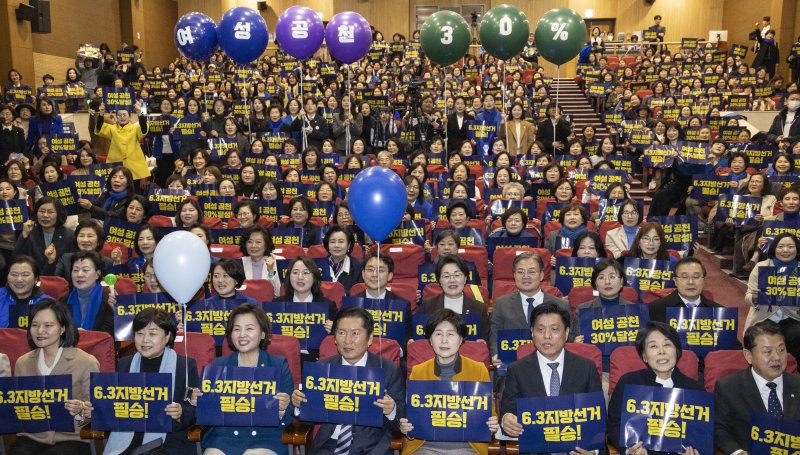
■ Democratic Party of Korea: "Give Strength to the Government and Ruling Party"
This is why Jung Chung-rae, leader of the Democratic Party of Korea, stressed at a press conference on the 8th, "In this local election, the president’s approval rating is more important than anything else. The foremost sentiment among voters is, 'Let’s back President Lee so he can govern stably and effectively.'"
In local elections, the impact of presidential and party approval is most pronounced in races for metropolitan and provincial governors in regions with a high share of swing voters. In areas where one party has a deeply entrenched base, candidates tend to secure a certain level of support regardless of the president’s approval rating. Seoul Metropolitan City is a prime example. In the previous, eighth local elections, held just after Yoon Suk Yeol was elected president and enjoyed high approval, Oh Se-hoon of the then-ruling People Power Party (PPP) won the Seoul mayoral race with a commanding 59% of the vote. In the seventh local elections before that, held barely a year into the term of former President Moon Jae-in, former mayor Park Won-soon was elected with 52%. Polls suggest a similar pattern for this year’s Seoul mayoral race. The gap between Chong Won-o, former head of Seongdong District Office and the leading Democratic contender, and incumbent Mayor Oh is roughly in line with the difference in party support between the Democratic Party of Korea and the PPP. Preference surveys for the Governor of Gyeonggi Province show a comparable structure when the ruling and opposition camps are each aggregated. Of course, election outcomes do not always follow presidential and party approval trends mechanically. In the previous eighth local elections, when the PPP swept many races early in Yoon Suk Yeol’s presidency, Democratic candidate Kim Dong-yeon still eked out a narrow victory in the Gyeonggi governor’s race by just 0.15 percentage points. Thus, while the current landscape suggests the Democratic Party of Korea could be headed for a sweeping victory, the actual results may vary depending on the strength of individual candidates nominated by each party and on the president and ruling party’s approval ratings at the time of voting.
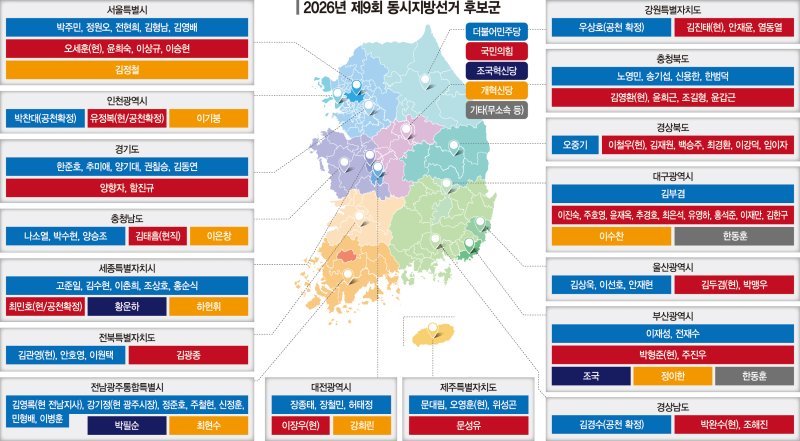
To begin with, in the Seoul mayoral race, the PPP is widely expected to field the incumbent, Mayor Oh Se-hoon, while the outcome of the Democratic primary is likely to be a key variable. President Lee’s favored "Myung-sim" candidate—so called because he is seen as reflecting Lee’s own mind—is former district chief Chong Won-o, but sitting lawmakers such as Park Joo-min, Kim Young-bae, and Jeon Hyun-hee are also entering the race and could generate a convention bounce during the primary. For Sejong Special Self-Governing City, the PPP has already confirmed incumbent Mayor Choi Min-ho as its candidate. On the Democratic side, former mayor Lee Choon-hee, former party chief of staff for political coordination Cho Sang-ho, and party special adviser Kim Soo-hyun are effectively engaged in a three-way primary contest. In Ulsan Metropolitan City, the PPP race features a showdown between incumbent Mayor Kim Doo-gyum and former mayor Park Maeng-woo. The Democratic field includes lawmaker Kim Sang-wook, who defected from the PPP, former standing representative of the Roh Moo-hyun Foundation’s Ulsan branch Ahn Jae-hyun, and former Blue House secretary for local autonomy and development Lee Sun-ho. The Progressive Party (South Korea), which has its own distinct support base in Ulsan Metropolitan City, has nominated Kim Jong-hoon and is calling for a single unified candidate from the progressive camp, shaking up the race.
For the Governor of North Chungcheong Province, both the ruling and opposition parties have drawn a crowded field of challengers. On the PPP side, incumbent Governor Kim Young-hwan faces former Chungju mayor Cho Gil-hyeon, who gained name recognition through his "Chungju Man" YouTube channel; attorney Yoon Kap-geun, who once served as legal counsel to Yoon Suk Yeol, former president of South Korea; and former National Police Agency commissioner Yoon Hee-keun, who drew attention by calling to "cut ties with Yoon" despite having served under the previous Yoon administration. In the Democratic Party of Korea, veteran Noh Young-min—who was Chief of Staff to the President and ambassador to China under former President Moon Jae-in—has entered the race, along with Shin Yong-han, vice chair of the Committee for the Era of Local Autonomy who exposed the so-called Myung Tae-gyun gate, two-term Cheongju mayor Han Beom-deok, and three-term Jincheon County chief Song Gi-seop.
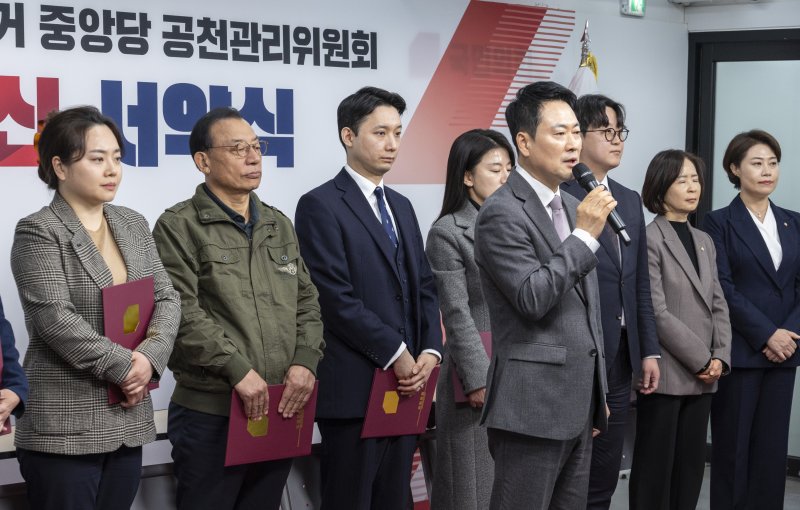
■ PPP Sees a Flood of Preliminary Candidates in Daegu–Gyeongbuk
There are regions where the Democratic Party of Korea’s potential candidates are stronger in both stature and name recognition. For Governor of Gyeonggi Province, incumbent Kim Dong-yeon is locked in a close race with six-term lawmaker Choo Mi-ae, while other sitting lawmakers such as Han Joon-ho—another of President Lee’s favored "Myung-sim" figures—and senior lawmaker Kwon Chil-seung have also jumped in. On the PPP side, only figures outside the National Assembly have declared so far, including Supreme Council member Yang Hyang-ja and Ham Jin-gyu, president of Korea Expressway Corporation. In Jeonnam-Gwangju Integrated Metropolitan City, not only incumbent Gwangju mayor Kang Gi-jung and Governor of South Jeolla Province Kim Young-rok but also five sitting lawmakers from the Democratic Party of Korea have entered the race, whereas the PPP has not received a single nomination application. For Governor of North Jeolla Province, incumbent Kim Gwan-young faces a primary against senior lawmaker Ahn Ho-young and two-term lawmaker Lee Won-taek, while on the PPP side only Kim Kwang-jong, former planning director at Woosuk University, has applied for nomination. In the race for Governor of Jeju Special Self-Governing Province, incumbent Oh Young-hoon is competing with lawmakers Wi Seong-gon and Moon Dae-rim, but the PPP has put forward only one candidate: Moon Sung-yu, former president of the Korea Asset Management Corporation (KAMCO), who is currently outside the National Assembly.
Daegu–Gyeongbuk and the Daejeon–South Chungcheong region remain highly volatile because the question of administrative integration has not yet been settled. For now, only incumbent local leaders and a few other figures have stepped forward to run in the races they had originally targeted. In the contest for Governor of North Gyeongsang Province, the PPP’s dominance is so strong that the primary is effectively the real election. Incumbent Governor Lee Cheol-woo faces challenges from three-term lawmaker Im Lee-ja, PPP Supreme Council member Kim Jae-won, former deputy prime minister and finance minister Choi Kyoung-hwan, former lawmaker Baek Seung-joo, and former Mayor of Pohang Lee Kang-deok. On the Democratic side, only Oh Jung-gi, a former Blue House administrative official, has applied for nomination. Daegu Metropolitan City, like North Gyeongsang, is typically a PPP stronghold, but recent voter volatility and the absence of an incumbent mayor mean an unexpectedly close race could emerge. This is why former prime minister Kim Boo-kyum and former lawmaker Hong Ui-rak—both of whom made their names by winning seats in Daegu Metropolitan City, long considered an electoral wasteland for the Democratic Party of Korea—are being mentioned as potential candidates. To succeed former mayor Hong Joon-pyo, the PPP has drawn not only senior lawmakers Joo Ho-young, Yoon Jae-ok, and Choo Kyung-ho but also first-term lawmakers Choi Eun-seok and Yoo Young-ha. From outside the National Assembly, contenders include Lee Jin-sook, former Chairman of the Korea Communications Commission appointed under the Yoon Suk Yeol administration who later resisted under the Lee Jae-myung administration; former lawmaker Hong Seok-jun; former Mayor of Dong District, Daegu Metropolitan City, Lee Jae-man; and Kim Han-gu, former auditor of the Saemaul Association in Dalseong County. In Daejeon Metropolitan City and South Chungcheong Province, PPP incumbents Mayor Lee Jang-woo and Governor Kim Tae-heum are waging defensive battles to hold their seats against Democratic challengers. Because these are regions with a large share of swing voters and the administrative-integration controversy has opened political space, multiple Democratic candidates are being floated. In Daejeon Metropolitan City, former mayor Heo Tae-jeong and lawmakers Jang Chul-min, a two-term member, and Jang Jong-tae, a first-term member, are engaged in a three-way primary. In South Chungcheong Province, former governor Yang Seung-jo and two-term lawmaker Park Su-hyeon, who once served as the party’s chief spokesperson, have declared their candidacies, while attention is focused on whether presidential chief of staff Kang Hoon-sik will resign his post to join the race.
■ Swing Voters: All Eyes on Daejeon and South Chungcheong
There are also regions where the presence of a strong incumbent or early confirmation of party nominations has effectively locked in the main matchups. In the race for Mayor of Incheon Metropolitan City, it has been confirmed that Democratic lawmaker Park Chan-dae—another of President Lee’s close "Myung-sim" allies—will challenge incumbent PPP mayor Yoo Jeong-bok. For Governor of Gangwon State, the PPP is widely expected to field incumbent Kim Jin-tae, while the Democratic Party of Korea has already nominated Woo Sang-ho, former Senior Presidential Secretary for Political Affairs, as its candidate. In both cases, close confidants of President Lee are seeking to wrest seats from PPP incumbents. In the Busan mayoral race, PPP incumbent Park Hyung-joon is expected to face Democratic lawmaker Jeon Jae-soo. However, several variables could still emerge: Rep. Joo Jin-woo of the People Power Party might stage an upset in the PPP’s internal contest and draw attention, or allegations about Jeon’s contacts with the Family Federation for World Peace and Unification (Unification Church) could gain prominence. For Governor of South Gyeongsang Province, the Democratic Party of Korea is aiming to retake the post by fielding Kim Kyoung-soo, former head of the Committee for the Era of Local Autonomy and a key figure in the pro-Roh Moo-hyun and pro-Moon Jae-in factions who previously ran in the party’s presidential primary. The PPP will hold a primary between incumbent Park Wan-su, Governor of South Gyeongsang Province, and former lawmaker Cho Hae-jin.
The presidential approval poll cited in this article was conducted by the Gallup Korea Research Institute from the 10th to the 12th on a nationwide sample of 1,002 adults, using computer-assisted telephone interviewing (CATI). The margin of error is ±3.1 percentage points at the 95% confidence level. For further details, refer to the website of the Central Election Poll Deliberation Commission.
uknow@fnnews.com Kim Yoon-ho Reporter