U.S.–Iran war shakes global economy... Russia emerges as the only winner [Global Report]
- Input
- 2026-03-15 18:32:36
- Updated
- 2026-03-15 18:32:36
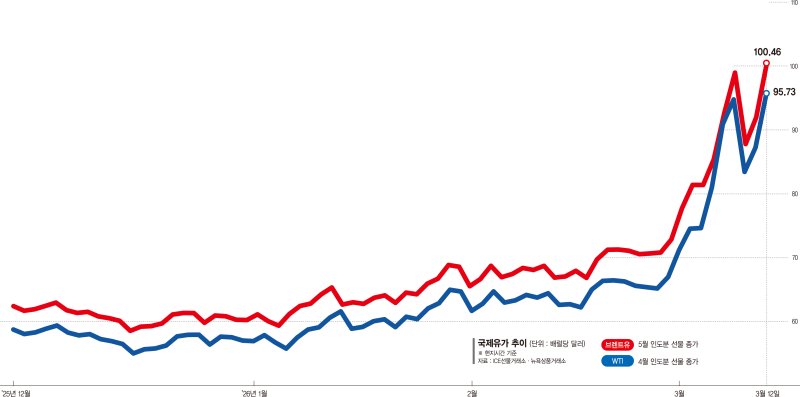
The unexpected spike in global oil prices has left the U.S. on the back foot, and major oil-importing countries in Europe and Asia are also going through a period of turmoil. As the conflict widens, key states across the Middle East are being drawn into the war almost inevitably. Much now depends on how this war ends, and there are serious concerns that the regional order in the Middle East could evolve in highly unpredictable ways.
Russia, by contrast, is widely seen as the main winner so far. Major countries are lining up to buy Russian crude, while global attention to the war in Ukraine has faded. China is watching the situation while maintaining strategic ambiguity. Stephanie T. Williams, a senior fellow at the Brookings Institution, wrote in a recent report, "Those who stand to gain the most from the United States' serious violations of International law are precisely the forces Washington, D.C. sought to contain," adding, "Moscow will be emboldened to continue its brutal assault on Ukraine, and China will feel it has gained the strength to attack Taiwan."
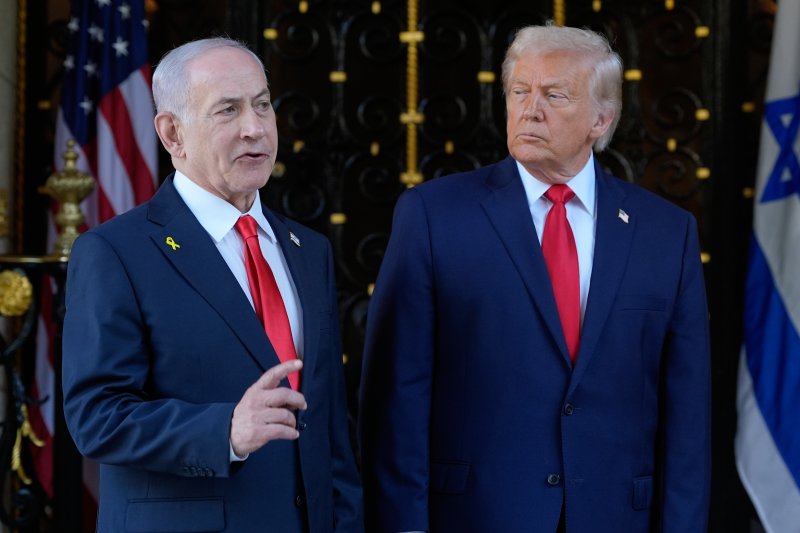
United States: Display of military might vs. economic and political costs
As a direct party to this war, the U.S. has once again showcased its military power to the world. Analysts say President Donald Trump has essentially replayed in the Middle East conflict the America First policy he demonstrated earlier this year during the operation to capture Bolivarian Republic of Venezuela President Nicolás Maduro. Some also view the campaign as a preemptive move to block Iran from becoming a fully nuclear-armed state like the Democratic People's Republic of Korea (DPRK). If Iran’s nuclear facilities and military infrastructure are severely damaged, its nuclear program could be set back by several years, according to these assessments.
However, the costs of war and surging oil prices could become a serious drag on the U.S. economy. If tensions in the Strait of Hormuz escalate further, higher international crude and gasoline prices could intensify inflationary pressures at home. As the conflict drags on, public opinion in the U.S. is souring, and there is still no clear exit strategy in sight. With midterm elections coming up in November, a deterioration in public sentiment and economic conditions due to the war could become a major political liability for President Trump.
Laura Blumenfeld, a professor at Johns Hopkins University, told a British outlet that "President Trump is putting at risk not only the global economy and regional stability, but also the Republican Party's performance in the midterm elections."
State of Israel: Eliminating an archrival and gaining strategic advantages
The State of Israel has achieved its long-standing objective by launching a full-scale attack on its decades-old adversary Iran and eliminating Ali Hosseini Khamenei, who had ruled the country for 37 years. Israel has long described Iran’s nuclear armament as an "existential threat." The possibility that this operation will weaken the so‐called "axis of resistance"—including Hezbollah in Lebanon and the Houthi rebels in the Republic of Yemen, both backed by Iran—is also seen as a major strategic gain for Israel. Prime Minister of Israel Benjamin Netanyahu said of the war, "I have been able to do what I have wanted to do for 40 years." Netanyahu, the country’s longest-serving prime minister, has made regime change in Iran the central theme of his 18-year political career.
Israel is also heading into a general election this year, and the coalition government led by Netanyahu had been trailing in recent opinion polls. Some experts argue that "the war with Iran is both a military operation and an election campaign for Netanyahu." The financial cost is significant as well. Foreign media have reported that if the war becomes protracted, Israel’s economic losses could reach about 2.9 billion dollars per week. Concerns are also mounting over potential damage to Israeli territory from Iranian missile and drone attacks.
Iran: A watershed for regime survival
For Iran, this war is widely seen as a critical watershed that will determine the survival of the regime and the future direction of its Middle East strategy. Foreign media and think tanks note that while the conflict may temporarily rally the population around the leadership, over the longer term it could impose heavy economic and military burdens. The Brookings Institution has pointed out that external military clashes tend to strengthen hardliners inside Iran and push the public to close ranks around the regime.
At the same time, some observers warn that the war could further strengthen Iran’s argument for acquiring a nuclear deterrent. The Carnegie Endowment for International Peace (CEIP) has assessed that military confrontation may lend weight to claims that Iran must pursue deterrence through nuclear weapons.
Although still seen as a low-probability scenario, some warn that if regime collapse in Iran were to materialize, it could trigger long-term conflict and political instability that spill beyond Iran’s borders. In that case, armed struggles by long-oppressed groups such as the Kurdish people, the Baloch people and various Islamist forces could intensify, and this instability could spread across the wider region.
Middle Eastern states: A strategic dilemma over joining the war
The positions of Saudi Arabia, the United Arab Emirates (UAE), the State of Kuwait and the Sultanate of Oman in this war with Iran reflect a structural irony. Oman and Qatar have traditionally placed great value on maintaining mediation and communication channels with Tehran. Despite having recently invested in détente, the Kingdom of Saudi Arabia (KSA) and the UAE have tilted more toward deterrence. The State of Kuwait, for its part, tends to maintain a cautious balance and avoid taking a hard-line stance.
Even though Iran has attacked some of these countries, they are Iran’s permanent neighbors, which makes it difficult for them to decide to enter the war. This dilemma is expected to become a key variable in reshaping the postwar order in the Middle East. The Atlantic Council, a U.S. think tank, assessed that "long after the U.S. operation in Iran has ended, Middle Eastern states will have little choice but to reassess their security and economic strategies."
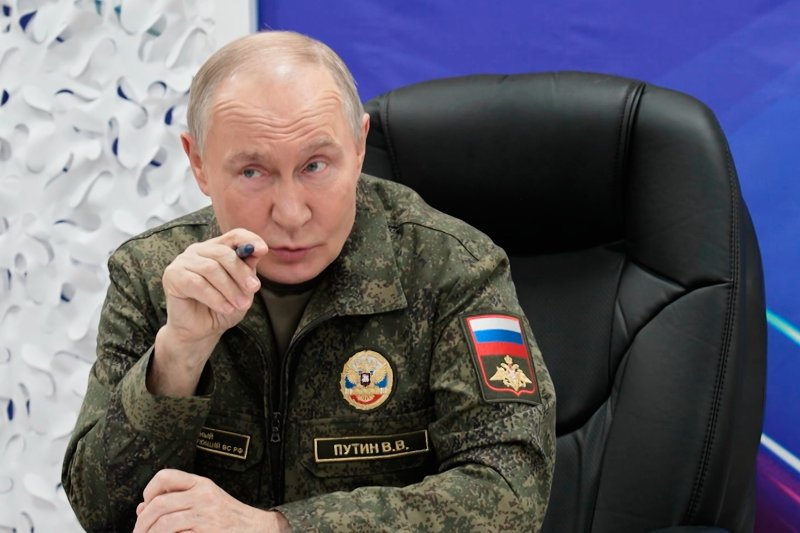
Russia: Biggest beneficiary of higher oil prices and diverted attention from war
António Costa, president of the European Union (EU) Council, remarked, "At present, the only winner in this war is Russia." First, as the Strait of Hormuz closure sent international oil prices soaring, the U.S. moved to fully expand 30-day waivers so that countries could purchase Russian crude and petroleum products stranded at sea. The Financial Times (FT) recently reported that Russia’s excess tax revenues from oil exports are now estimated at about 150 million dollars per day.
Russia is also benefiting from the dispersal of U.S. military assets. As advanced missile defense units such as the MIM-104 Patriot surface-to-air missile system and the Terminal High Altitude Area Defense (THAAD) system are redeployed to the Middle East, the pressure on Russia along the Ukrainian front has eased. Finally, Moscow gains from the diversion of international attention. With the U.S. bogged down in the Middle Eastern quagmire of Iran, global focus and support for the Ukrainian front are weakening, to Russia’s advantage.
Europe: Shut out of decisions, stuck with the bill
Europe has been effectively sidelined since the early stages of this war. The U.S. and the State of Israel did not give Europe prior notice of the operation, and European countries have remained on the sidelines, taking a largely spectator’s stance.
Yet the costs Europe is bearing are immediate. Higher oil and gas prices are adding to the burden on European consumers and industries, which were already struggling with inflation and eroding competitiveness. At the same time, these price rises may help extend Russia’s capacity to sustain its war in Ukraine. This leaves European governments facing a deeply uncomfortable dilemma. There is a sense of relief at the possible downfall of a dictatorship that has slaughtered its own people and exported terror, but this is mixed with fears of destabilization in Europe and beyond, as well as anxiety over Europe’s limited influence and narrow range of options. In particular, the prospect of millions of refugees if Iran collapses evokes memories of the Syrian Arab Republic crisis in 2015.
China: Calculated gains while watching from the sidelines
The Royal Institute of International Affairs (Chatham House), an International Politics think tank based in London, United Kingdom, cautioned that "China’s diplomatic restraint toward Iran should not be mistaken for a lack of credibility or indifference. China is playing a long game, seeking to rise by sacrificing the United States and achieving its long-term objectives."
In practice, China’s gains are multi-layered. As U.S. high-end missile defense assets are redeployed to the Middle East, a strategic gap has opened in the Indo-Pacific, and anti-stealth radar supplied by China has bolstered Iran’s electronic warfare capabilities. The Atlantic Council notes that "China is also exerting asymmetric pressure by restricting exports of rare earth elements (REE) used for military purposes, making it harder for the U.S. to replenish its weapons." In addition, China has secured strategic petroleum reserves equivalent to 104 days of consumption and stockpiled large volumes of Iranian crude right up to the outbreak of war. Iran, for its part, has strong incentives to maintain a dedicated export channel to China, one of its main oil customers.
There are, however, risks for China. The Brookings Institution predicts that "China will work to prevent any new Iranian government from realigning itself toward the United States."
India: An ‘innocent victim’ of its dependence on the Middle East
India is arguably the biggest "innocent victim" of this war. Half of its crude oil imports pass through the Strait of Hormuz, and 9.1 million Indians living in the Gulf region remit 51.4 billion dollars back home each year. These remittances amount to about 3.5% of India’s Gross Domestic Product (GDP), roughly twice the value of its exports to the U.S. If the war lasts more than six months, analysts warn that India’s economy could suffer substantial damage. For this reason, the Indian government has so far refrained from criticizing the U.S. or the State of Israel, and has not condemned the assassination of Supreme Leader Ali Hosseini Khamenei. Prime Minister Narendra Modi has not mentioned Iran by name, but he has condemned attacks on the Kingdom of Bahrain, the Kingdom of Saudi Arabia (KSA) and especially the United Arab Emirates (UAE), expressing solidarity with these countries. More than any other nation, India is hoping for a de-escalation of tensions in the Middle East.
[email protected] Reporter Lee Byung-chul Reporter